Understanding how to identify skin type is one of the most important steps in creating an effective skincare routine. Every person’s skin is unique, and using products that match your skin type can help maintain healthy, balanced, and radiant skin. If you have ever wondered how to identify skin type, this comprehensive guide will help you understand the characteristics of each skin type and the best methods to determine where your skin fits.
What Is a Skin Type?
A skin type refers to the natural condition of your skin based on factors such as oil production, hydration levels, sensitivity, and overall balance. Learning how to identify skin type allows you to choose skincare products that work best for your skin’s needs while avoiding products that may cause irritation or breakouts.
The five main skin types are:
- Oily Skin
- Dry Skin
- Combination Skin
- Normal Skin
- Sensitive Skin
Why Knowing How to Identify Skin Type Matters
Many people invest in skincare products without first understanding how to identify skin type. As a result, they may experience acne, dryness, irritation, or excessive oiliness. When you know how to identify skin type, you can:
- Select suitable skincare products.
- Build a personalized skincare routine.
- Reduce the risk of breakouts and irritation.
- Improve skin texture and appearance.
- Protect your skin from environmental damage.
- Maintain long-term skin health.
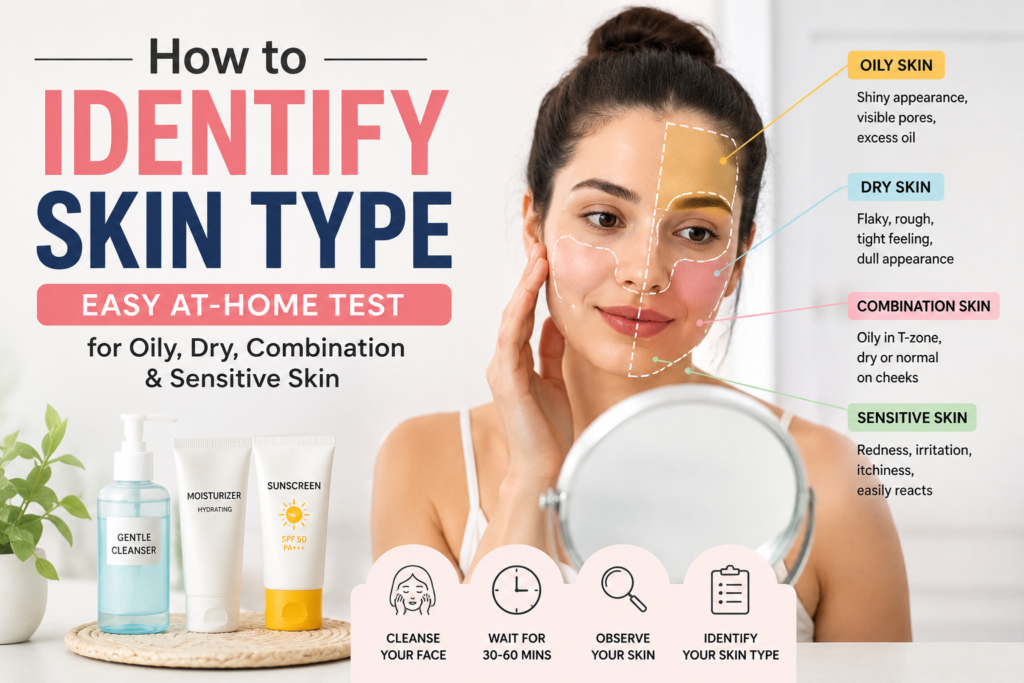
How to Identify Skin Type Using the Bare-Face Method
The bare-face method is one of the easiest ways to learn how to identify skin type at home.
Step 1: Cleanse Your Face
Wash your face using a gentle cleanser to remove dirt, oil, and makeup.
Step 2: Leave Your Skin Bare
Avoid applying moisturizer, toner, serum, or sunscreen for about one hour.
Step 3: Observe Your Skin
Carefully examine how your skin feels and looks.
Results
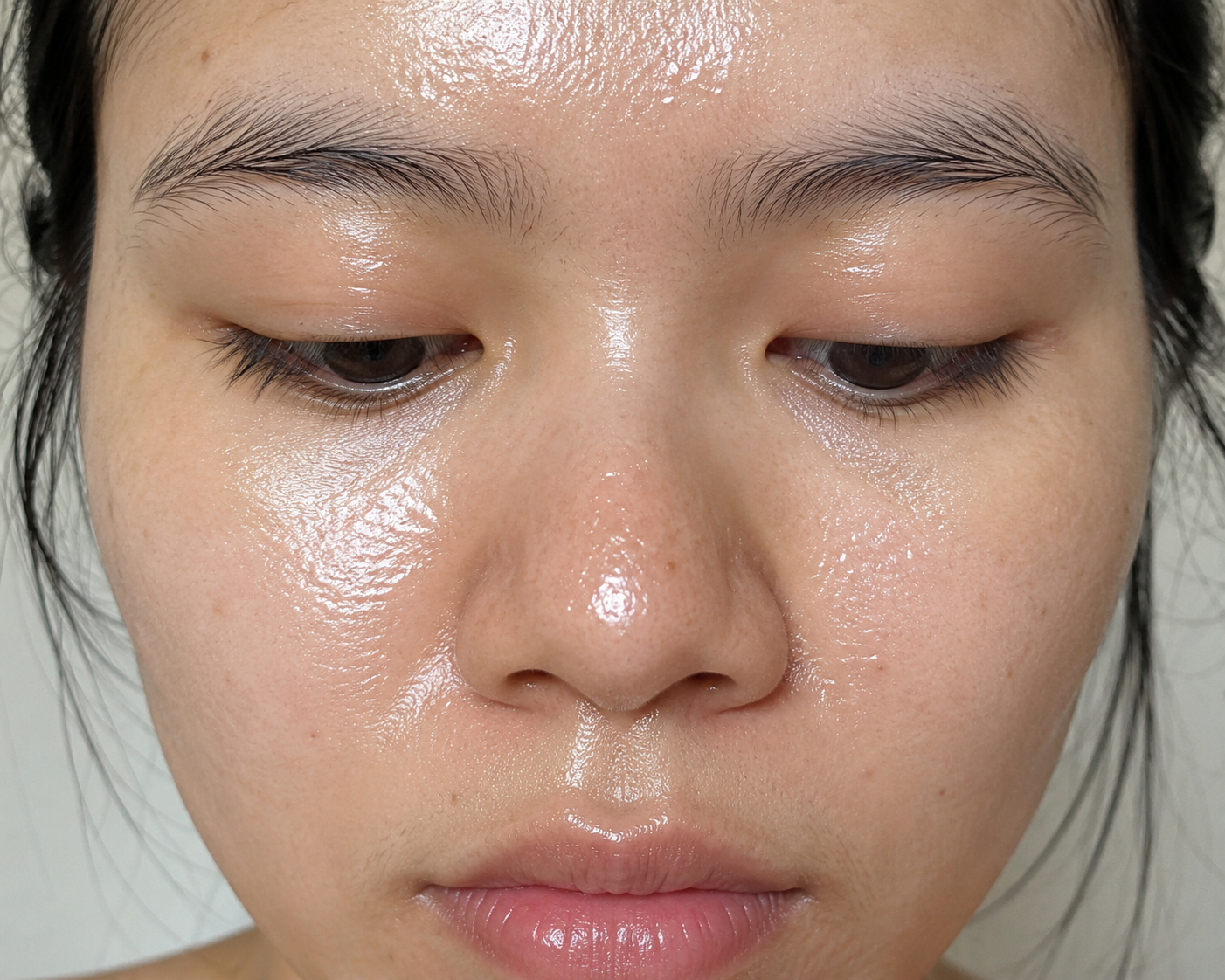
Oily Skin
If your face becomes shiny and greasy, especially around the forehead, nose, and chin, you likely have oily skin.
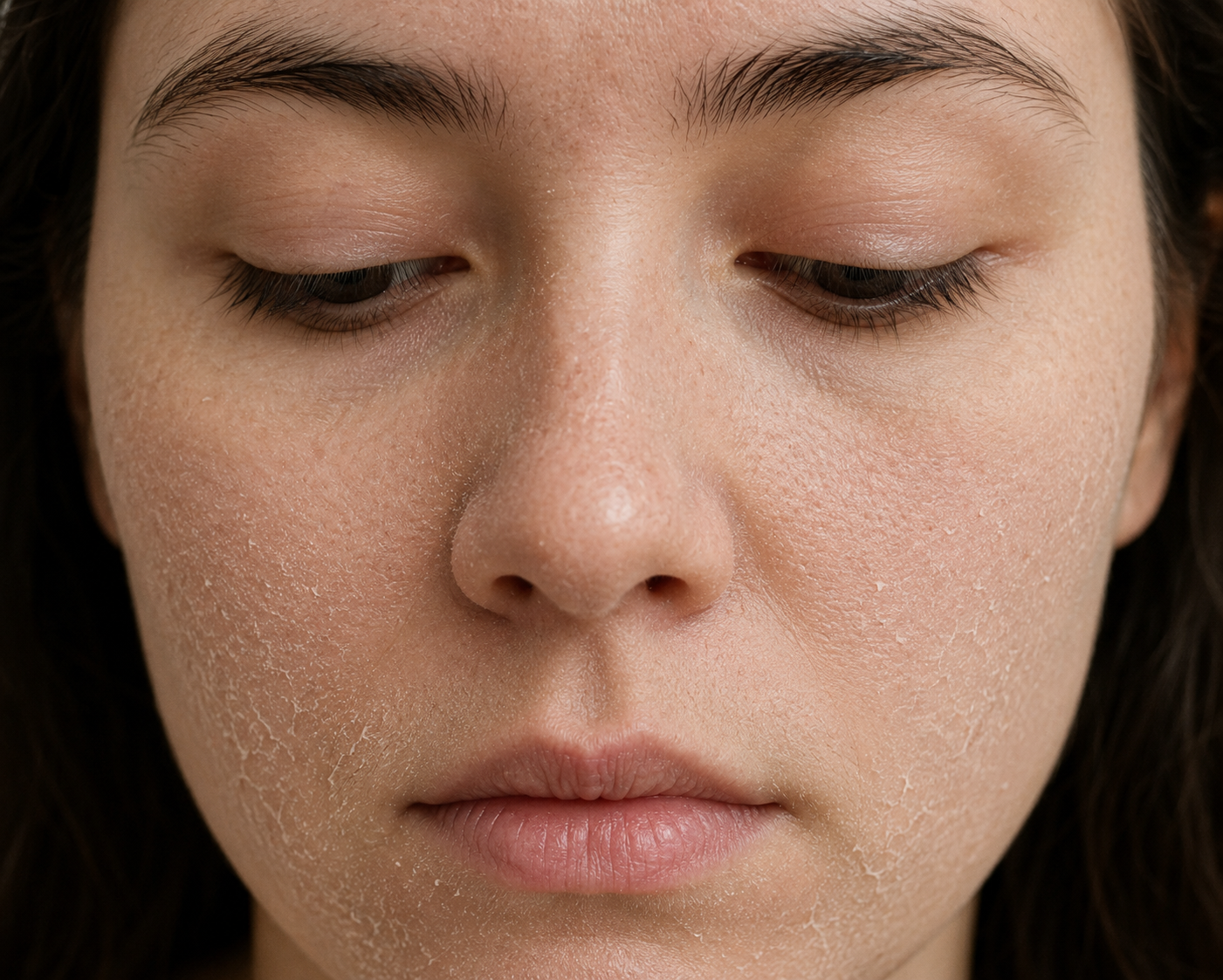
Dry Skin
If your skin feels tight, rough, flaky, or uncomfortable, you likely have dry skin.
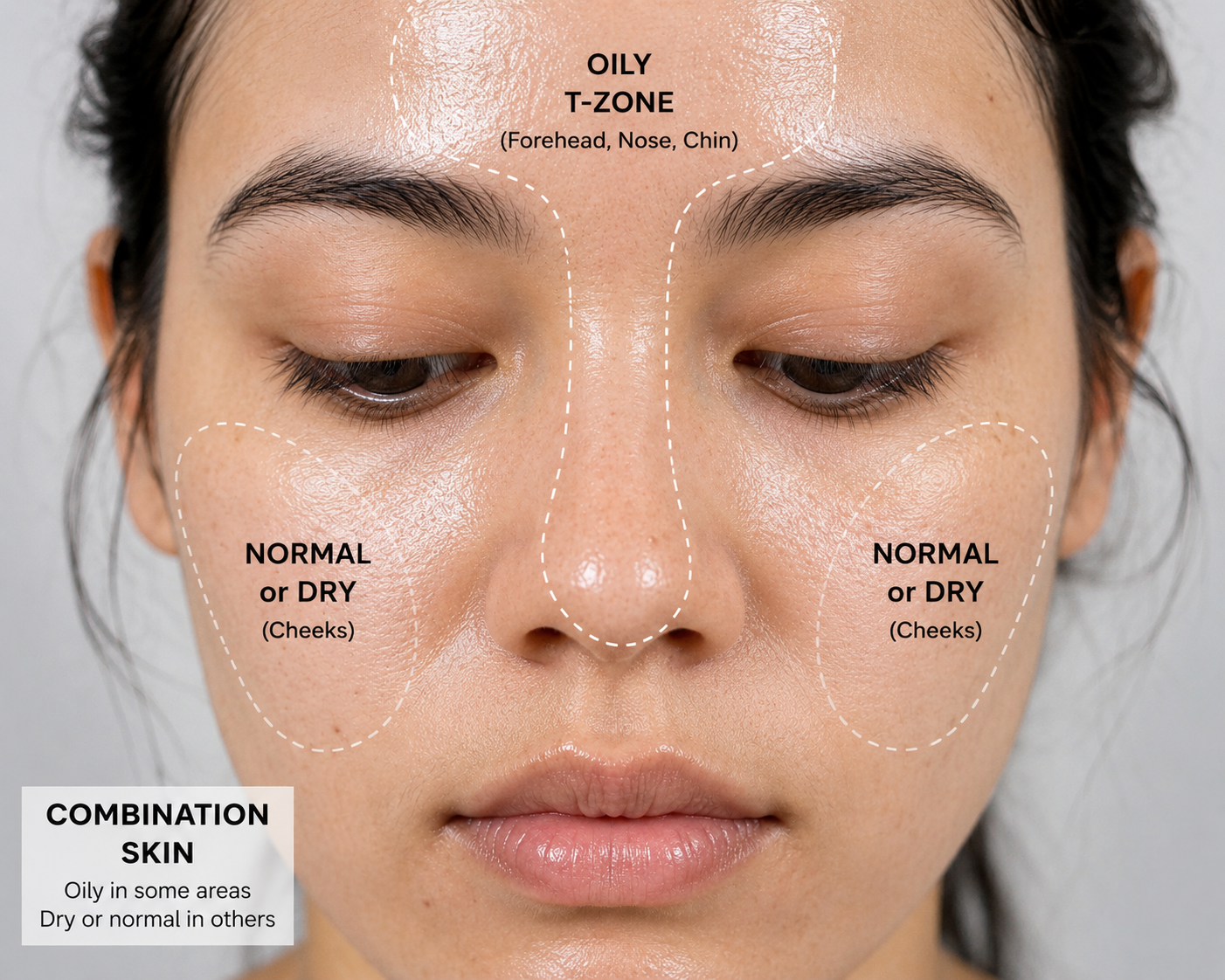
Combination Skin
If your T-zone is oily but your cheeks are normal or dry, you likely have combination skin.
Normal Skin
If your skin feels comfortable, balanced, and healthy, you likely have normal skin.
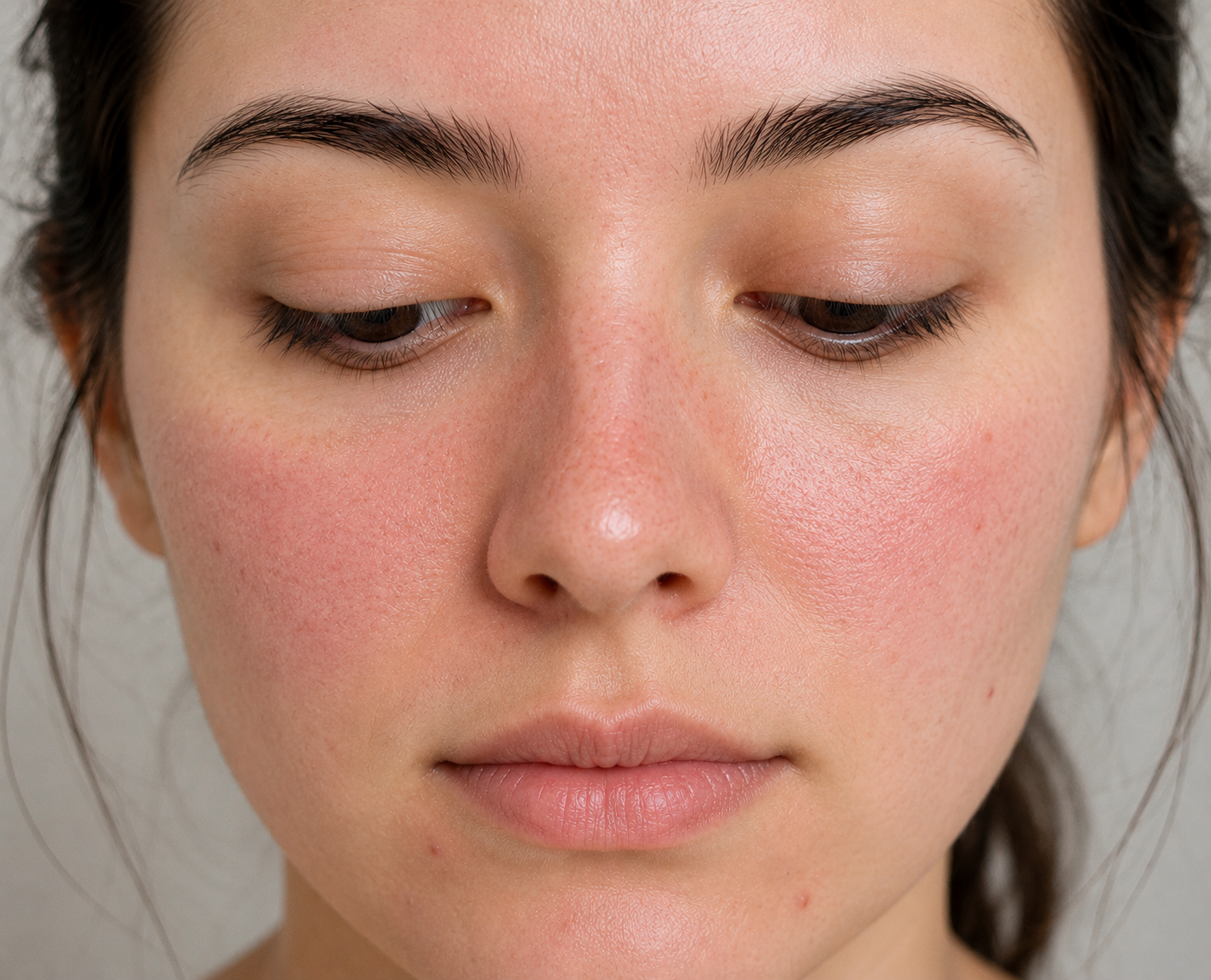
Sensitive Skin
If your skin becomes red, itchy, or irritated easily, you may have sensitive skin.
How to Identify Skin Type with the Blotting Paper Test
Another effective way to understand how to identify skin type is through the blotting paper test.
How to Perform the Test
- Gently press blotting paper on different areas of your face.
- Hold the paper against a light source.
- Check the amount of oil collected.
Interpretation
- Significant oil on the paper indicates oily skin.
- Little or no oil suggests dry skin.
- Oil mainly from the T-zone indicates combination skin.
- Minimal oil with balanced skin suggests normal skin.
Characteristics of Oily Skin
People learning how to identify skin type often discover they have oily skin due to excessive sebum production.
Common signs include:
- Shiny appearance
- Enlarged pores
- Frequent acne breakouts
- Blackheads and whiteheads
- Makeup that fades quickly
Characteristics of Dry Skin
Dry skin lacks sufficient moisture and natural oils.
Signs include:
- Tightness after washing
- Flaky patches
- Rough texture
- Dull complexion
- Increased sensitivity
Understanding these signs is essential when learning how to identify skin type accurately.
Characteristics of Combination Skin
Combination skin includes both oily and dry areas.
Typical features:
- Oily forehead, nose, and chin
- Dry or normal cheeks
- Occasional breakouts
- Visible pores in the T-zone
Combination skin is one of the most common skin types.
Know More About Best Tonner for Oily Skin
Characteristics of Normal Skin
Normal skin is generally balanced and healthy.
Signs include:
- Smooth texture
- Small pores
- Few imperfections
- Good moisture balance
- Minimal sensitivity
People with normal skin still benefit from knowing how to identify skin type to maintain skin health.

Characteristics of Sensitive Skin
Sensitive skin reacts easily to products, weather changes, or environmental factors.
Common symptoms:
- Redness
- Itching
- Burning sensations
- Irritation
- Dry patches
When exploring how to identify skin type, sensitivity should always be considered.
Factors That Affect Skin Type
Several factors influence your skin type:
Genetics
Your genes largely determine how much oil your skin produces.
Climate
Hot and humid weather may increase oil production, while cold weather may cause dryness.
Age
Skin typically becomes drier as people age.
Hormones
Hormonal changes can affect oil production and skin condition.
Lifestyle
Diet, stress, sleep, and hydration levels can influence skin health.
Common Mistakes When Trying to Identify Skin Type
Many people make mistakes while learning how to identify skin type.
Avoid these errors:
- Testing skin immediately after cleansing.
- Using harsh skincare products before testing.
- Ignoring seasonal changes.
- Confusing dehydrated skin with dry skin.
- Assuming acne automatically means oily skin.
Best Skincare Tips Based on Skin Type
For Oily Skin
- Use lightweight, oil-free products.
- Cleanse regularly.
- Wear non-comedogenic sunscreen.
For Dry Skin
- Use hydrating cleansers.
- Apply rich moisturizers.
- Avoid excessive exfoliation.
For Combination Skin
- Balance hydration and oil control.
- Use gentle products.
For Sensitive Skin
- Choose fragrance-free formulas.
- Patch-test new products.
For Normal Skin
- Maintain a simple skincare routine.
- Protect skin with daily sunscreen.
Final Thoughts
Learning how to identify skin type is the foundation of successful skincare. Whether your skin is oily, dry, combination, normal, or sensitive, understanding how to identify skin type helps you choose the right products and build a routine that supports healthy, glowing skin. Taking the time to correctly identify your skin type can save money, prevent skin problems, and help you achieve your skincare goals more effectively.