Why Korean Skincare Works in India’s Environment
Korean skincare has become popular in India because it focuses on hydration, skin-barrier protection, lightweight textures, and consistent skincare routines. These features can be especially useful in a country where the climate varies from hot and humid summers to dry winters, with pollution, dust, and strong sunlight affecting daily skin care.
However, Korean skincare is not automatically better than Indian or other skincare products. The best results depend on choosing products that suit your skin type, local climate, and individual concerns.
1. Introduction: Why Is Korean Skincare Popular in India?
Korean skincare, often called K-beauty, is known for its gentle formulations, hydrating ingredients, innovative textures, and multi-step skincare routines. Instead of focusing only on treating visible skin problems, many Korean skincare products aim to maintain healthy, hydrated, balanced skin.
For Indian consumers, this approach can be helpful because the environment creates several skincare challenges:
-
Hot weather: High temperatures can increase sweating and make heavy creams uncomfortable.
-
Humid climate: Excessive humidity may make some skin types feel greasy and uncomfortable.
-
Pollution and dust: Environmental exposure can contribute to irritation and oxidative stress.
-
Strong UV exposure: Sunlight can cause sunburn, premature skin ageing, and worsening pigmentation.
-
Seasonal changes: Skin may become oily during summer but dry or dehydrated during winter.
Korean skincare offers a wide range of lightweight moisturisers, hydrating toners, soothing serums, and sunscreens that can be adapted to these conditions.
2. How Does Korean Skincare Work in India’s Climate?
A. Lightweight formulas are suitable for hot weather
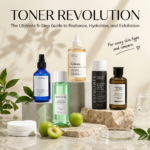
Many Korean skincare products feature gel moisturisers, watery toners, fluid serums, and lightweight lotions. These textures can feel more comfortable in hot weather than rich, heavy creams.
For people with oily or combination skin, lightweight products may provide hydration without leaving a thick, greasy layer.
Best product types for Indian summers:
-
Water-based or gel moisturisers
-
Lightweight hydrating serums
-
Non-greasy sunscreens
-
Gentle, low-irritation cleansers
Remember that a lightweight texture does not guarantee that a product is non-comedogenic. If you are prone to acne, check the full formulation and observe how your skin responds.
B. Hydration helps maintain a healthy skin barrier
One of the biggest strengths of Korean skincare is its emphasis on hydration. Ingredients such as hyaluronic acid, glycerin, panthenol, and beta-glucan help attract or retain water in the skin.
A well-hydrated skin barrier can help reduce tightness, flaking, and discomfort. This is important in India because air conditioning, dry winter weather, harsh cleansers, and excessive exfoliation can contribute to dehydration.
Hydration is useful even for oily skin. Oily skin can still be dehydrated, so skipping moisturiser entirely is not always the best approach.
C. Skin-barrier care can reduce irritation
Many Korean skincare products are formulated with ingredients that support moisturisation and soothe the skin.
Useful ingredients include:
-
Ceramides: Help support the skin’s protective barrier.
-
Panthenol: Helps moisturise and soothe the skin.
-
Centella asiatica (Cica): Commonly used in products designed for sensitive or irritated skin.
-
Madecassoside: A Centella-derived ingredient used in soothing skincare.
-
Allantoin: Helps condition the skin and improve comfort.
These ingredients may be particularly helpful if pollution, frequent washing, or overuse of active ingredients leaves your skin feeling irritated.
D. Sunscreen helps protect against strong Indian sunlight
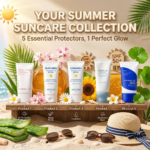
Sun protection is one of the most important parts of any skincare routine in India. Korean sunscreens are popular for their lightweight textures, smooth application, and often minimal white cast.
Daily sunscreen helps protect against UV-related skin damage, including sunburn, premature ageing, and the worsening of dark spots.
Choose a broad-spectrum sunscreen with SPF 30 or higher; SPF 50 is a practical option for prolonged outdoor exposure. Look for water resistance when sweating or spending time outdoors, and reapply as directed on the product label.
Korean sunscreen is not automatically more protective than Indian sunscreen. The right choice is one that provides adequate protection and that you will apply generously and consistently.
E. Some ingredients may help with pigmentation and uneven skin tone
Pigmentation is a common concern for many Indian skincare users. Acne marks, tanning, and melasma can become more noticeable with sun exposure and inflammation.
Korean skincare includes products with ingredients that may help improve uneven skin tone, such as:
-
Niacinamide: Helps support the skin barrier and can improve the appearance of uneven skin tone.
-
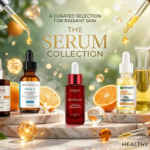
Vitamin C: An antioxidant that can help brighten the appearance of skin and support protection against environmental oxidative stress.
-
Alpha arbutin: Used in skincare products targeting the appearance of dark spots.
-
Tranexamic acid: Used in some topical products designed for uneven pigmentation.
-
Centella asiatica: Often included in soothing products for skin that is easily irritated.
Not every Korean product contains these ingredients, and their effectiveness depends on the formulation and concentration. Persistent melasma or stubborn pigmentation may require treatment from a dermatologist.
3. Why Korean Skincare Can Suit Different Indian Skin Types
Oily skin
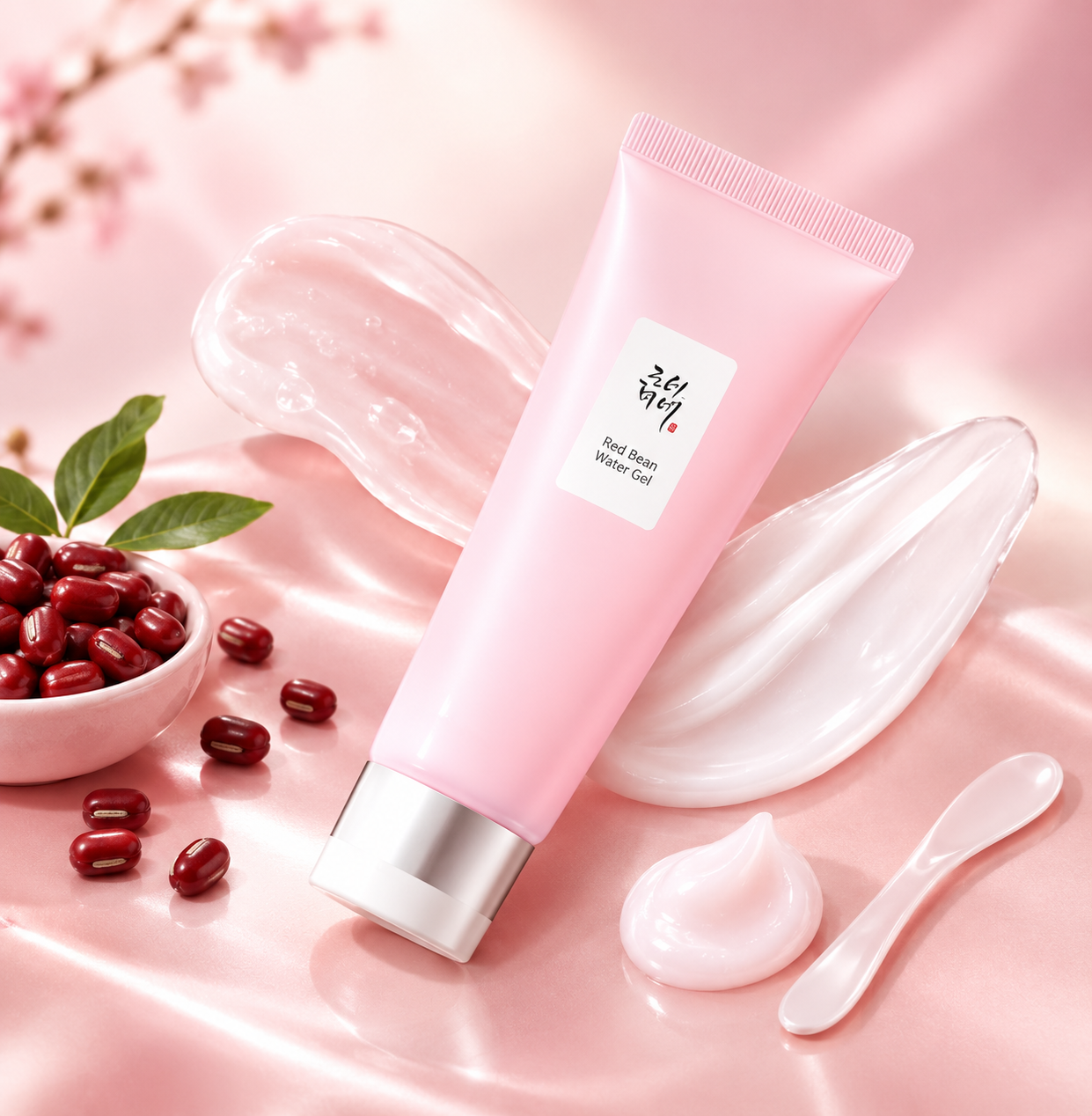
Beauty of Joseon Red Bean Water Gel
Choose lightweight gel moisturisers, gentle cleansers, and non-greasy sunscreens. Avoid layering too many rich creams and essences in humid weather.
Product name: Red Bean Water Gel
Brand: Beauty of Joseon
Type: Lightweight gel moisturiser
Best for: Oily and combination skin
Key ingredients: Red bean extract and a triple peptide complex.
Main benefit: Hydrates skin without a heavy, greasy feel.
Acne-prone skin
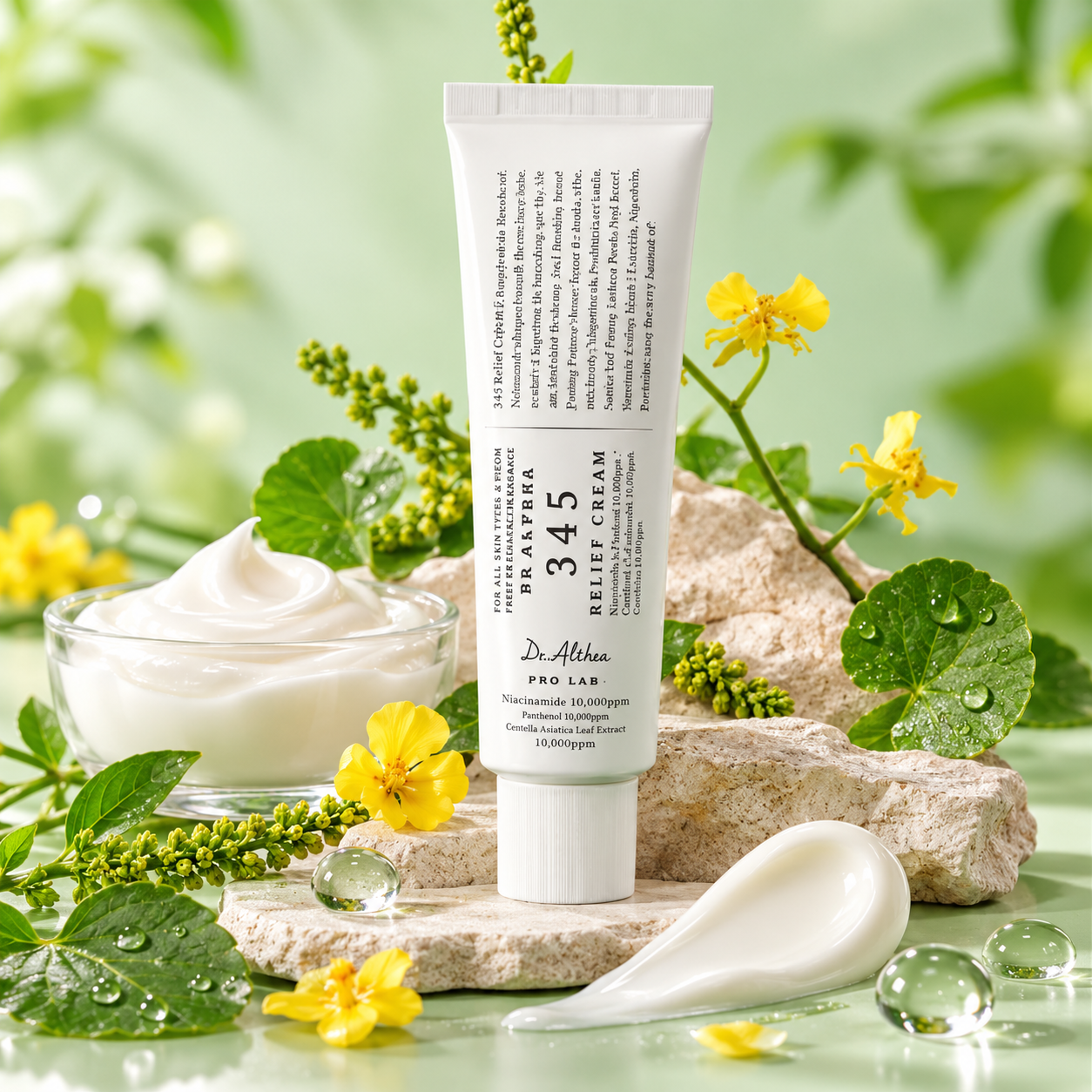
Dr. Althea 345 Relief Cream
Look for non-comedogenic products and gentle hydration. Korean skincare can support your routine, but active acne may also need proven treatments such as salicylic acid or dermatologist-recommended medication.
-
Brand: Dr. Althea
-
Product: 345 Relief Cream
-
Type: Moisturising gel-cream
-
Benefits: Hydration, soothing care, and support for the skin barrier.
-
Suitable for: Many skin types, including sensitive and acne-prone skin, depending on individual tolerance.
Dry skin
Choose moisturisers containing ceramides, glycerin, and other emollients. A richer cream may be more suitable during winter or in air-conditioned environments.
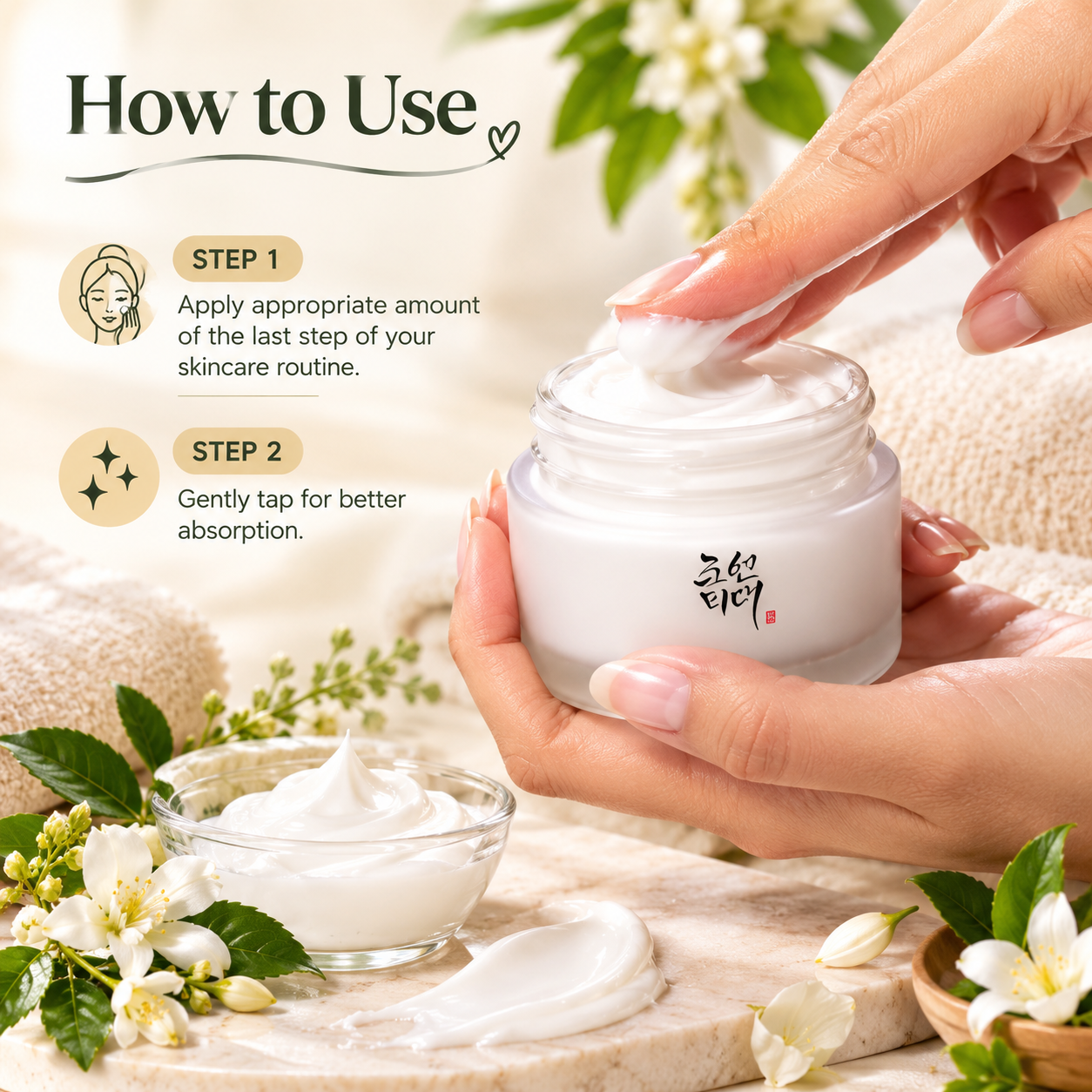
Beauty of Joseon Dynasty Cream
Key details
-
Main purpose: Helps moisturize the skin, support the skin barrier, and leave skin feeling soft and looking radiant.
-
Texture: A rich, creamy texture with a dewy finish.
-
Best suited for: Normal, dry, and combination skin, especially skin that needs extra moisture.
-
Skin concerns: Dryness, dehydration, dull-looking skin, and rough texture.
-
Finish: Smooth, nourished, and luminous-looking skin.
Sensitive skin
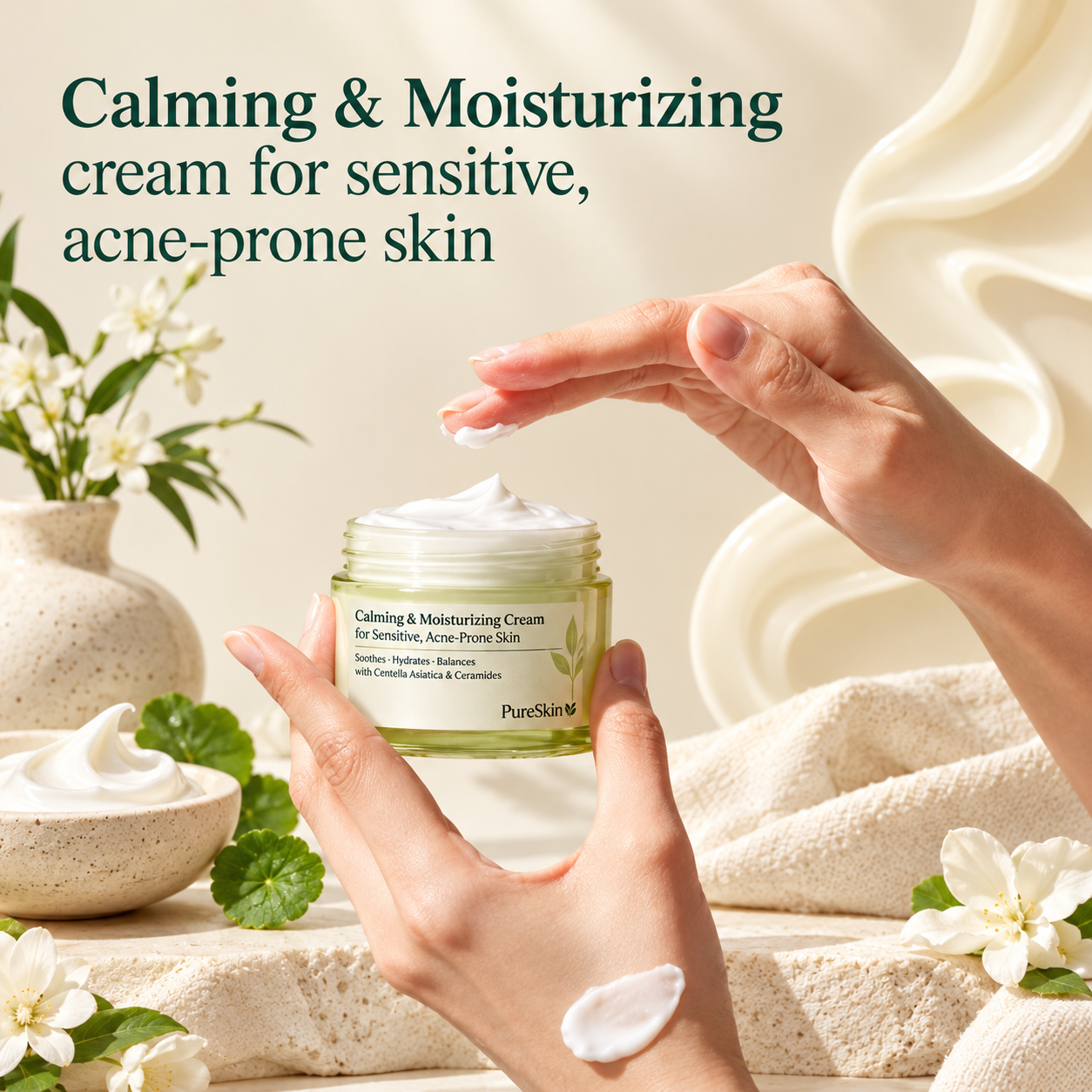
Calming & Moisturizing Cream for Sensitive, Acne-Prone Skin
Key Benefits
- Calms: Helps soothe skin that feels irritated or uncomfortable.
- Hydrates: Helps replenish moisture and reduce dryness.
- Supports the skin barrier: Helps maintain soft, healthy-looking skin.
- Lightweight comfort: Designed for everyday skincare.
- Healthy-looking glow: Leaves skin looking smooth and hydrated.
Ideal For: Sensitive, dehydrated, and acne-prone skin.
Prefer fragrance-free, gentle formulas with soothing and moisturising ingredients. Introduce one new product at a time and patch-test before regular use.
Pigmentation-prone skin
Prioritise daily sun protection and consider suitable brightening ingredients. Gentle skincare can help, but sunscreen is essential for preventing existing dark spots from becoming more noticeable.
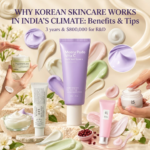
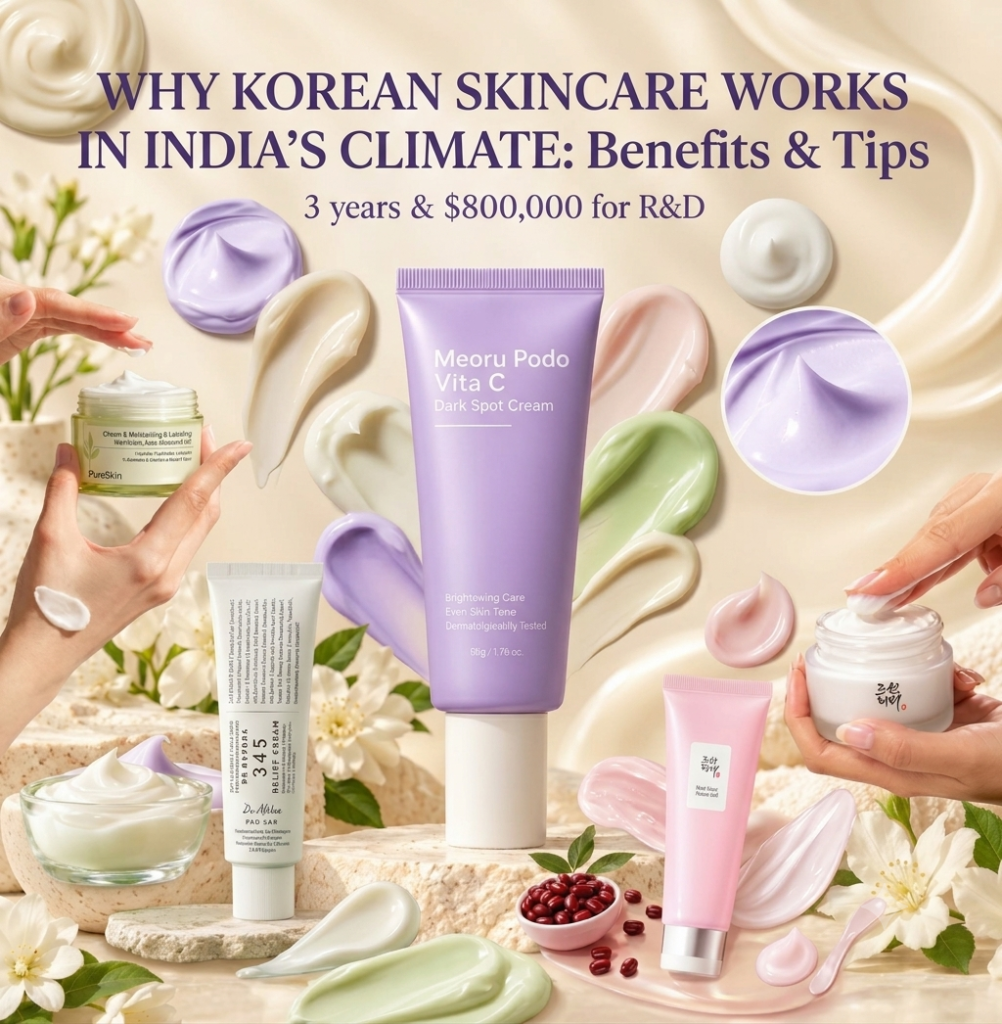
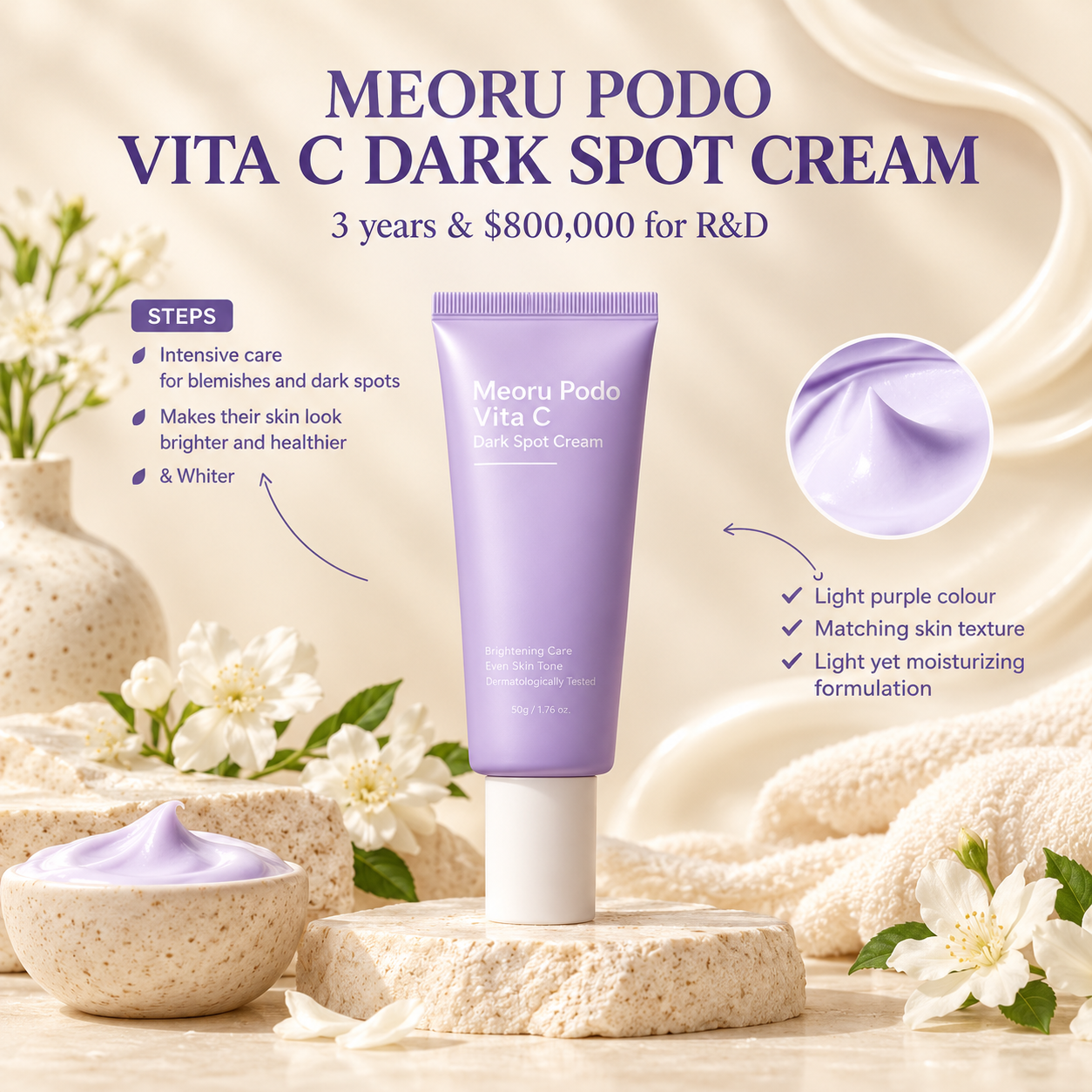
Meoru Podo Vita C Dark Spot Cream
Product type: Brightening and moisturizing face cream
Main purpose: Designed to target the appearance of dark spots, blemishes, and uneven skin tone while helping the skin look brighter and smoother.
Texture: Lightweight-looking cream with a soft lavender-purple appearance, as shown in the poster.
4. Best Korean Skincare Ingredients for India’s Environment
| Ingredient | Main benefit | Best suited for |
|---|---|---|
| Hyaluronic acid | Attracts and retains moisture | Dehydrated skin |
| Glycerin | Hydrates the skin | All skin types |
| Ceramides | Support the skin barrier | Dry and sensitive skin |
| Centella asiatica | Helps soothe skin | Irritation-prone skin |
| Panthenol | Moisturises and soothes | Dry or sensitive skin |
| Niacinamide | Supports the barrier and helps improve uneven tone | Oily and pigmentation-prone skin |
| Green tea extract | Provides antioxidant activity | Many skin types, depending on the formula |
| Snail mucin | Moisturises and helps improve skin softness | Dehydrated skin, if well tolerated |
These ingredients are not exclusive to Korean skincare. Their benefits depend on the complete formula, concentration, and suitability for your skin.
5. How to Build a Korean Skincare Routine for Indian Weather
You do not need a 10-step routine to enjoy the benefits of Korean skincare. Three or four well-chosen products are often enough.
Morning routine
Step 1: Gentle cleanser
Remove excess oil and sweat without leaving your skin tight. If your skin is very dry, rinsing with water may be sufficient in the morning.
Step 2: Hydrating serum (optional)
Use a glycerin- or hyaluronic-acid-based serum if your skin needs additional hydration.
Step 3: Moisturiser
Choose a lightweight gel for oily skin or a richer cream for dry skin.
Step 4: Sunscreen
Finish with broad-spectrum SPF 30 or higher, preferably SPF 50 for regular outdoor exposure. Reapply approximately every two hours outdoors and after heavy sweating or swimming, following the label.
Night routine
Step 1: Cleanse
Remove sunscreen, makeup, sweat, and dirt. Use an oil cleanser first if needed for makeup or water-resistant sunscreen, followed by a gentle cleanser.
Step 2: Treatment (optional)
Select one suitable product for your concern, such as niacinamide for uneven tone. Introduce stronger actives gradually.
Step 3: Moisturise
Apply a suitable moisturiser to help maintain hydration overnight.
6. Does Korean Skincare Help Protect Skin from Pollution?
Pollution can expose the skin to particles and other environmental stressors that contribute to oxidative stress and irritation. A sensible skincare routine can help maintain the skin barrier and remove accumulated dirt.
Helpful habits include:
-
Washing your face gently after exposure to heavy dust or pollution.
-
Using a moisturiser suited to your skin.
-
Applying sunscreen during the day.
-
Considering antioxidant ingredients such as vitamin C or green tea extract if tolerated.
-
Avoiding aggressive scrubbing and excessive cleansing.
Important: Korean skincare cannot completely block pollution or detoxify the skin. Antioxidants may offer additional benefits, but no serum replaces practical measures such as cleansing and sun protection.
7. Common Korean Skincare Mistakes to Avoid in India
Using too many products
Layering multiple toners, essences, serums, and creams can be uncomfortable in hot, humid weather and may increase the chance of irritation.
Choosing products because they are trending
A viral product may not match your skin type, budget, or specific concern.
Expecting instant brightening
Hydration can improve the appearance of skin relatively quickly, but acne marks and pigmentation generally take longer and may require targeted treatment.
Skipping sunscreen
Brightening serums and moisturisers cannot replace daily sun protection.
Assuming Korean products suit everyone
Skin reactions, allergies, acne triggers, and product preferences vary from person to person. Patch-test new products and discontinue anything that causes persistent irritation.
8. Korean Skincare vs Indian Skincare: Which Is Better?
| Feature | Korean skincare | Indian skincare |
|---|---|---|
| Common strengths | Lightweight textures, hydration, soothing formulations | Broad range of products tailored to local preferences and budgets |
| Product choices | Essences, hydrating toners, gel creams, modern sunscreens | Gels, creams, serums, sunscreens and targeted treatments |
| Affordability | Imported products can cost more | Many affordable domestic options are available |
| Climate suitability | Many products work well in warm weather, but not all | Many products are developed with Indian consumers and conditions in mind |
| Best choice | Depends on formula and individual needs | Depends on formula and individual needs |
Neither category is universally superior. An Indian moisturiser with ceramides may work just as well as a Korean moisturiser with the same suitable formulation. Focus on ingredients, tolerability, protection, and price rather than the country of origin.
9. How Long Does Korean Skincare Take to Show Results?
| Time frame | What you may notice |
|---|---|
| First few days | Better surface hydration or softer-feeling skin |
| 2–4 weeks | Improvements in dryness or comfort, depending on the products |
| 6–12 weeks | Possible gradual improvements in some concerns, such as uneven texture or skin tone |
| Several months | More noticeable progress with consistent care, particularly for stubborn pigmentation |
These are general estimates, not guaranteed results. Acne, melasma, and other persistent skin conditions may need specific treatments and professional guidance.
10. Is Korean Skincare Worth It for Indian Consumers?
Yes, Korean skincare can be worth trying if you select products according to your skin’s needs. It is especially appealing if you prefer lightweight moisturisers, soothing serums, gentle cleansing, and comfortable sunscreen textures.
To get the most value from your routine:
-
Start with a gentle cleanser, a suitable moisturiser, and sunscreen.
-
Add a targeted serum only if you have a specific skin concern.
-
Choose lighter textures in humid weather and richer moisturisers when your skin feels dry.
-
Check ingredient lists, authenticity, expiry dates, and the total cost before buying imported products.
-
Give your routine time to work rather than frequently changing products.
For additional guidance, see the American Academy of Dermatology recommendations on choosing a moisturiser and the Indian Sunscreen Forum’s 2025 practical sunscreen recommendations.
Final Thoughts
Korean skincare can work well in India’s environment because many products focus on hydration, skin-barrier support, soothing ingredients, and comfortable textures. These features can help address common concerns associated with heat, humidity, dry weather, and daily environmental exposure.
However, the secret to healthy skin is not following every Korean beauty trend or using the most expensive products. It is choosing the right ingredients, maintaining a simple and consistent routine, and protecting your skin from the sun.
The best Korean skincare routine for India is one that suits your skin type, adapts to your local climate, fits your budget, and delivers benefits without causing irritation.