5 Skincare Mistakes Ruining Your Skin: The Ultimate Complete Guide (2026)
Healthy skin is not achieved by using dozens of expensive products. In fact, many people unknowingly damage their skin through common skincare mistakes. These habits can weaken your skin barrier, trigger acne, increase sensitivity, cause pigmentation, and even accelerate premature aging.
Dermatologists often emphasize that consistency and proper technique matter more than having a complicated skincare routine. Understanding what not to do is just as important as knowing what products to use.
What Happens When You Make Skincare Mistakes?
Your skin has a protective barrier called the skin barrier or moisture barrier, made up of skin cells, lipids (fats), and natural moisturizing factors. This barrier helps:
- Lock in moisture
- Protect against bacteria and pollutants
- Prevent irritation
- Support healthy skin healing
- Maintain smooth, glowing skin
When your skincare routine repeatedly damages this barrier, your skin becomes more vulnerable to dehydration, inflammation, and environmental damage.
Common Symptoms of a Damaged Skin Barrier
- Tightness after cleansing
- Persistent redness
- Dry patches
- Increased oil production
- Acne breakouts
- Burning when applying skincare
- Flaky skin
- Itching
- Rough texture
- Increased sensitivity

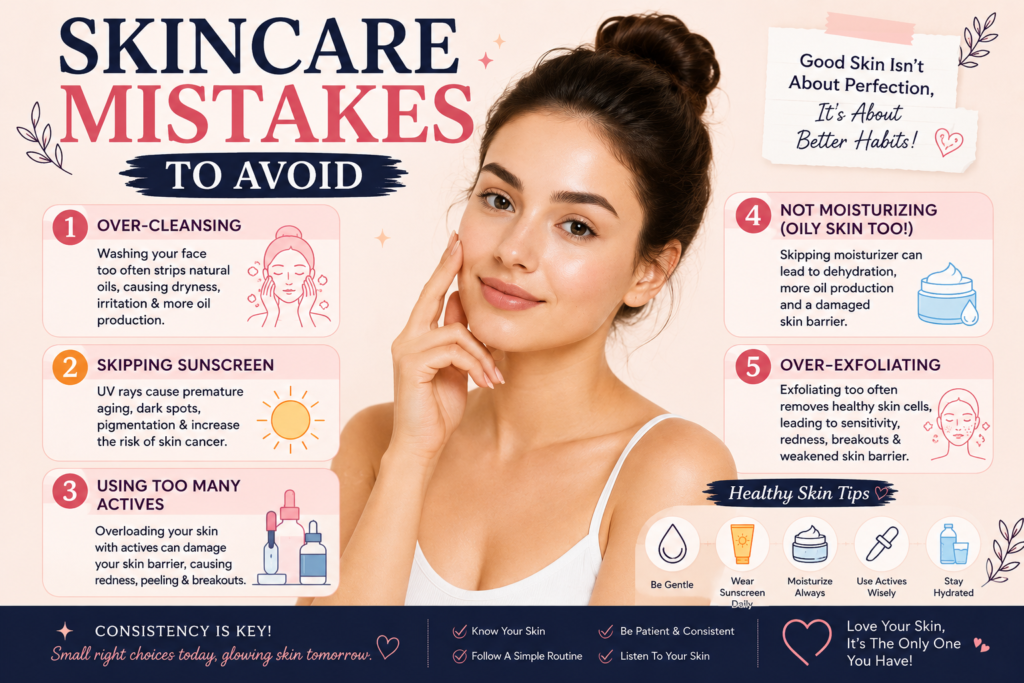
Mistake #1: Over-Cleansing or Using Harsh Cleansers
Many people believe that washing their face multiple times a day will keep it cleaner and prevent acne. In reality, excessive cleansing strips away the skin’s natural oils and protective lipids.
Why This Is Harmful
Over-cleansing can:
- Remove beneficial skin oils
- Disrupt the skin’s pH balance
- Damage the skin barrier
- Increase water loss from the skin
- Trigger more oil production
- Make acne worse
Harsh cleansers containing strong sulfates or high concentrations of alcohol can also leave skin dry and irritated.
How Often Should You Wash Your Face?
- Morning: Once
- Evening: Once
- After heavy exercise: One additional gentle cleanse if necessary
For most people, cleansing twice daily is enough.
Tips
- Use lukewarm water instead of hot water.
- Avoid scrubbing with rough washcloths or brushes.
- Pat your face dry instead of rubbing it.
Mistake #2: Skipping Sunscreen Every Day
If you use expensive serums but skip sunscreen, you may be undoing many of the benefits of your skincare routine.
Why Sunscreen Is Essential
Ultraviolet (UV) rays are one of the leading causes of:
- Premature wrinkles
- Fine lines
- Hyperpigmentation
- Dark spots
- Uneven skin tone
- Collagen breakdown
- Loss of skin elasticity
- Increased skin cancer risk
Even on cloudy days, up to 80% of UV rays can reach your skin.
UVA vs UVB
UVA Rays
- Penetrate deeper into the skin
- Cause aging and wrinkles
- Can pass through windows
UVB Rays
- Cause sunburn
- Contribute to skin cancer
- Strongest during midday
Sunscreen Tips
Choose a sunscreen that is:
- SPF 30 or higher
- Broad-spectrum (UVA + UVB)
- PA+++ or PA++++
- Suitable for your skin type
Reapply every two hours if you are outdoors or after swimming or sweating.
Mistake #3: Mixing Too Many Active Ingredients
The popularity of skincare on social media has encouraged many people to layer multiple active ingredients without understanding how they interact.
Common Active Ingredients
- Retinol
- Vitamin C
- Salicylic Acid
- Glycolic Acid
- Lactic Acid
- Azelaic Acid
- Benzoyl Peroxide
- Niacinamide
- Peptides
While these ingredients can be highly effective, using too many at once may irritate your skin.
Possible Side Effects
- Burning
- Redness
- Peeling
- Dryness
- Increased sensitivity
- Breakouts
- Barrier damage
Safer Layering Example
Morning
- Gentle cleanser
- Vitamin C serum
- Moisturizer
- Sunscreen
Evening
- Gentle cleanser
- Retinol (2–3 nights per week)
- Moisturizer
Use exfoliating acids only on nights when you’re not using retinol unless directed otherwise by a dermatologist.
Mistake #4: Skipping Moisturizer Because Your Skin Is Oily
This is one of the biggest misconceptions in skincare.
Many people with oily skin avoid moisturizers because they think it will make them shinier. In reality, dehydrated skin often produces more oil to compensate.
Benefits of Moisturizing
- Maintains the skin barrier
- Reduces water loss
- Improves skin texture
- Helps active ingredients work better
- Reduces irritation
- Balances oil production
Ingredients to Look For
- Hyaluronic Acid
- Ceramides
- Glycerin
- Squalane
- Niacinamide
- Panthenol
Choose lightweight, oil-free, or gel-based formulas if you have oily or acne-prone skin.
Mistake #5: Over-Exfoliating
Exfoliation removes dead skin cells and can improve texture and brightness, but too much exfoliation damages healthy skin.
Signs You Are Exfoliating Too Much
- Redness
- Burning
- Stinging
- Shiny, thin-looking skin
- Dry patches
- Breakouts
- Increased sensitivity
- Skin feels raw
How Often Should You Exfoliate?
| Skin Type | Frequency |
|---|---|
| Sensitive | Once a week |
| Dry | 1–2 times a week |
| Combination | 2 times a week |
| Oily | 2–3 times a week |
Chemical exfoliants (AHAs and BHAs) are generally gentler and more even than harsh physical scrubs.
Additional Skincare Mistakes to Avoid
Sleeping with Makeup On
Leaving makeup on overnight traps:
- Oil
- Dirt
- Sweat
- Pollution
- Bacteria
This increases the risk of clogged pores, acne, and dullness.
Using Expired Skincare Products
Old products may:
- Lose effectiveness
- Become contaminated
- Cause irritation
Always check the expiration date or the “Period After Opening” symbol on packaging.
Not Cleaning Makeup Brushes
Dirty brushes collect:
- Bacteria
- Oil
- Dead skin
- Product buildup
Wash brushes weekly with a gentle cleanser.
Touching Your Face Frequently
Hands carry bacteria, dirt, and oils that can transfer to your skin and contribute to breakouts.
Popping Pimples
Popping pimples can:
- Push bacteria deeper into the skin
- Cause inflammation
- Leave scars
- Lead to dark spots
Instead, use acne spot treatments or consult a dermatologist for persistent acne.
Using Extremely Hot Water
Hot water strips natural oils and can worsen:
- Dryness
- Redness
- Rosacea
- Eczema
Lukewarm water is ideal for cleansing.
Expecting Overnight Results
Many skincare ingredients require time to work.
| Ingredient | Typical Time to See Results |
|---|---|
| Vitamin C | 6–12 weeks |
| Retinol | 8–12 weeks |
| Niacinamide | 4–8 weeks |
| Azelaic Acid | 8–12 weeks |
| Acne Treatments | 8–12 weeks |
Consistency is key.
Not Patch Testing New Products
Always test new products on a small area of skin (such as behind the ear or along the jawline) for 24–48 hours before using them on your entire face.
How Lifestyle Affects Your Skin
Your skincare routine is only one part of healthy skin.
Lack of Sleep
Poor sleep may contribute to:
- Dark circles
- Dullness
- Slower skin repair
- Increased inflammation
Aim for 7–9 hours of quality sleep.
Poor Diet
A balanced diet rich in fruits, vegetables, healthy fats, and protein supports overall skin health. Some people may notice that high-sugar diets or certain dairy products can worsen acne, though triggers vary by individual.
Chronic Stress
Stress can increase hormones that may contribute to:
- Acne flare-ups
- Eczema
- Psoriasis
- Skin sensitivity
Managing stress through exercise, mindfulness, or hobbies may benefit your skin.
Smoking
Smoking reduces blood flow to the skin and accelerates collagen breakdown, contributing to wrinkles, dullness, and slower wound healing.
Signs Your Routine Is Working
You may notice:
- Smoother texture
- Better hydration
- Fewer breakouts
- Less redness
- More even skin tone
- Improved radiance
- Healthier skin barrier
Daily Routine to Protect Your Skin
Morning
- Gentle cleanser
- Antioxidant serum (optional)
- Lightweight moisturizer
- Broad-spectrum sunscreen SPF 30–50
Evening
- Makeup remover (if needed)
- Gentle cleanser
- Treatment product (on scheduled nights)
- Moisturizer
Final Thoughts
Beautiful, healthy skin isn’t about following every viral trend or buying the most expensive products—it’s about avoiding the everyday mistakes that quietly damage your skin over time. Common habits like over-cleansing, skipping sunscreen, overusing active ingredients, neglecting moisturizer, and exfoliating too often can weaken your skin barrier, leading to dryness, irritation, breakouts, and premature aging.
The good news is that your skin has an incredible ability to recover when you give it the right care. A simple, consistent routine that includes a gentle cleanser, a suitable moisturizer, and broad-spectrum sunscreen can often deliver better long-term results than a complicated routine filled with unnecessary products.
Remember that skincare is a journey, not an overnight transformation. Introduce new products gradually, patch-test whenever possible, and give your skin enough time to respond before expecting visible changes. Healthy habits, patience, and consistency are the true secrets to achieving clear, glowing, and resilient skin.
By avoiding these five common skincare mistakes, you’ll not only protect your skin barrier but also create the foundation for healthier, brighter, and younger-looking skin for years to come.