Why Sunscreen Burns Around the Eyes: Causes, Prevention, and Best Solutions
Sunscreen is one of the most important skincare products for protecting your skin from harmful UV rays. However, many people experience a common problem: burning, stinging, watering, or irritation around the eyes after applying sunscreen.
If your eyes burn every time you wear sunscreen, you’re not alone. The good news is that it usually doesn’t mean you’re allergic—it often comes down to the type of sunscreen, the ingredients, and how it’s applied.
Why Does Sunscreen Burn Around the Eyes?
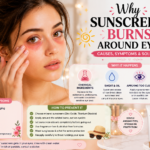
The skin around your eyes is among the thinnest and most sensitive areas on your body. When sunscreen migrates into your eyes due to sweat, tears, or oily skin, certain ingredients can irritate the eye surface.
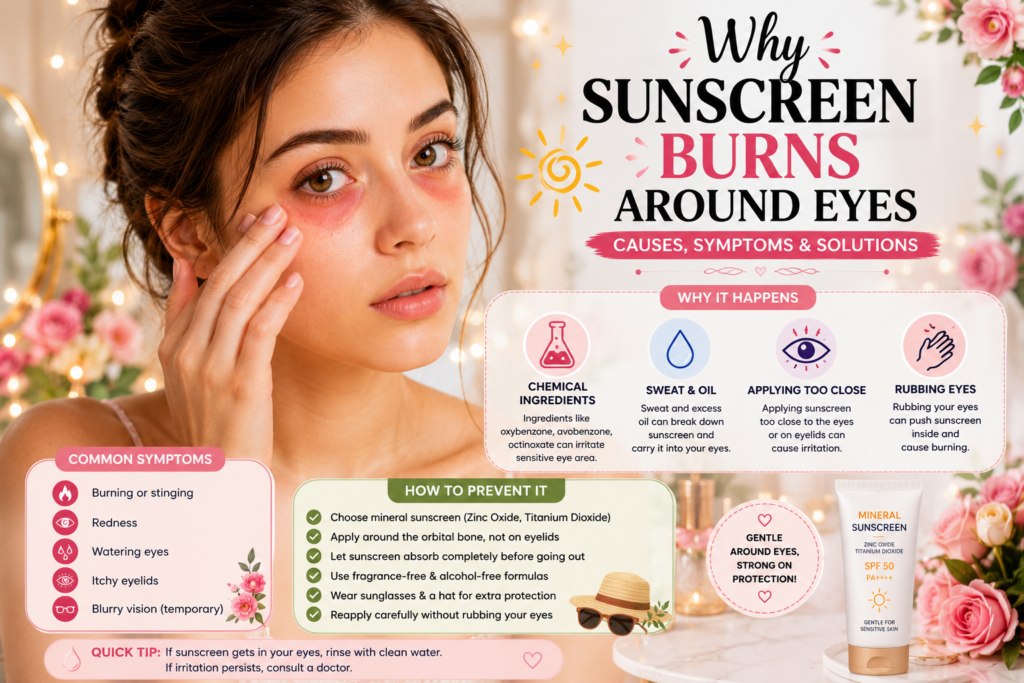
Common symptoms include:
- Burning sensation
- Stinging
- Watery eyes
- Redness
- Itchy eyelids
- Blurry vision (temporary)
- Feeling like something is in your eye
These symptoms usually improve after rinsing your eyes thoroughly with clean water.
Main Reasons Sunscreen Burns Around the Eyes
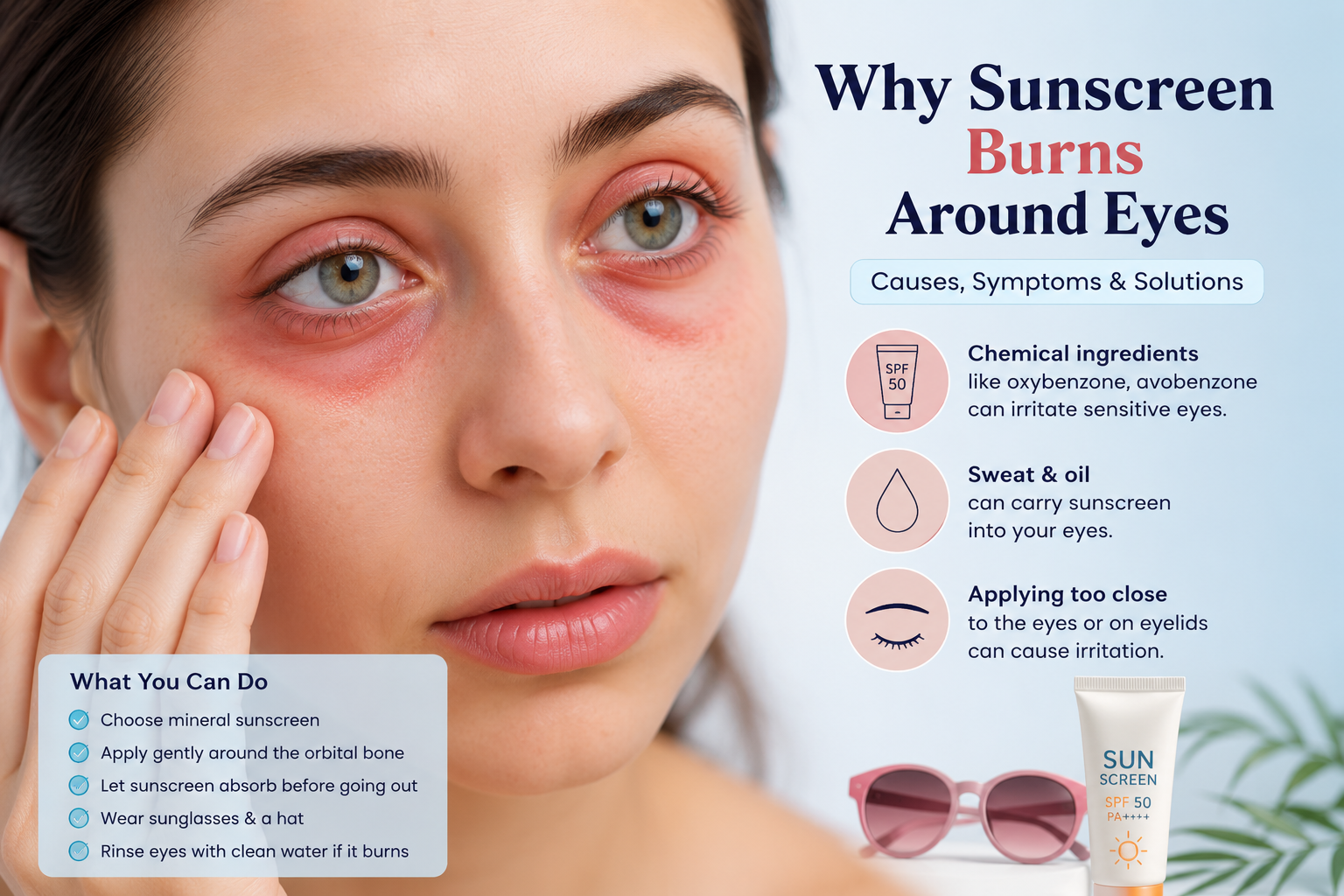
1. Chemical UV Filters
The biggest cause is chemical sunscreen ingredients.
Common chemical filters include:
- Avobenzone
- Oxybenzone
- Octinoxate
- Octocrylene
- Homosalate
- Octisalate
These ingredients absorb UV rays and convert them into heat. While effective, they may cause irritation when they get into your eyes.
2. Sweat Carries Sunscreen Into Eyes
Even if you apply sunscreen correctly, sweating can cause it to move.
This is common during:
- Outdoor exercise
- Running
- Walking
- Beach trips
- Hot weather
- Humid climates
As sunscreen mixes with sweat, it can drip into the eyes and trigger burning.
3. Oily Skin
People with oily skin often notice sunscreen sliding down the face throughout the day.
Excess oil makes sunscreen more likely to migrate toward the eye area.
4. Applying Too Close to the Eyelids
Many people apply sunscreen directly on the upper eyelid or along the lash line.
As you blink, product can transfer into the eye.
Instead, apply sunscreen around the orbital bone (the bony area surrounding the eye), allowing it to spread naturally without getting too close.
5. Fragrance and Alcohol
Some sunscreens contain:
- Fragrance
- Essential oils
- Denatured alcohol
6. Sensitive Skin
People with:
- Rosacea
- Eczema
- Dry skin
- Sensitive skin
may experience stronger reactions around the eyes.
7. Allergic Contact Dermatitis
Although less common, some people develop an allergy to specific sunscreen ingredients.
Signs include:
- Swelling
- Persistent redness
- Rash
- Peeling
- Itching lasting several days
If this happens repeatedly, consult a dermatologist for evaluation.
Chemical vs. Mineral Sunscreen
Chemical Sunscreens
Pros
- Lightweight
- Invisible finish
- Easy to wear under makeup
Cons
- More likely to sting eyes
- May irritate sensitive skin
- Can migrate with sweat
Mineral Sunscreens
Active ingredients:
- Zinc Oxide
- Titanium Dioxide
Benefits
- Less likely to sting
- Gentle on sensitive skin
- Good for children
- Better for the eye area
The main drawback is that some formulas may leave a white cast, though newer versions are often more cosmetically elegant.
Ingredients Most Likely to Cause Eye Irritation
- Oxybenzone
- Avobenzone
- Octinoxate
- Octocrylene
- Homosalate
- Fragrance
- Essential oils
- High concentrations of alcohol
Ingredients Usually Better Around Eyes
- Zinc Oxide
- Titanium Dioxide
- Ceramides
- Glycerin
- Hyaluronic Acid
- Panthenol
- Centella Asiatica
- Aloe Vera
These ingredients are generally soothing or moisturizing and are often found in formulations suitable for sensitive skin.
How to Prevent Sunscreen from Burning Your Eyes
1. Choose Mineral Sunscreen
Look for formulas containing Zinc Oxide and/or Titanium Dioxide.
2. Let Sunscreen Dry
Wait about 10–15 minutes after applying sunscreen before going outside or exercising so it can set.
3. Don’t Apply Too Close to Eyes
Apply around the orbital bone rather than directly on the eyelids or lash line.
4. Use a Sunscreen Stick Around Eyes
Sunscreen sticks tend to stay in place better than lotions and are less likely to run into your eyes.
5. Wear Sunglasses
Sunglasses reduce the need to squint and help limit sweat reaching the eye area.
6. Wear a Hat
A wide-brimmed hat provides extra shade and can reduce sweating on the forehead.
7. Reapply Carefully
Avoid rubbing sunscreen into your eyes during reapplication. Wash or dry your hands before touching the eye area.
What to Do If Sunscreen Gets in Your Eyes
- Do not rub your eyes.
- Rinse with plenty of clean, lukewarm water or sterile saline solution.
- Blink several times while rinsing.
- Remove contact lenses if you wear them.
- Use preservative-free lubricating eye drops if irritation persists.
- Seek medical care if you have severe pain, persistent redness, vision changes, or symptoms that do not improve after rinsing.
Best Sunscreen Types for Sensitive Eyes
Look for products labeled:
- Mineral sunscreen
- Sensitive skin
- Fragrance-free
- Ophthalmologist-tested
- Non-irritating
- Alcohol-free
- Hypoallergenic
Who Is Most Likely to Experience Eye Irritation?
- People with sensitive skin
- Individuals with dry eyes
- Contact lens wearers
- Outdoor athletes
- People with oily skin
- Those who sweat heavily
- People using chemical sunscreens
Tips for Wearing Sunscreen Around the Eyes
- Apply moisturizer first if your skin is dry.
- Use a gentle mineral sunscreen around the eyes.
- Allow sunscreen to dry before makeup.
- Avoid rubbing your face throughout the day.
- Reapply every two hours when outdoors, or after swimming or heavy sweating.
Frequently Asked Questions
Can sunscreen permanently damage my eyes?
Most accidental exposures cause only temporary irritation. However, severe pain, ongoing redness, or changes in vision should be evaluated by a healthcare professional.
Is it safe to put sunscreen on eyelids?
It’s best to avoid the lash line. A gentle mineral sunscreen can be applied carefully around the orbital bone, and it will naturally provide some coverage to nearby skin.
Why does only one sunscreen burn my eyes?
Different products use different UV filters and inactive ingredients. You may tolerate one formula but react to another.
Does SPF 50 burn more than SPF 30?
Not necessarily. Eye irritation is more closely related to the ingredients and formulation than to the SPF number.
Which Sunscreen Ingredients Are Most Likely to Cause Burning?
Some ingredients are more commonly associated with eye irritation.
Chemical UV Filters
These absorb UV rays but may sting if they reach the eye.
Examples include:
- Avobenzone
- Octinoxate
- Octocrylene
- Oxybenzone
- Homosalate
- Octisalate
Not everyone reacts to these ingredients, but they are frequent causes of eye discomfort.
Fragrance
Added fragrance can increase irritation, especially around sensitive skin.
Alcohol
Some lightweight sunscreens contain alcohol to create a fast-drying finish. Alcohol may dry and irritate the delicate skin around the eyes.
Essential Oils
Ingredients such as peppermint, citrus, or eucalyptus oils can increase stinging if they come into contact with the eyes.
Mineral Sunscreens Are Often Better
Mineral sunscreens use:
- Zinc Oxide
- Titanium Dioxide
Instead of absorbing UV rays, these ingredients form a protective barrier on the skin that reflects and scatters UV radiation. They are generally less likely to irritate the eyes, making them a good choice for people with sensitive skin or those who experience frequent eye burning.
Does SPF Number Matter?
Many people believe higher SPF causes more irritation.
In reality:
- SPF 30
- SPF 50
- SPF 70
can all sting if they contain irritating ingredients. The sunscreen formula and ingredients are usually more important than the SPF value itself.
Skin Conditions That Increase Eye Sensitivity
Certain skin conditions make irritation more likely.
Eczema
People with eczema have a weakened skin barrier, making the eye area more sensitive.
Rosacea
Rosacea often causes burning and redness that can worsen with certain sunscreen ingredients.
Allergic Skin
People with allergies may react to preservatives, fragrances, or UV filters.
Dry Skin
Dry skin has tiny cracks in its protective barrier, allowing irritating ingredients to penetrate more easily.
How Makeup Can Make It Worse
Layering products can increase the chance of irritation.
For example:
- Sunscreen
- Primer
- Foundation
- Concealer
can mix together and migrate into the eyes, especially in warm weather.
Using lightweight, long-wearing products may reduce this problem.
Can Sunscreen Damage Your Eyes?
Most cases cause only temporary irritation.
Symptoms usually improve within a few minutes after rinsing.
However, seek medical attention if you experience:
- Severe eye pain
- Vision changes
- Persistent redness
- Swelling
- Light sensitivity
- Symptoms lasting several hours after rinsing
How to Apply Sunscreen Around the Eyes Safely
Step 1
Apply moisturizer first if your skin is dry.
Step 2
Use a mineral sunscreen around the eye area.
Step 3
Apply only to the orbital bone (the bony area around the eye), not directly on the lash line.
Step 4
Let sunscreen set for 10–15 minutes before going outdoors.
Step 5
Wear sunglasses and a hat for additional UV protection.
Common Mistakes to Avoid
- Applying sunscreen directly on the eyelids or eyelashes.
- Rubbing your eyes after application.
- Using heavily fragranced sunscreens.
- Applying too much product around the eyes.
- Reapplying without first removing sweat or excess oil.
- Choosing a sunscreen that isn’t suitable for sensitive skin.
Tips for Athletes and Outdoor Activities
If you spend time outdoors:
- Choose a sweat-resistant sunscreen.
- Wear a headband to reduce sweat running into your eyes.
- Use a sunscreen stick around the eye area, as it is less likely to drip.
- Reapply after heavy sweating according to the product instructions.
Children and Eye Irritation
Children are more likely to rub their eyes, increasing the chance of irritation.
To reduce discomfort:
- Choose mineral sunscreens formulated for children.
- Apply carefully, avoiding the eyelids and lash line.
- Encourage children to avoid rubbing their eyes after application.
Top 6 Best Sunscreens That Don’t Burn Around the Eyes
If you have sensitive eyes, look for fragrance-free, alcohol-free, or mineral sunscreens. These formulas are much less likely to sting or cause watery eyes.
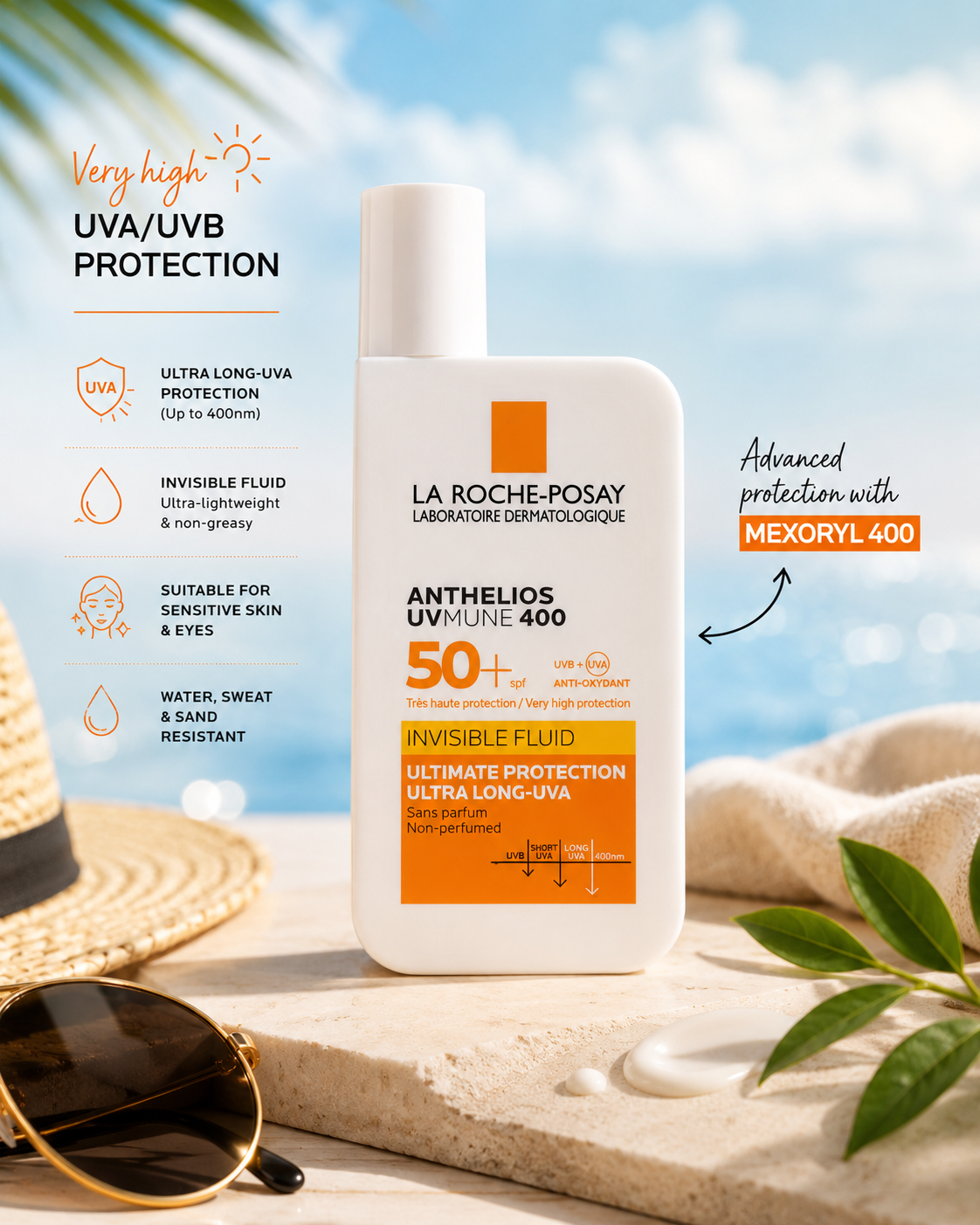
1. La Roche-Posay Anthelios UVMune 400 Invisible Fluid SPF 50+
Best Overall
Why it’s great:
- Very lightweight
- Designed for sensitive skin
- Highly water- and sweat-resistant
- Minimal eye irritation for many users
Best for:
- All skin types
- Daily use
- Outdoor activities
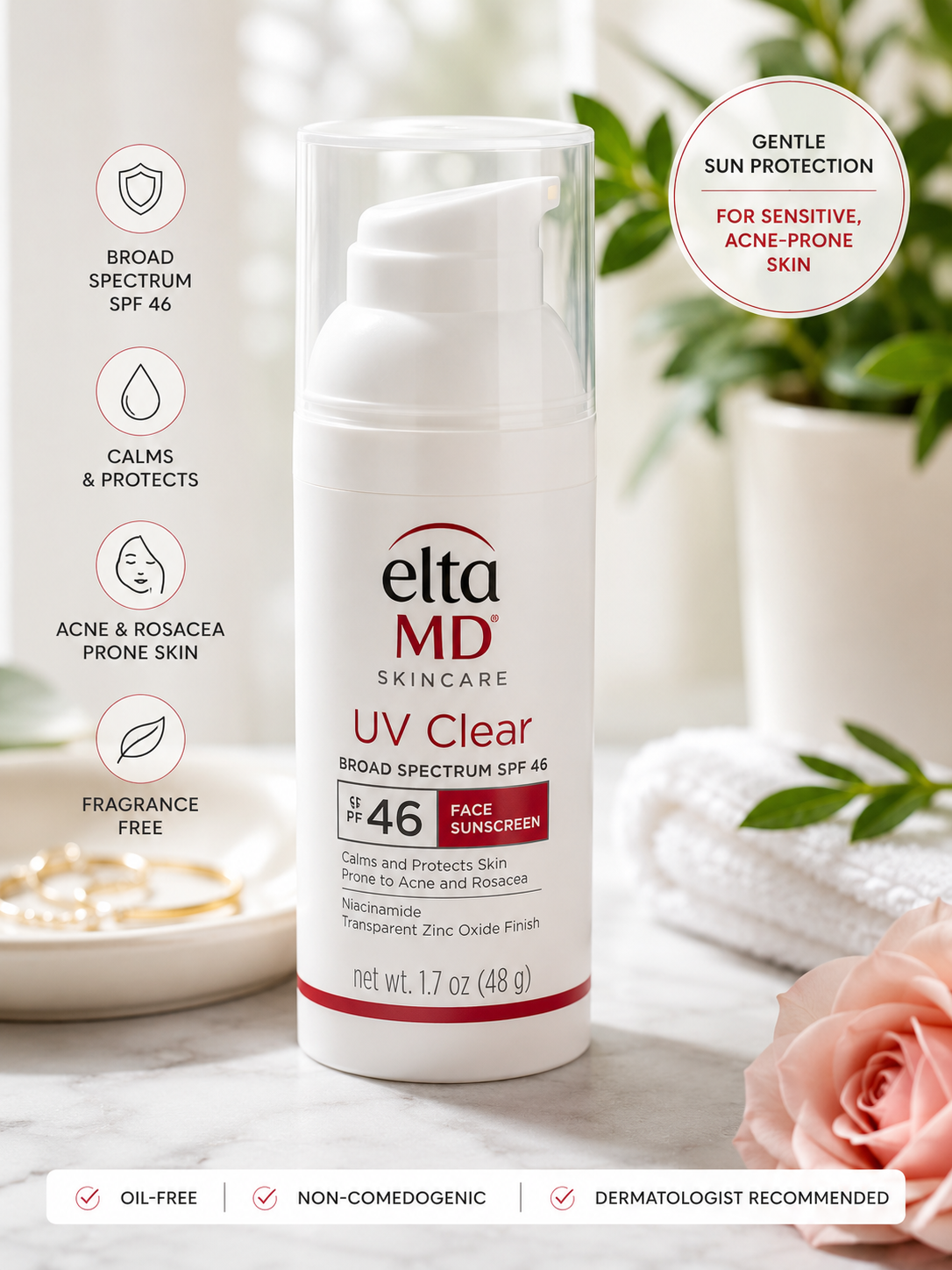
2. EltaMD UV Clear Broad-Spectrum SPF 46
Best for Sensitive & Acne-Prone Skin
Key ingredients:
- Zinc Oxide
- Niacinamide
Benefits:
- Gentle around the eyes
- Fragrance-free
- Lightweight
- Helps calm redness
Best for:
- Acne-prone skin
- Rosacea
- Sensitive skin
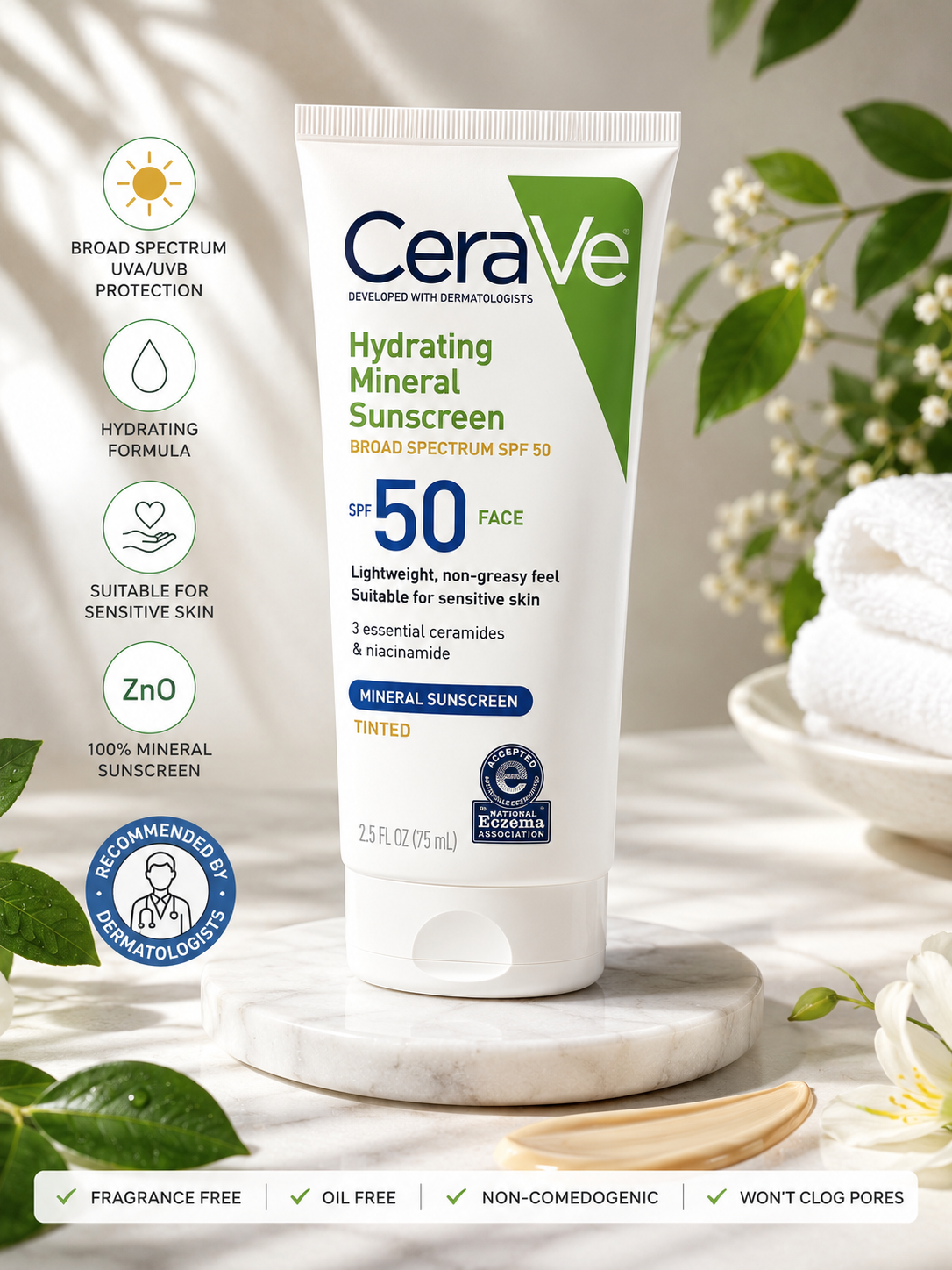
3. CeraVe Hydrating Mineral Sunscreen Face SPF 50
Best Mineral Sunscreen
Key ingredients:
- Zinc Oxide
- Titanium Dioxide
- Ceramides
Benefits:
- Very low risk of eye stinging
- Supports the skin barrier
- Fragrance-free
- Suitable for sensitive skin
Best for:
- Dry skin
- Sensitive skin
- People whose eyes sting with chemical sunscreens
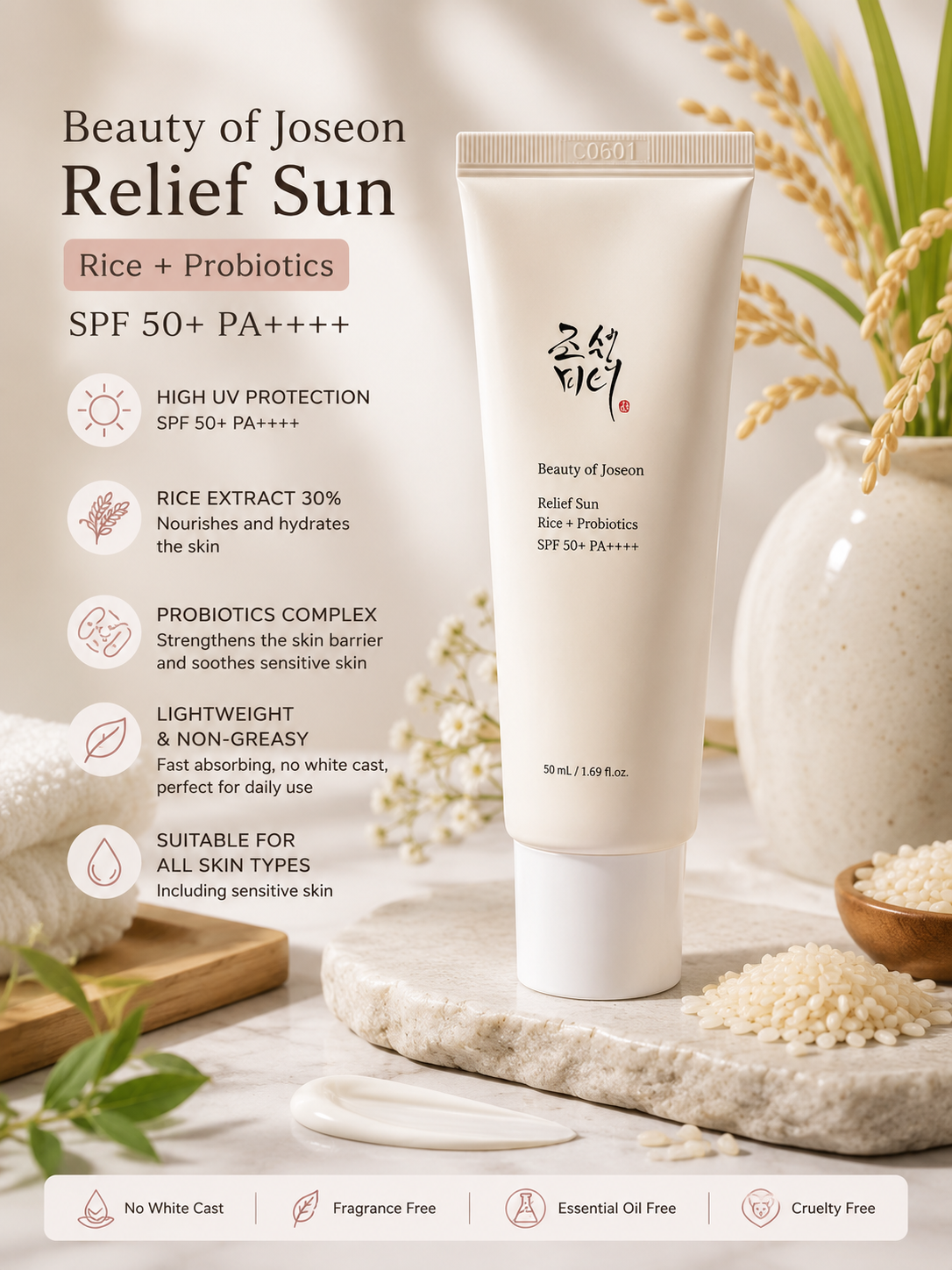
4. Beauty of Joseon Relief Sun: Rice + Probiotics SPF 50+ PA++++
Best Korean Sunscreen
Benefits:
- Lightweight lotion texture
- Hydrating
- Comfortable for daily wear
- Many users report little to no eye irritation
Best for:
- Normal skin
- Combination skin
- Dry skin
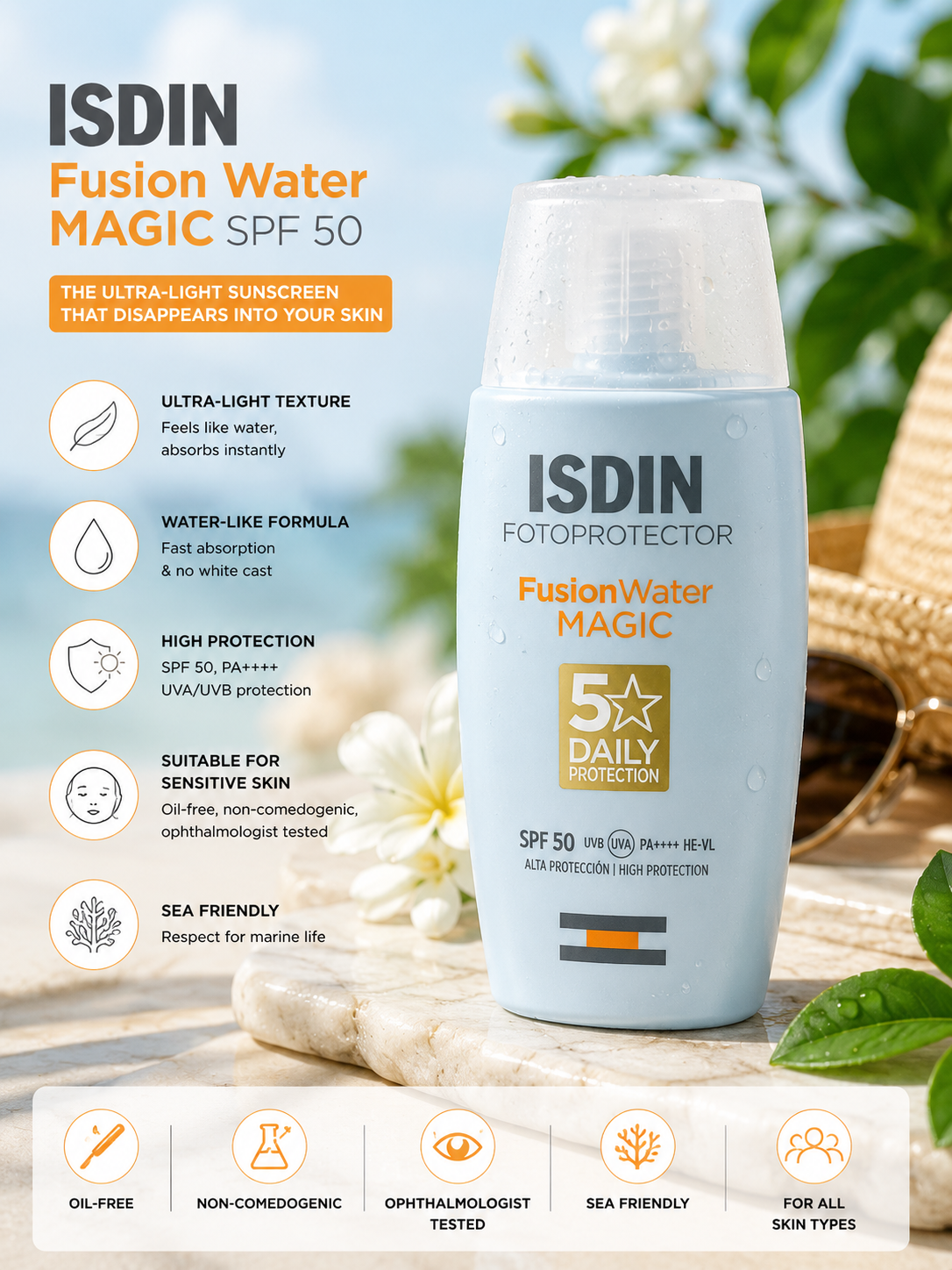
5. ISDIN Fusion Water Magic SPF 50
Best for Oily Skin
Benefits:
- Ultra-light texture
- Absorbs quickly
- Doesn’t feel greasy
- Formulated with eye comfort in mind
Best for:
- Oily skin
- Combination skin
- Humid climates
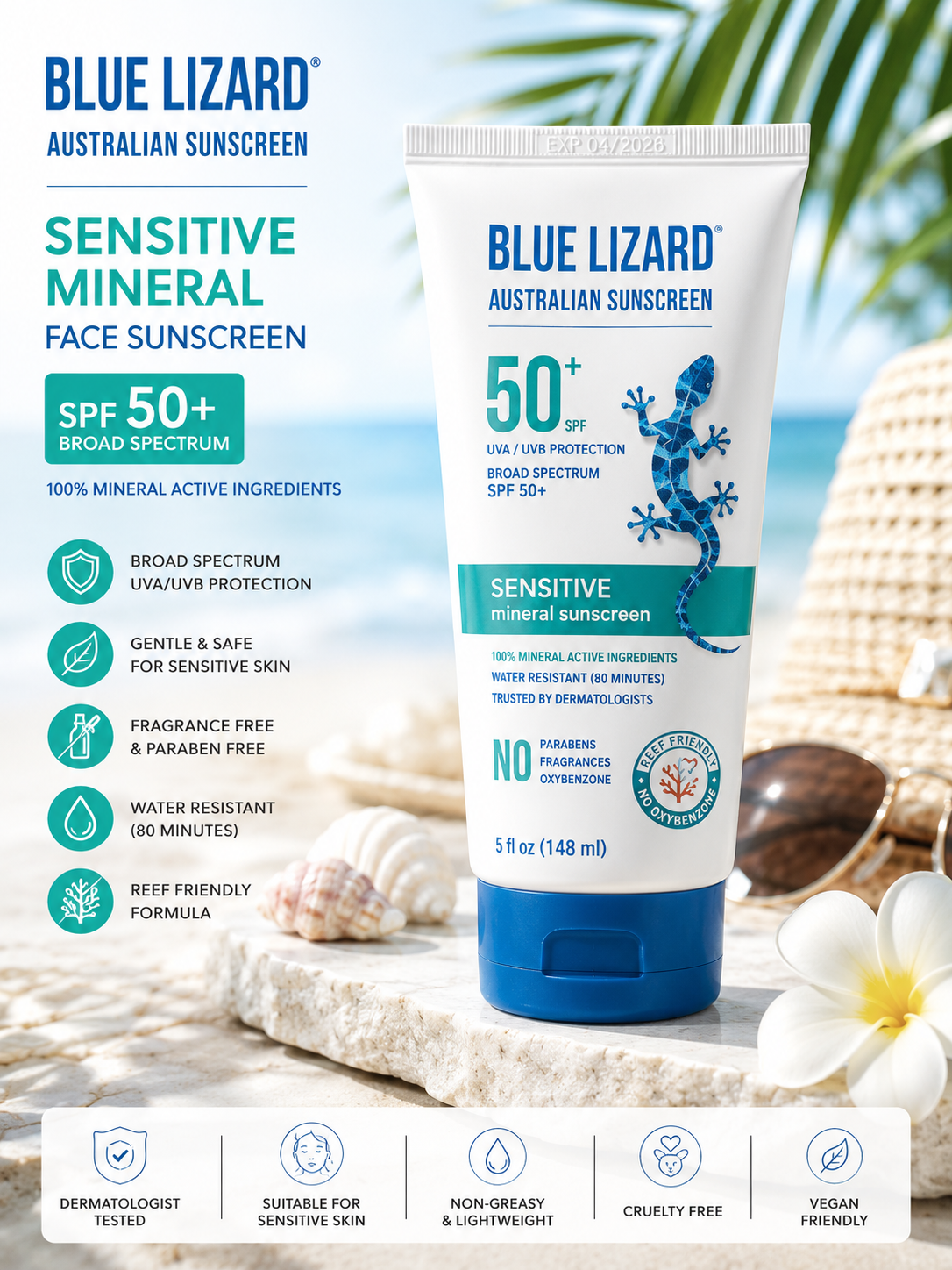
6. Blue Lizard Sensitive Mineral Face Sunscreen SPF 50+
Best for Very Sensitive Eyes
Key ingredients:
- Zinc Oxide
- Titanium Dioxide
Benefits:
- Mineral formula
- Fragrance-free
- Gentle on sensitive skin
- Excellent for people who experience frequent eye burning
Best for:
- Sensitive skin
- Children
- Outdoor sports
Quick Comparison
| Sunscreen | Best For | Eye-Friendly |
|---|---|---|
| La Roche-Posay Anthelios UVMune 400 | Overall protection | ⭐⭐⭐⭐⭐ |
| EltaMD UV Clear SPF 46 | Acne-prone & sensitive skin | ⭐⭐⭐⭐⭐ |
| CeraVe Hydrating Mineral SPF 50 | Dry & sensitive skin | ⭐⭐⭐⭐⭐ |
| Beauty of Joseon Relief Sun | Everyday hydration | ⭐⭐⭐⭐☆ |
| ISDIN Fusion Water Magic SPF 50 | Oily skin | ⭐⭐⭐⭐☆ |
| Blue Lizard Sensitive SPF 50+ | Very sensitive eyes | ⭐⭐⭐⭐⭐ |
Experiencing a burning or stinging sensation around your eyes after applying sunscreen is a common issue, but it doesn’t mean you should stop using sunscreen altogether. In most cases, the irritation is caused by chemical UV filters, sunscreen migrating into the eyes through sweat or oil, or using a formula that isn’t suitable for sensitive skin.
The best solution is to choose a gentle, fragrance-free mineral sunscreen containing zinc oxide and/or titanium dioxide, apply it carefully around the orbital bone rather than directly on the eyelids, and allow it to dry completely before going outdoors or exercising. If you continue to experience persistent redness, swelling, or severe discomfort despite switching products, consult a dermatologist or eye care professional to rule out an allergy or another underlying condition.
Remember, the skin around your eyes is especially vulnerable to UV damage and premature aging, so protecting it is essential. By selecting the right sunscreen and applying it correctly, you can enjoy effective sun protection without the uncomfortable burning sensation.