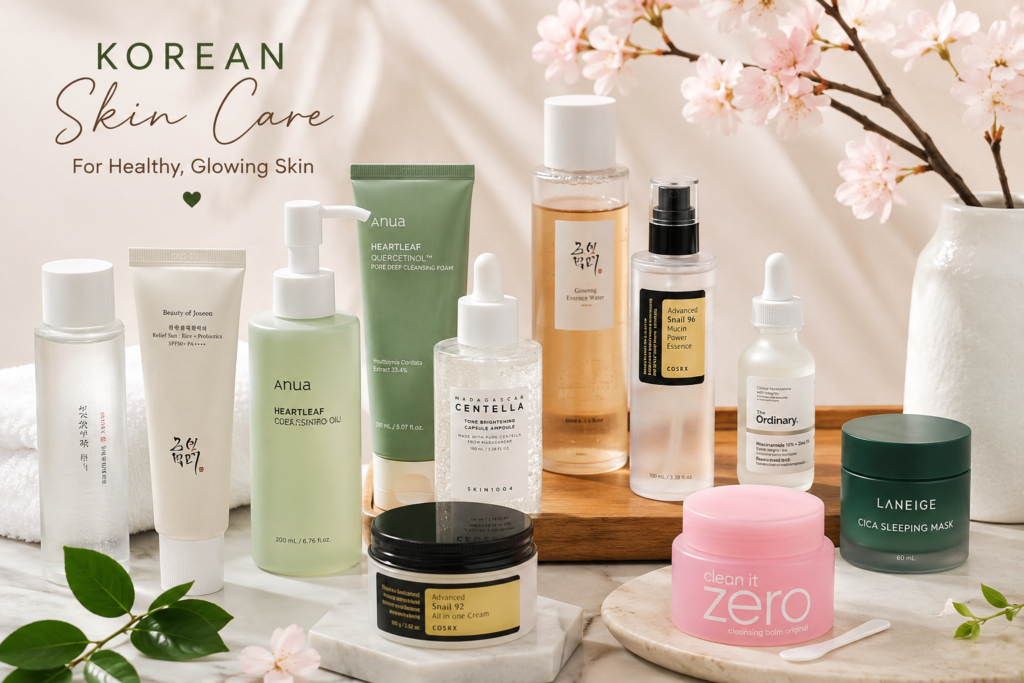
Why Korean Skincare Works on Indian Skin: Complete Guide
Korean skincare has become incredibly popular in India over the past few years—and for good reason. Many Korean skincare products focus on hydration, skin barrier repair, gentle ingredients, and long-term skin health rather than quick fixes. Since Indian skin often faces challenges like intense sun exposure, pollution, humidity, and pigmentation, many Korean products can work very well when chosen correctly.
However, not every Korean product suits every Indian skin type. The key is selecting products based on your skin concerns instead of simply following trends.
Does Korean Skincare Really Work on Indian Skin?
Yes. Korean skincare can be highly effective for Indian skin because skin biology is similar across ethnicities. The biggest differences are:
- Climate
- Lifestyle
- Sun exposure
- Individual skin type
- Skin concerns
Indian skin generally contains more melanin than East Asian skin, making it more prone to:
- Hyperpigmentation
- Acne marks
- Tanning
- Melasma
- Post-inflammatory pigmentation (PIH)
Fortunately, many Korean products are specifically designed to soothe inflammation, hydrate the skin, and strengthen the skin barrier, which also benefits Indian skin.
Why Korean Skincare Is Popular
1. Focuses on Healthy Skin Instead of Makeup
Korean beauty believes healthy skin is more important than hiding imperfections with makeup.
The goal is:
- Clear skin
- Hydrated skin
- Bright complexion
- Smooth texture
- Strong skin barrier
2. Gentle Ingredients
Many Korean products avoid harsh formulations.
Common soothing ingredients include:
- Centella Asiatica
- Heartleaf
- Green Tea
- Rice Extract
- Mugwort
- Snail Mucin
- Ceramides
- Panthenol
These ingredients calm irritated skin while improving hydration.
3. Excellent Hydration
Hydrated skin naturally appears:
- Healthier
- More radiant
- Softer
- Less irritated
Korean skincare often uses:
- Hyaluronic Acid
- Beta Glucan
- Glycerin
- Birch Sap
- Bamboo Water
These ingredients attract moisture without making the skin greasy.
4. Repairs the Skin Barrier
Many Indian skincare problems come from a damaged skin barrier caused by:
- Over-exfoliation
- Strong face washes
- Pollution
- UV rays
- Acne treatments
Korean moisturizers often contain:
- Ceramides
- Cholesterol
- Fatty acids
- Panthenol
These help restore and protect the skin barrier.
5. Lightweight Formulas
Unlike some heavier creams, Korean products are often:
- Gel-based
- Lightweight
- Fast absorbing
- Non-greasy
This makes them suitable for India’s humid climate.
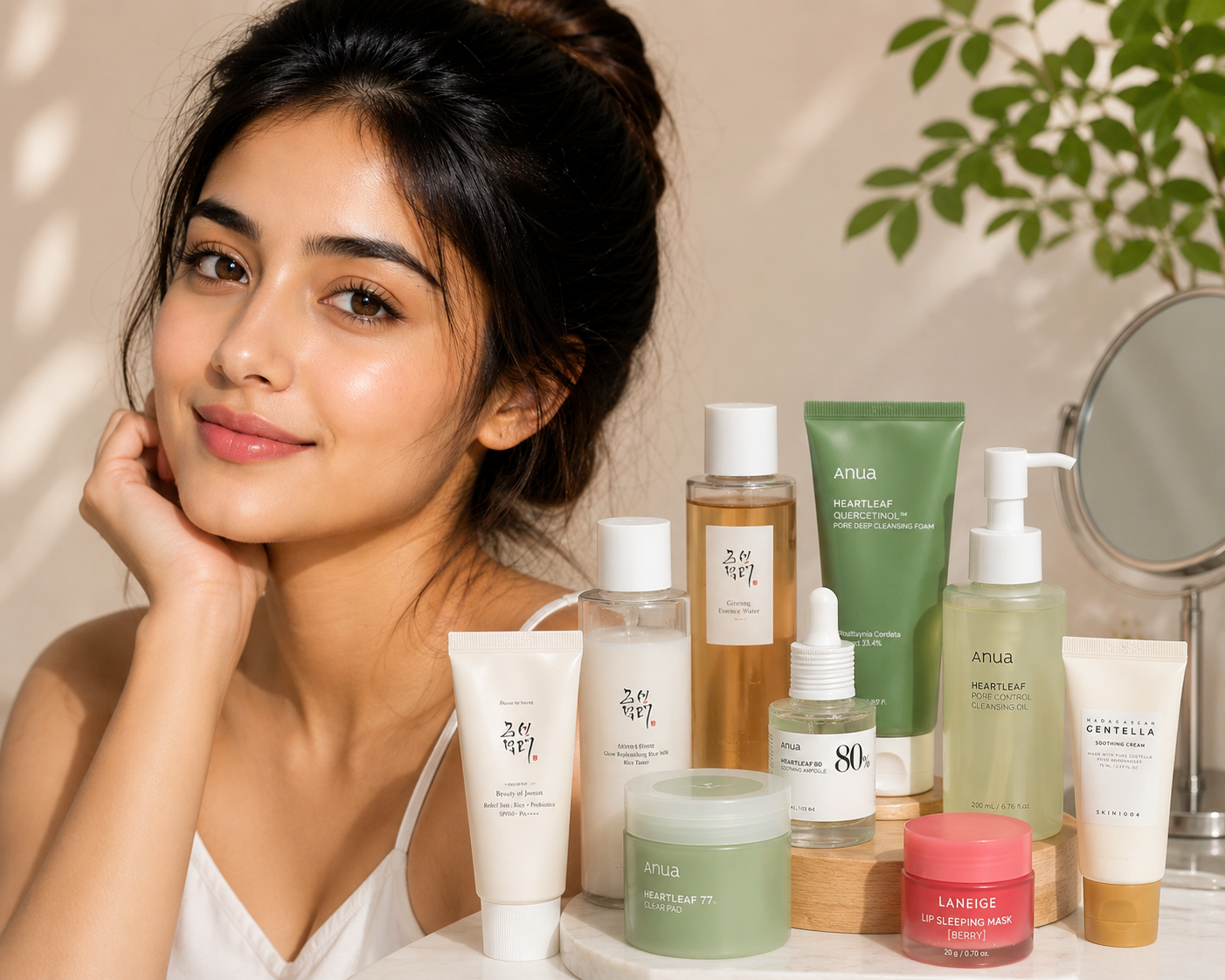
Benefits for Indian Skin
Acne-Prone Skin
Many Korean products help:
- Reduce redness
- Calm inflammation
- Balance oil production
- Repair acne damage
Helpful ingredients:
- Tea Tree
- Centella
- Heartleaf
- Niacinamide
Pigmentation
Indian skin is more likely to develop pigmentation.
Korean skincare commonly includes:
- Niacinamide
- Alpha Arbutin
- Rice Extract
- Vitamin C
- Licorice Root
These ingredients can gradually improve uneven skin tone.
Dry Skin
Korean moisturizers provide long-lasting hydration without feeling heavy.
Look for:
- Ceramides
- Hyaluronic Acid
- Squalane
- Panthenol
Oily Skin
Many Korean products are designed to hydrate without clogging pores.
They help:
- Balance oil
- Reduce dehydration
- Minimize shine
- Improve texture
Sensitive Skin
Korean skincare often avoids harsh alcohols and focuses on calming ingredients, making many products suitable for sensitive skin.
Best Korean Ingredients for Different Indian Skin Types
| Skin Type | Recommended Ingredients |
|---|---|
| Oily Skin | Niacinamide, Heartleaf, Green Tea |
| Dry Skin | Ceramides, Hyaluronic Acid, Squalane |
| Acne-Prone Skin | Centella, Tea Tree, Heartleaf |
| Sensitive Skin | Mugwort, Panthenol, Centella |
| Pigmented Skin | Vitamin C, Alpha Arbutin, Rice Extract |
| Combination Skin | Snail Mucin, Niacinamide, Hyaluronic Acid |
Korean Skincare Steps
A full Korean routine can include up to 10 steps, but most people don’t need all of them.
A simple routine for Indian skin is:
Morning
- Gentle Cleanser
- Hydrating Toner
- Serum
- Moisturizer
- Sunscreen (SPF 50+)
Night
- Cleanser
- Toner
- Treatment Serum
- Moisturizer
This 4–5 step routine is usually enough for healthy skin.
Does Korean Skincare Help with Acne Marks?
Yes, many products help fade post-acne marks over time.
Look for ingredients such as:
- Niacinamide
- Vitamin C
- Alpha Arbutin
- Centella
- Snail Mucin
Results typically take several weeks to months with consistent use.
Does It Work in India’s Hot Climate?
Yes, provided you choose products suited to your skin type.
Summer
- Gel moisturizer
- Lightweight sunscreen
- Hydrating toner
Winter
- Rich cream
- Ceramide moisturizer
- Sleeping mask
Common Myths
Myth 1: Korean skincare is only for Korean skin.
Fact: Skin responds to ingredients, not nationality. Many formulas work well across different ethnicities.
Myth 2: Everyone needs a 10-step routine.
Fact: A few well-chosen products are often sufficient.
Myth 3: It gives instant glass skin.
Fact: Healthy-looking skin develops with consistent care, not overnight.
Myth 4: Korean products don’t suit oily skin.
Fact: Many are specifically formulated to be lightweight and suitable for oily or combination skin.
Possible Drawbacks
- Some products may contain fragrance, which can irritate sensitive skin.
- Certain creams may feel too rich in very humid weather.
- Imported products can be more expensive than local alternatives.
- Counterfeit products exist, so buy from trusted retailers.
- A complex routine can become unnecessary or irritating if too many active ingredients are layered.
Tips Before Buying
- Know your skin type.
- Introduce one new product at a time.
- Patch-test new products before full use.
- Use sunscreen every morning.
- Be consistent—results take time.
- Choose products based on ingredients and your concerns rather than social media trends.
Who Should Try Korean Skincare?
Korean skincare can be a good option if you have:
- Dry or dehydrated skin
- Oily or combination skin
- Sensitive skin
- Acne-prone skin
- Uneven skin tone
- Post-acne pigmentation
- A weakened skin barrier
More Information About Why Korean Skincare Works in Indian Skin
1. Similar Skin Biology
One of the biggest reasons Korean skincare works on Indian skin is that human skin functions similarly regardless of ethnicity. While Indian skin generally has more melanin than Korean skin, the basic structure of the skin—epidermis, dermis, skin barrier, and moisture balance—is the same. This means ingredients that hydrate, repair, and protect the skin can benefit people across different skin tones.
2. Designed to Strengthen the Skin Barrier
The skin barrier is your body’s first line of defense against:
- Pollution
- UV rays
- Dust
- Bacteria
- Moisture loss
India’s hot weather, pollution, and frequent sun exposure can weaken the skin barrier. Korean skincare emphasizes barrier-repair ingredients such as:
- Ceramides
- Panthenol (Vitamin B5)
- Squalane
- Centella Asiatica
- Beta-Glucan
A healthy skin barrier leads to:
- Less irritation
- Reduced redness
- Better hydration
- Fewer breakouts
- Stronger protection against environmental damage
3. Excellent Hydration Without Greasiness
Many people think oily skin doesn’t need moisturizer. In reality, dehydrated skin can produce even more oil.
Korean skincare focuses on layering lightweight hydration with ingredients like:
- Hyaluronic Acid
- Glycerin
- Birch Sap
- Bamboo Water
- Betaine
These ingredients deeply hydrate without clogging pores, making them ideal for oily and combination skin common in India.
4. Focus on Prevention Instead of Treatment
Many skincare routines only address problems after they appear.
Korean skincare emphasizes preventing issues by:
- Keeping skin hydrated
- Protecting the skin barrier
- Wearing sunscreen daily
- Using antioxidants
- Maintaining consistent skincare habits
This proactive approach supports healthier skin over time.
5. Lightweight Sunscreens
Many people skip sunscreen because traditional formulas can feel thick or leave a white cast.
Korean sunscreens are often:
- Lightweight
- Fast-absorbing
- Comfortable under makeup
- Less likely to leave a white cast
- Suitable for daily use
Daily sunscreen is especially important in India due to high UV exposure.
6. Rich in Natural and Fermented Ingredients
Many Korean formulations include fermented ingredients that may improve hydration and skin texture.
Common examples include:
- Fermented Rice
- Fermented Soybean
- Galactomyces Ferment Filtrate
- Bifida Ferment Lysate
These ingredients are often included to nourish and support healthy-looking skin.
Common Mistakes to Avoid
- Buying products only because they are trending.
- Using too many active ingredients at once.
- Skipping sunscreen.
- Not patch-testing new products.
- Expecting overnight “glass skin.”
- Choosing products without considering your skin type.
Can Korean Skincare Replace Indian Skincare?
Not necessarily. Korean skincare and Indian skincare can complement each other. Many Indian brands now offer formulations with ingredients like niacinamide, ceramides, hyaluronic acid, and centella. The best routine is one that suits your skin, regardless of the product’s country of origin.
Is Korean Skincare Worth It?
If chosen carefully, Korean skincare can be a worthwhile investment because it offers:
- Gentle, skin-friendly formulations
- Long-lasting hydration
- Skin barrier support
- Effective brightening ingredients
- Lightweight textures for humid weather
- Innovative formulations backed by modern skincare research
Final Thoughts
Korean skincare works well on Indian skin because it focuses on hydration, skin barrier repair, gentle formulations, and long-term skin health rather than relying on harsh treatments. These qualities make many Korean products effective for addressing common concerns among Indian skin types, such as dehydration, acne, pigmentation, sensitivity, and damage caused by sun exposure and pollution.
However, Korean skincare is not a one-size-fits-all solution. The best results come from choosing products that match your individual skin type and concerns instead of following every trend or adopting an extensive 10-step routine. A simple routine consisting of a gentle cleanser, hydrating moisturizer, targeted serum, and broad-spectrum sunscreen is often enough to achieve healthy, glowing skin.
Ultimately, beautiful skin is not determined by where a product is made but by using scientifically backed ingredients consistently and protecting your skin every day. When selected wisely and used regularly, Korean skincare can be an excellent option for Indian skin, helping to maintain a strong skin barrier, improve texture, reduce pigmentation, and promote a naturally radiant complexion over time.