Are Peptides Worth It? A Complete Guide
Peptides have become one of the most popular anti-aging skincare ingredients in recent years. They’re often marketed as collagen boosters that can reduce wrinkles, improve skin firmness, and strengthen the skin barrier. But are they really worth adding to your skincare routine?
The short answer is yes—for many people, peptides are worth it, but they are not miracle ingredients. Scientific evidence suggests that certain peptides can improve skin hydration, support collagen production, and reduce the appearance of fine lines over time. However, their effects are generally modest and depend heavily on the formulation and consistent use.
What Are Peptides?
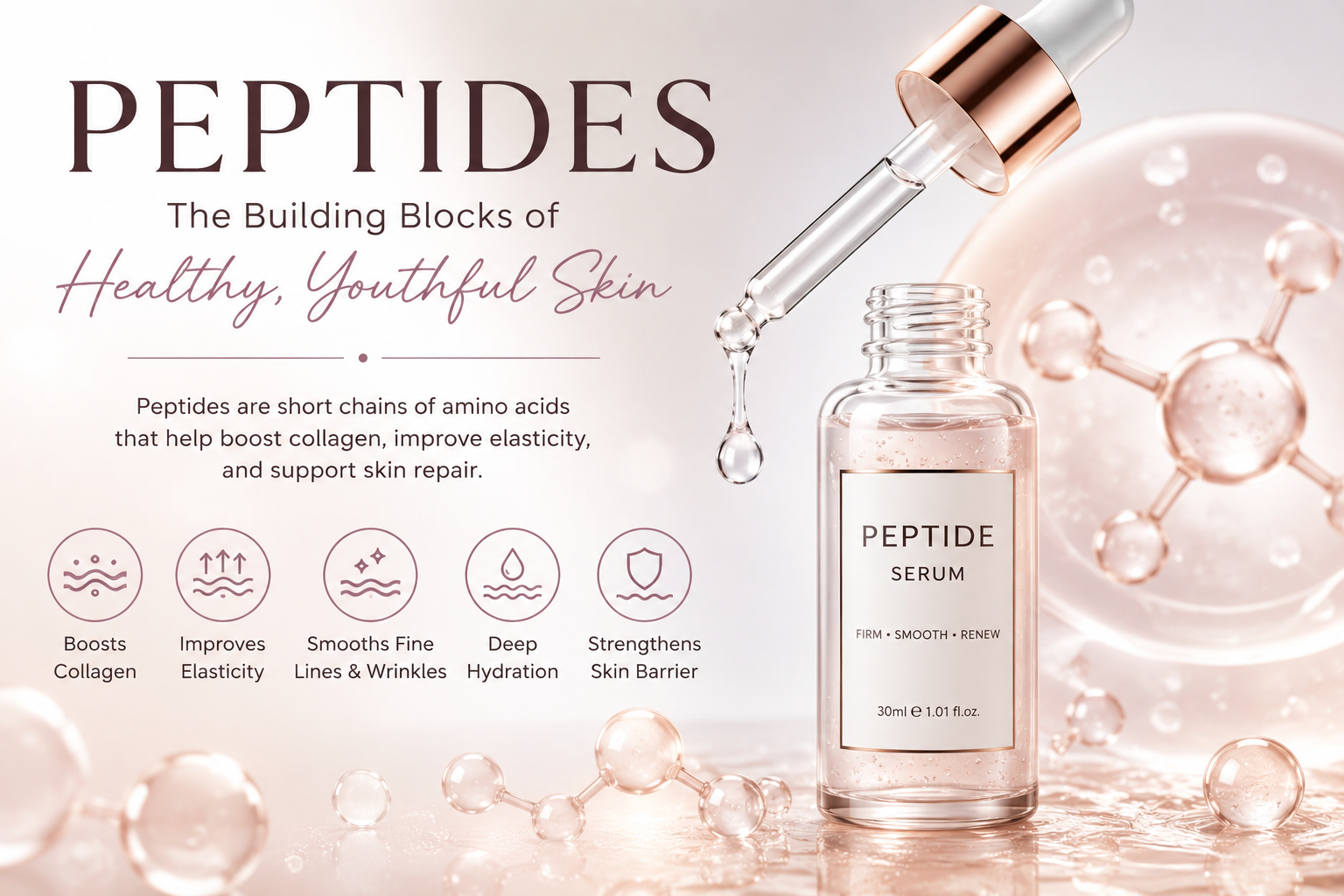
Peptides are short chains of amino acids, which are the building blocks of proteins like:
- Collagen
- Elastin
- Keratin
As we age, collagen production naturally declines. Certain peptides act as cell-signaling molecules, encouraging skin cells to produce more collagen and repair damaged skin.
How Do Peptides Work?
Different peptides perform different jobs in the skin.
1. Signal Peptides
These tell skin cells to produce more collagen and elastin.
Benefits:
- Firmer skin
- Fewer wrinkles
- Better elasticity
Examples:
- Matrixyl (Palmitoyl Pentapeptide-4)
- Matrixyl 3000
2. Carrier Peptides
These deliver minerals such as copper to skin cells.
Benefits:
- Skin repair
- Wound healing
- Improved collagen production
Example:
- Copper Tripeptide-1 (GHK-Cu)
3. Neurotransmitter Peptides
These relax facial muscles slightly, reducing expression lines.
Benefits:
- Softer forehead lines
- Reduced crow’s feet
Example:
- Argireline (Acetyl Hexapeptide-8)
4. Enzyme-Inhibiting Peptides
These help slow collagen breakdown.
Benefits:
- Healthier skin structure
- Longer-lasting firmness
Benefits of Peptides
1. Stimulate Collagen Production
Collagen keeps skin firm and youthful.
Peptides signal fibroblast cells to produce more collagen, helping reduce wrinkles over time.
2. Reduce Fine Lines
Regular use may improve:
- Smile lines
- Crow’s feet
- Forehead wrinkles
- Neck lines
Results are gradual rather than dramatic.
3. Improve Skin Firmness
Skin often feels:
- More elastic
- Firmer
- Smoother
4. Strengthen the Skin Barrier
Peptides help repair damaged skin, reducing moisture loss.
Benefits include:
- Less dryness
- Better hydration
- Stronger barrier function
5. Calm Sensitive Skin
Many peptide formulas have anti-inflammatory properties that can reduce redness and irritation.
6. Boost Hydration
Peptides work well alongside moisturizing ingredients.
Skin often appears:
- Plumper
- Softer
- More radiant
7. Support Skin Repair
Copper peptides especially may help support skin healing and recovery after minor damage.
Are Peptides Scientifically Proven?
Research is promising, but it’s not as strong as for ingredients like retinoids or sunscreen.
A recent systematic review found that oral and topical peptides may improve:
- Hydration
- Wrinkle appearance
- Skin brightness
- Roughness
However, evidence for improvements in elasticity and density was less consistent, and more high-quality studies are needed.
Who Should Use Peptides?
Peptides are especially suitable for:
✅ People over 25
✅ Dry skin
✅ Mature skin
✅ Sensitive skin
✅ Damaged skin barrier
✅ Fine lines
✅ Early signs of aging
Skin Types That Benefit Most
Dry Skin
Excellent choice.
Sensitive Skin
Usually well tolerated.
Combination Skin
Works well.
Oily Skin
Choose lightweight peptide serums.
Acne-Prone Skin
Can be beneficial if paired with non-comedogenic products.
When Will You See Results?
Most users notice:
2–4 weeks
- Better hydration
- Softer skin
6–8 weeks
- Improved texture
- Slight firmness
8–12 weeks
- Reduction in fine lines
- Brighter complexion
Consistency is key.
How to Use Peptides
Morning Routine
- Gentle cleanser
- Peptide serum
- Moisturizer
- Sunscreen SPF 30+
Night Routine
- Cleanser
- Peptide serum
- Moisturizer
Can Peptides Be Used with Other Ingredients?
Vitamin C
✔ Yes (many modern formulations are compatible).
Hyaluronic Acid
✔ Excellent combination.
Niacinamide
✔ Great together.
Ceramides
✔ Excellent for barrier repair.
Retinol
✔ Yes—many people use peptides in the morning and retinoids at night, or layer them if tolerated.
Sunscreen
✔ Essential every day.
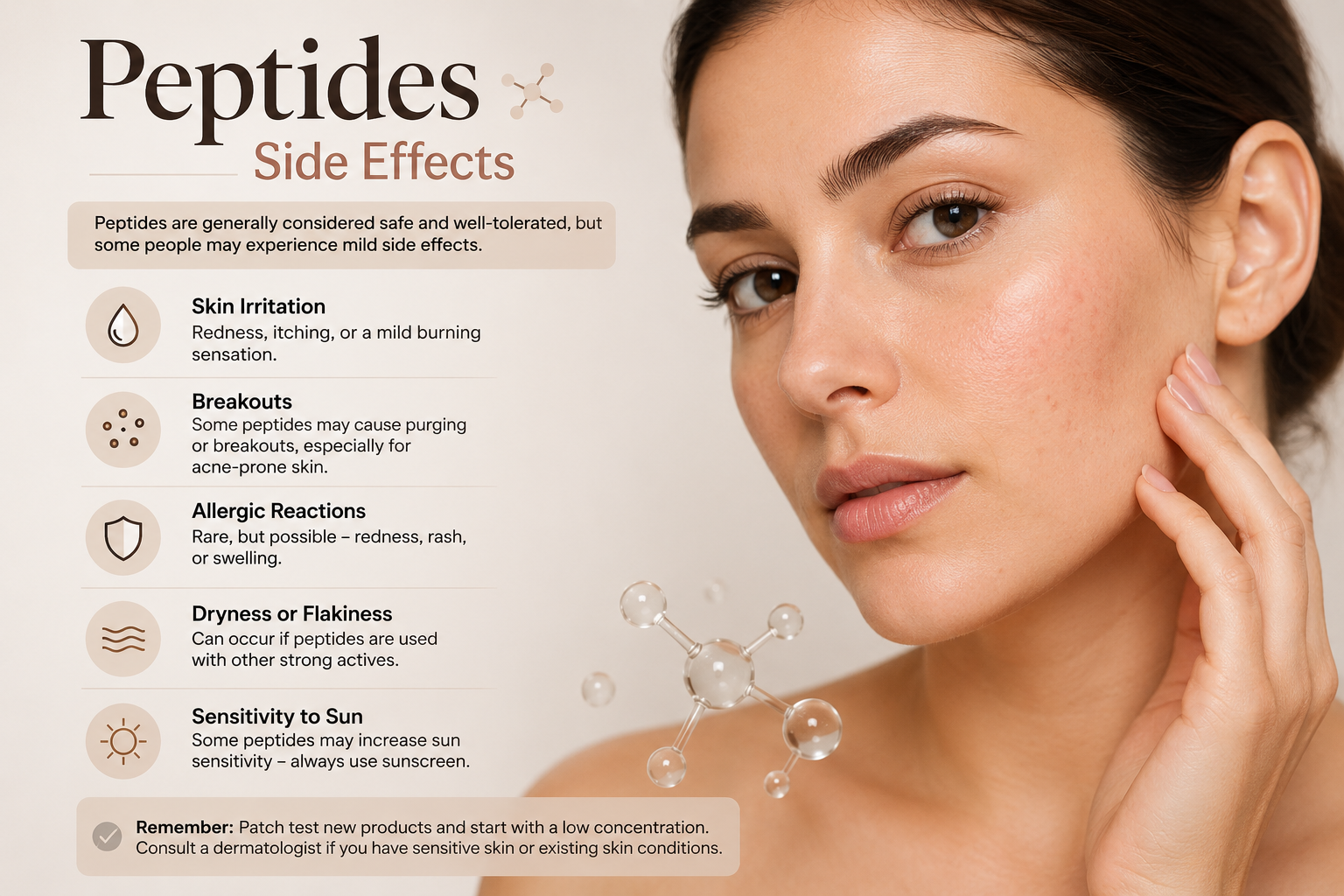
Side Effects
Peptides are considered one of the gentler skincare ingredients.
Possible side effects include:
- Mild redness
- Temporary irritation
- Allergic reaction (rare)
Patch testing new products is still recommended.
Advantages
- Gentle on sensitive skin
- Suitable for daily use
- Supports collagen production
- Helps strengthen the skin barrier
- Hydrates skin
- Reduces fine lines
- Can be combined with many other ingredients
- Minimal irritation compared with retinoids
Disadvantages
- Results are gradual
- Can be expensive
- Not every peptide has strong clinical evidence
- Product formulation matters a lot
- Won’t replace retinoids for anti-aging
Are Expensive Peptide Products Better?
Not necessarily.
A higher price doesn’t guarantee better results. Look for products that contain well-studied peptides (such as Matrixyl or copper peptides) in stable, well-formulated products rather than relying on luxury branding alone.
Common Myths
Myth: Peptides replace Botox.
Reality: No. They may soften the appearance of expression lines but do not produce Botox-like results.
Myth: Peptides work overnight.
Reality: Visible improvements usually take several weeks.
Myth: More peptides mean better results.
Reality: Product formulation and peptide type are more important than the number of peptides listed.
Myth: Peptides are only for older people.
Reality: They can also be used preventively by adults in their mid-20s and beyond.
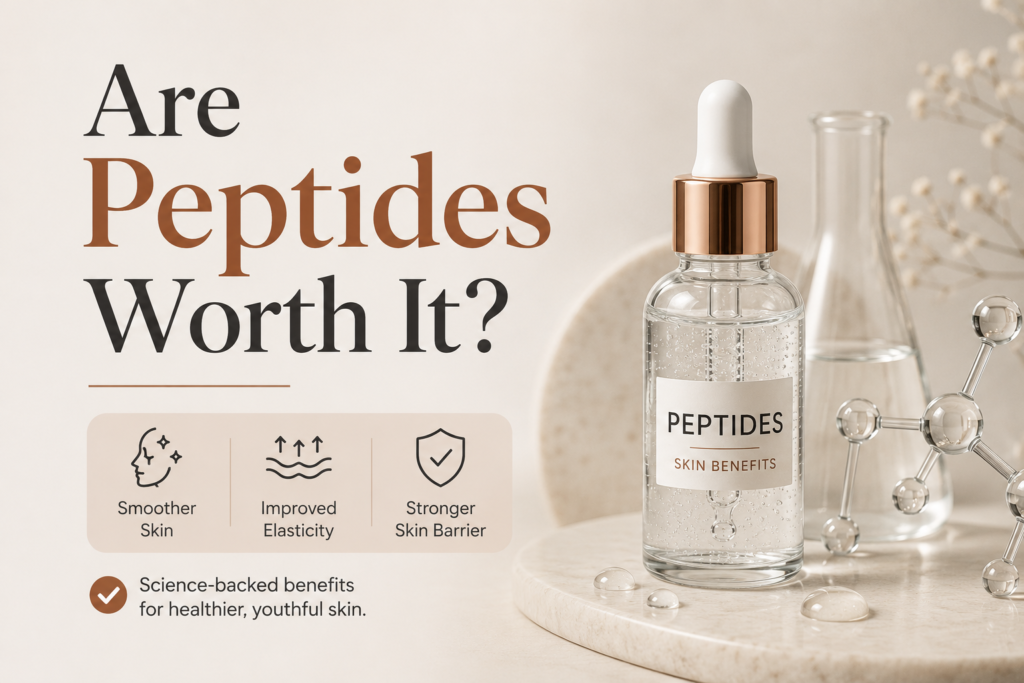
Are Peptides Worth It?
Yes, if you:
- Want to prevent early signs of aging
- Have sensitive skin and can’t tolerate retinoids
- Want extra hydration and barrier support
- Prefer a gentle, long-term approach
Maybe not, if you:
- Expect dramatic wrinkle removal
- Want instant results
- Are on a tight budget and haven’t yet invested in basics like sunscreen, moisturizer, or a retinoid
Dermatology experts generally view peptides as a helpful supporting ingredient rather than the foundation of an anti-aging routine. Daily sunscreen, retinoids (if appropriate), and a good moisturizer still have stronger evidence for long-term skin health.
Final Thoughts
So, are peptides worth it? For most people, yes. Peptides are a science-backed skincare ingredient that can support collagen production, strengthen the skin barrier, improve hydration, and gradually reduce the appearance of fine lines and wrinkles. While they won’t deliver overnight transformations or replace powerhouse ingredients like retinoids and daily sunscreen, they are an excellent addition to a well-rounded skincare routine.
Peptides are especially valuable for people with sensitive, dry, or mature skin because they offer anti-aging and skin-repair benefits with a low risk of irritation. The key is to choose a high-quality, well-formulated product and use it consistently for at least 8–12 weeks to see noticeable improvements.
Ultimately, if you’re looking for healthier, smoother, and more resilient skin over time, peptides are a worthwhile investment. Pair them with sunscreen, a gentle moisturizer, and other proven skincare ingredients to maximize your results and maintain a youthful, radiant complexion.