Minimal Skincare Routine: The Complete Beginner’s Guide (2026)
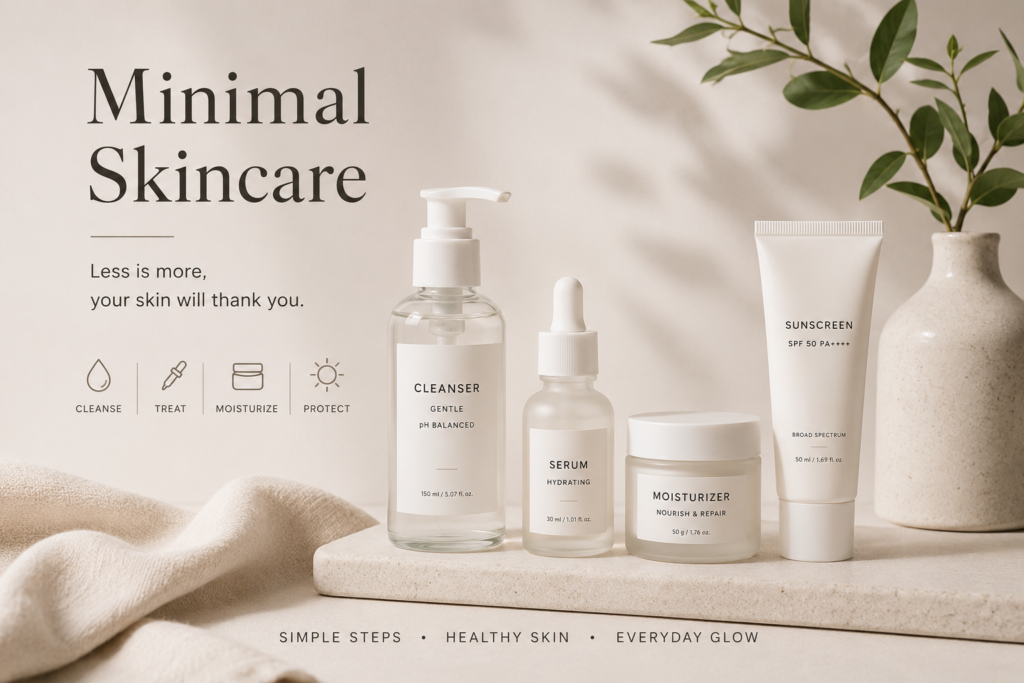
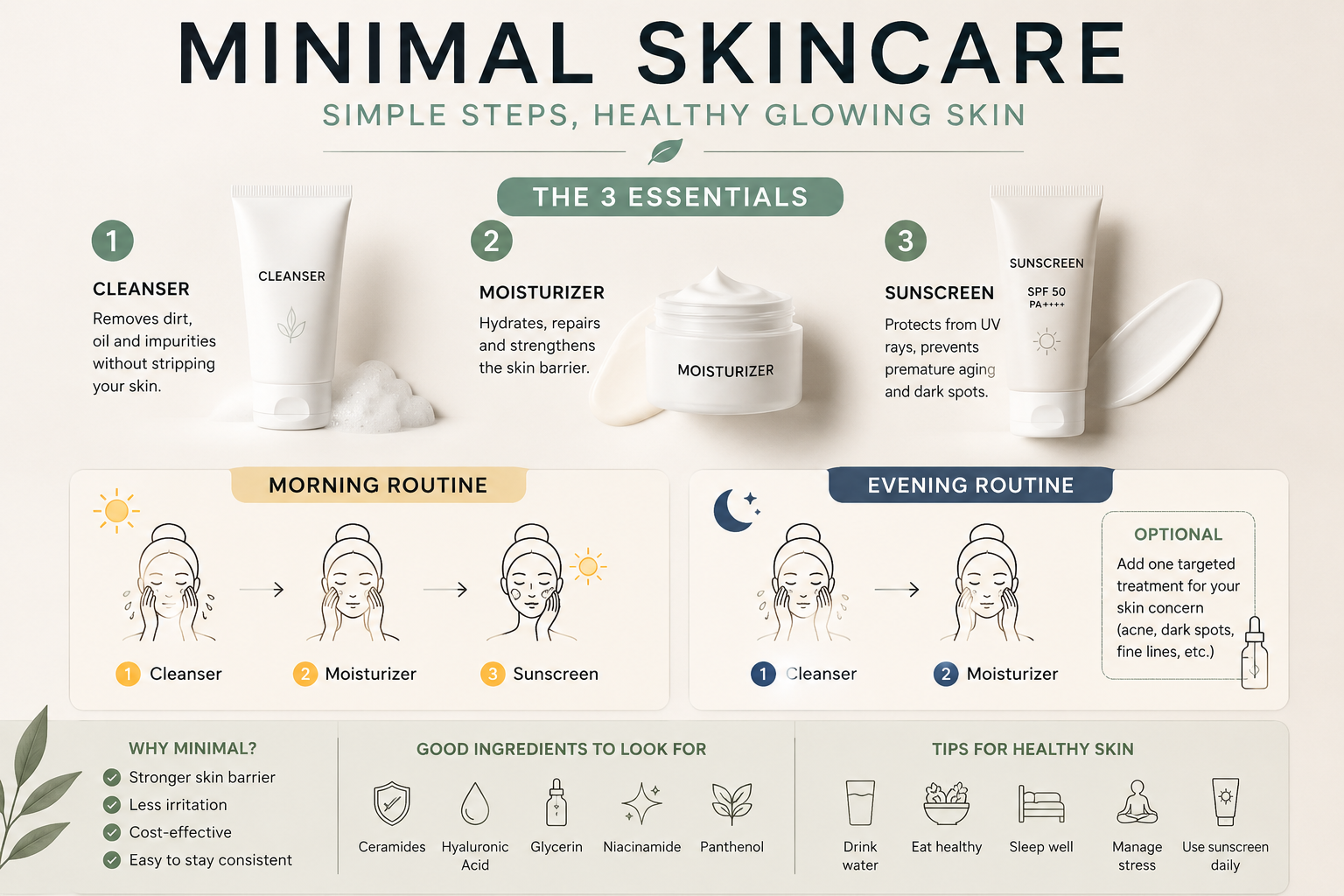
A minimal skincare routine focuses on using only the essential products your skin actually needs. Instead of following complicated 10-step routines, skin minimalism emphasizes consistency, gentle products, and protecting your skin barrier. Dermatologists generally agree that for most people, a simple routine of cleanser, moisturizer, and sunscreen is enough to maintain healthy skin, with one targeted treatment added only if needed.
What Is a Minimal Skincare Routine?
Minimal skincare means using fewer, high-quality products instead of layering multiple serums, acids, and treatments.
The goal is to:
- Maintain a healthy skin barrier
- Prevent irritation
- Save time and money
- Reduce unnecessary ingredients
- Improve long-term skin health
Less is often more because overusing active ingredients can damage the skin barrier and lead to dryness, redness, and breakouts.
Why Choose a Minimal Routine?
1. Better Skin Barrier
Using fewer irritating ingredients allows your skin’s natural protective barrier to repair itself.
Benefits include:
- Less redness
- Less sensitivity
- Better hydration
- Stronger protection against pollution and bacteria
2. Lower Risk of Irritation
Many skincare problems happen because people mix:
- Retinol
- AHAs
- BHAs
- Vitamin C
- Benzoyl peroxide
Using only necessary products greatly reduces irritation.
3. Saves Money
Instead of buying:
- Toners
- Essences
- Multiple serums
- Sleeping masks
- Facial oils
You only purchase products your skin truly needs.
4. Easier to Stay Consistent
Healthy skin comes from daily consistency, not from using the largest number of products.
The Three Essential Products
1. Gentle Cleanser
Purpose:
- Removes dirt
- Removes oil
- Removes sunscreen
- Removes pollution
A good cleanser should:
- Be fragrance-free
- Be soap-free
- Not leave skin feeling tight
Use:
- Morning (optional for dry skin)
- Every evening
2. Moisturizer
A moisturizer helps:
- Repair the skin barrier
- Lock in moisture
- Reduce water loss
- Keep skin soft
Look for ingredients like:
- Ceramides
- Glycerin
- Hyaluronic Acid
- Squalane
- Panthenol
3. Sunscreen (Most Important Step)
Daily sunscreen helps prevent:
- Premature aging
- Pigmentation
- Dark spots
- Wrinkles
- Sunburn
- UV damage
Choose:
- SPF 30 or higher
- Broad-spectrum protection
- PA+++ or PA++++
Apply every morning and reapply when spending extended time outdoors.
Morning Minimal Routine
Step 1
Gentle Cleanser (or rinse with water if your skin is very dry)
↓
Step 2
Moisturizer
↓
Step 3
Sunscreen
That’s it.
Evening Minimal Routine
Step 1
Gentle Cleanser
↓
Step 2
Moisturizer
That’s enough for most beginners.
Optional Fourth Step (Only If Needed)
Once your skin tolerates the basics for several weeks, you may add one treatment product for a specific concern:
| Skin Concern | Ingredient |
|---|---|
| Acne | Salicylic Acid or Benzoyl Peroxide |
| Dark Spots | Niacinamide, Azelaic Acid, Alpha Arbutin |
| Dryness | Hyaluronic Acid, Ceramides |
| Fine Lines | Retinol (start slowly) |
| Dull Skin | Vitamin C |
Avoid introducing multiple active ingredients at the same time.
Routine by Skin Type
Oily Skin
Morning
- Gel Cleanser
- Lightweight Moisturizer
- Oil-free Sunscreen
Night
- Gel Cleanser
- Lightweight Moisturizer
Dry Skin
Morning
- Cream Cleanser (or water rinse)
- Rich Moisturizer
- Hydrating Sunscreen
Night
- Cream Cleanser
- Thick Moisturizer
Combination Skin
Morning
- Gentle Cleanser
- Gel-Cream Moisturizer
- Sunscreen
Night
- Gentle Cleanser
- Moisturizer
Sensitive Skin
Choose products that are:
- Fragrance-free
- Alcohol-free
- Gentle
- Barrier-supporting
Avoid harsh exfoliants until your skin is comfortable.
Ingredients to Look For
Ceramides
Repair the skin barrier.
Glycerin
Hydrates the skin.
Hyaluronic Acid
Attracts moisture.
Panthenol
Calms irritated skin.
Niacinamide
Helps with oil control, redness, and uneven tone.
Squalane
Provides lightweight moisture.
Ingredients Beginners Should Use Carefully
- High-strength Retinol
- Glycolic Acid
- Lactic Acid
- Salicylic Acid (daily use may not suit everyone)
- Benzoyl Peroxide
- Strong Vitamin C formulas
Start slowly and avoid combining several potent actives at once.
Common Minimal Skincare Mistakes
- Washing your face too often
- Skipping sunscreen
- Using too many active ingredients
- Changing products every week
- Over-exfoliating
- Following social media trends without considering your skin type
Who Should Follow a Minimal Routine?
A minimal routine is ideal for:
- Beginners
- Teenagers
- People with sensitive skin
- Dry skin
- Acne-prone skin
- Those with damaged skin barriers
- Busy lifestyles
- Anyone on a budget
It can also be a good reset if your skin has become irritated from using too many products.
Lifestyle Tips for Healthy Skin
Your skincare products work best when paired with healthy habits:
- Drink enough water
- Eat a balanced diet rich in fruits and vegetables
- Sleep 7–9 hours each night
- Manage stress
- Avoid smoking
- Exercise regularly
- Wash pillowcases weekly
- Avoid touching your face frequently
How Long Does It Take to See Results?
With consistent use of a simple routine:
- 1–2 weeks: Skin feels more hydrated and comfortable.
- 4–6 weeks: Improved texture and fewer signs of irritation.
- 8–12 weeks: More noticeable improvements in tone, smoothness, and overall skin health.
Final Thoughts
A minimal skincare routine is a reminder that healthy, glowing skin doesn’t come from using the most products—it comes from using the right products consistently. By focusing on the essentials—a gentle cleanser, a moisturizer that supports your skin barrier, and a broad-spectrum sunscreen—you give your skin the care it needs without overwhelming it.
If you have specific concerns such as acne, dark spots, or signs of aging, introduce one targeted treatment at a time and give your skin several weeks to adjust before adding anything new. This approach helps reduce irritation, makes it easier to identify what works, and supports long-term skin health.
Remember that skincare is only one part of the equation. Staying hydrated, eating a balanced diet, getting enough sleep, managing stress, and protecting your skin from excessive sun exposure all contribute to a healthier complexion.
In the end, the best skincare routine is the one you can maintain every day. A simple, consistent routine tailored to your skin type is often more effective than an elaborate regimen with unnecessary products. When it comes to skincare, less can truly be more.