The Complete Skin Barrier Repair Guide
What Is the Skin Barrier?
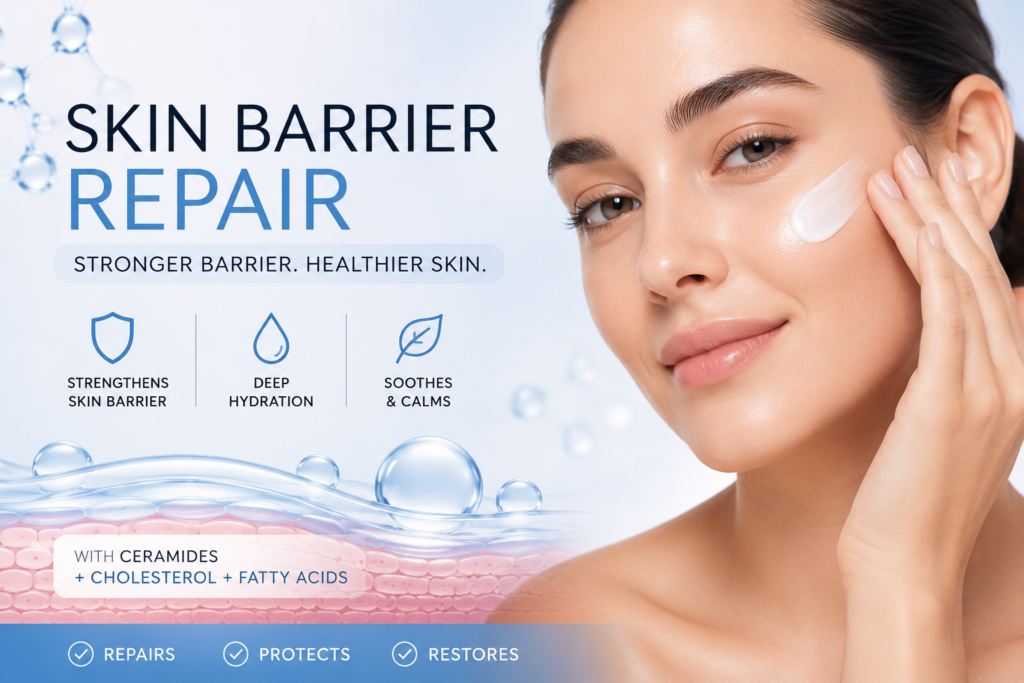
The skin barrier, also called the stratum corneum, is the outermost layer of your skin. It acts like a protective shield that:
- Prevents water loss
- Protects against bacteria, viruses, and pollutants
- Reduces irritation from chemicals
- Maintains healthy, smooth skin
- Supports the skin’s natural healing process
Think of it as a brick wall:
- Skin cells (corneocytes) = Bricks
- Lipids (ceramides, cholesterol, fatty acids) = Mortar
When the mortar is damaged, the wall becomes weak.
Signs Your Skin Barrier Is Damaged
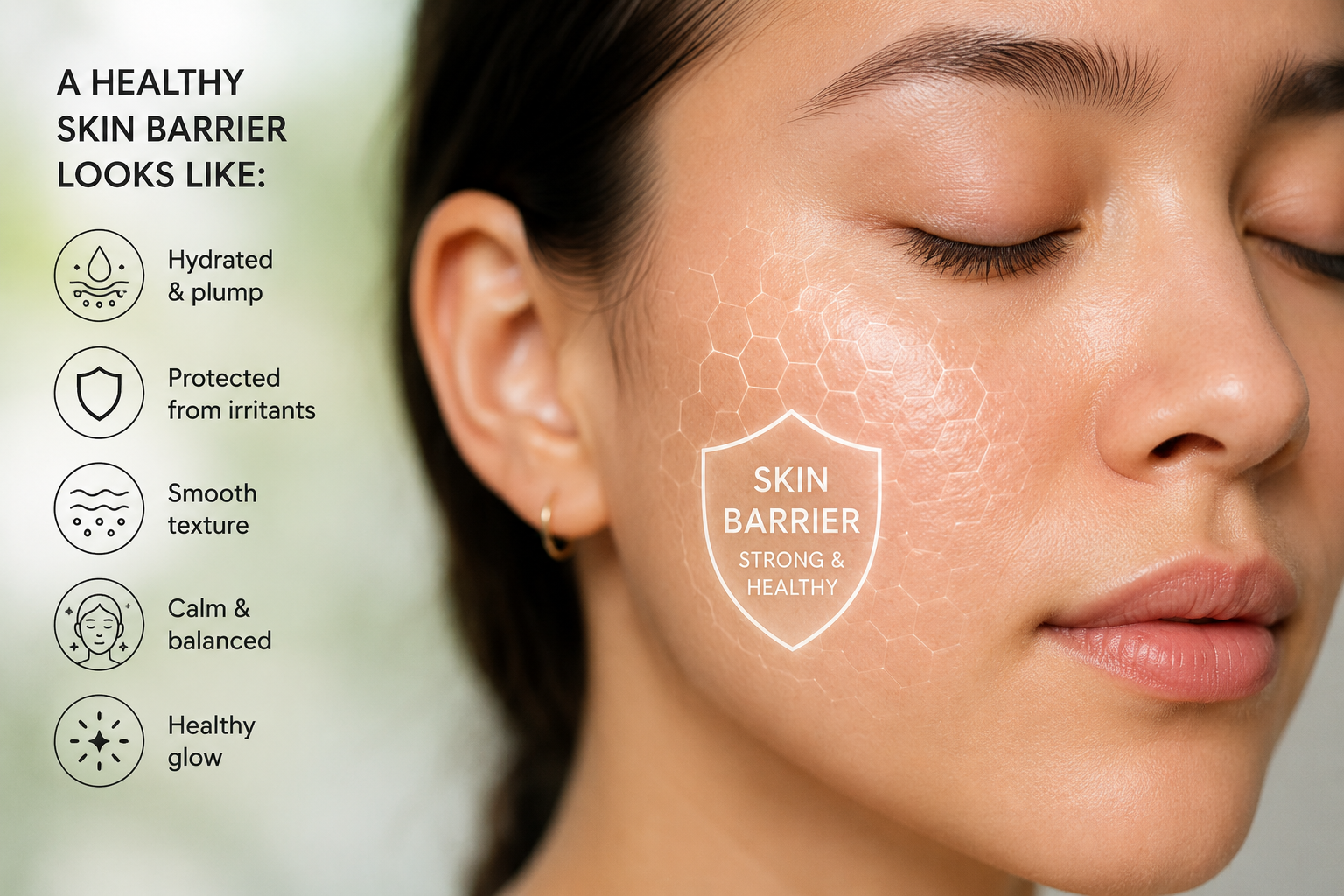
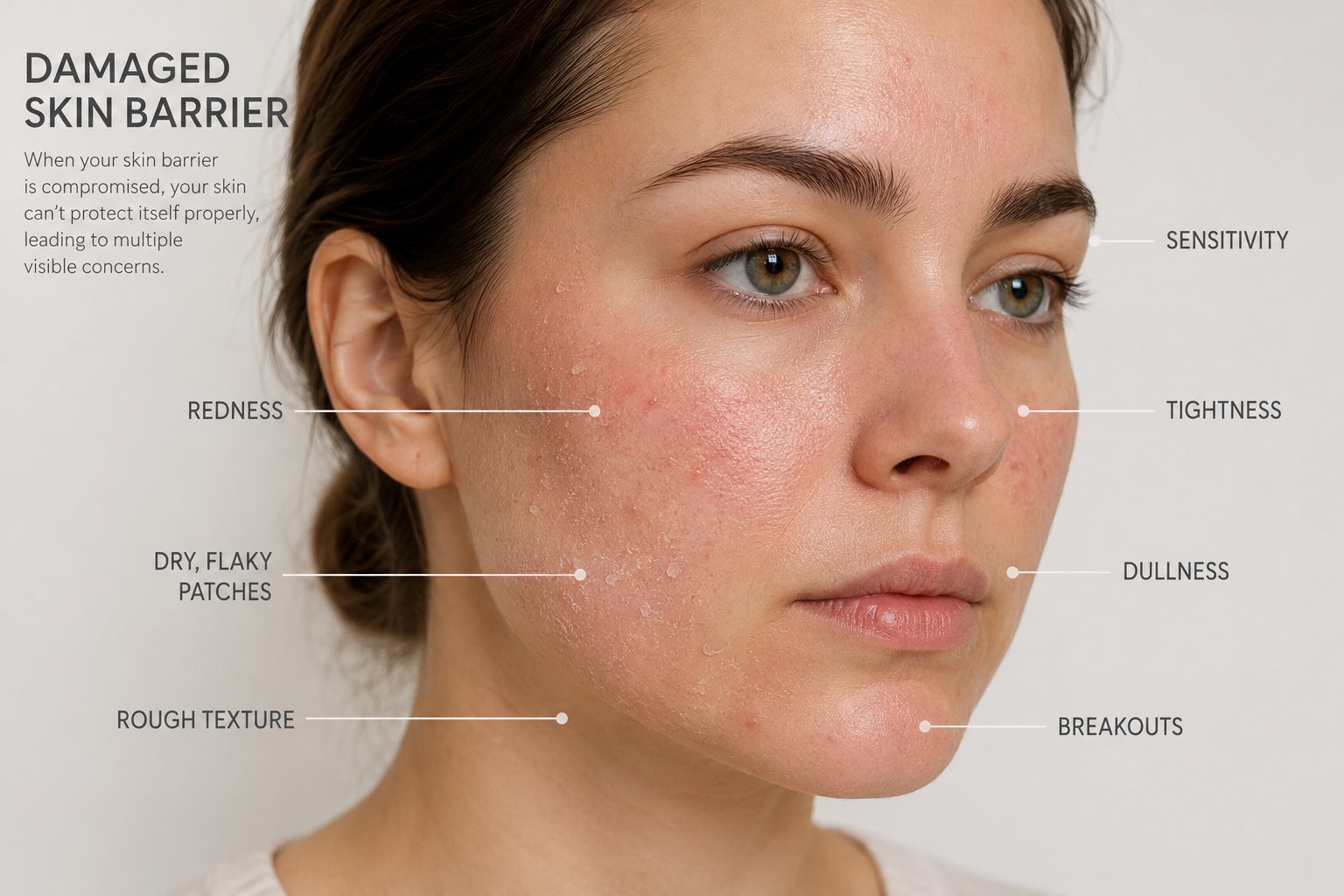
Common symptoms include:
- Dryness
- Tight feeling after cleansing
- Redness
- Burning or stinging
- Flaking
- Rough texture
- Increased sensitivity
- Itching
- Frequent breakouts
- Dehydrated skin
- Dull complexion
- Products suddenly causing irritation
Common Causes of Skin Barrier Damage
Over-Exfoliation
Using too many:
- AHAs
- BHAs
- PHAs
- Scrubs
- Retinoids
can strip natural oils.
Harsh Cleansers
High-foaming cleansers with strong sulfates can remove protective lipids.
Excessive Washing
Washing your face too many times a day weakens the barrier.
Hot Water
Very hot showers remove natural oils faster than warm water.
Weather
- Cold winter air
- Strong wind
- Dry indoor heating
- Intense sunlight
can all damage the barrier.
UV Exposure
Sun damage increases inflammation and weakens skin protection.
Pollution
Dust and pollution generate free radicals that stress the skin.
Low Humidity
Dry environments pull moisture from the skin.
Stress
Chronic stress affects skin repair and increases inflammation.
Poor Sleep
Skin repairs itself mostly during sleep.
Poor Diet
Lack of:
- Healthy fats
- Vitamins
- Protein
- Antioxidants
can slow skin repair.
Using Too Many Active Ingredients
Examples include:
- Vitamin C
- Retinol
- Glycolic Acid
- Salicylic Acid
- Benzoyl Peroxide
Layering several strong actives together often causes irritation.
Ingredients That Repair the Skin Barrier
Ceramides
Benefits:
- Restore skin lipids
- Lock in moisture
- Reduce water loss
- Strengthen the barrier
Best for:
- Dry skin
- Sensitive skin
- Damaged skin
Cholesterol
Works together with ceramides to rebuild the barrier.
Fatty Acids
Help replace lost oils and improve softness.
Glycerin
A powerful humectant that attracts water into the skin.
Hyaluronic Acid
Hydrates multiple layers of skin.
Panthenol (Vitamin B5)
Benefits:
- Soothes irritation
- Supports healing
- Improves hydration
Niacinamide
Benefits:
- Boosts ceramide production
- Reduces redness
- Controls oil
- Improves barrier function
Squalane
A lightweight oil that mimics natural skin lipids.
Colloidal Oatmeal
Excellent for:
- Eczema
- Sensitive skin
- Itchy skin
Allantoin
Calms irritated skin and supports healing.
Centella Asiatica (Cica)
Benefits:
- Reduces inflammation
- Supports wound healing
- Calms redness
Beta-Glucan
Provides hydration and soothes irritated skin.
Urea (Low Concentrations)
Helps hydrate and soften dry skin.
Ingredients to Avoid During Skin Barrier Repair
Avoid temporarily:
- High-strength Retinol
- Glycolic Acid
- Salicylic Acid
- Lactic Acid (if irritating)
- Physical scrubs
- Alcohol-heavy products
- Fragrance (if sensitive)
- Essential oils
- Strong peels
- High-strength Vitamin C (if stinging)
Best Routine for Repairing a Damaged Skin Barrier
Morning Routine
Step 1: Gentle Cleanser
Use a mild, sulfate-free cleanser.
Step 2: Hydrating Serum
Look for:
- Glycerin
- Hyaluronic Acid
- Panthenol
Step 3: Moisturizer
Choose one containing:
- Ceramides
- Cholesterol
- Fatty acids
Step 4: Sunscreen
Use:
- SPF 30 or higher
- Broad-spectrum protection
- Every day
Evening Routine
Step 1
Gentle cleanser.
Step 2
Hydrating serum.
Step 3
Barrier repair moisturizer.
Step 4 (Optional)
Apply a thin layer of an occlusive (such as petrolatum) over very dry areas to reduce overnight moisture loss.
How Long Does Barrier Repair Take?
Mild damage:
- 3–7 days
Moderate damage:
- 2–4 weeks
Severe damage:
- 1–3 months
Consistency is key.
Skin Barrier Repair for Different Skin Types
Dry Skin
Focus on:
- Ceramides
- Rich moisturizers
- Squalane
- Petrolatum
Oily Skin
Choose:
- Lightweight gel moisturizers
- Ceramides
- Niacinamide
Avoid over-cleansing.
Combination Skin
Use:
- Lightweight moisturizer
- Hydrating serum
- Gentle cleanser
Sensitive Skin
Avoid:
- Fragrance
- Alcohol
- Strong exfoliants
Look for:
- Panthenol
- Colloidal oatmeal
- Centella asiatica
Acne-Prone Skin
Use:
- Gentle cleansers
- Non-comedogenic moisturizers
- Ceramides
- Niacinamide
Reduce harsh acne treatments until the barrier improves.
Lifestyle Tips for Healthy Skin
- Drink enough water.
- Eat a balanced diet with healthy fats and protein.
- Sleep 7–9 hours each night.
- Manage stress.
- Avoid smoking.
- Limit excessive alcohol.
- Use a humidifier in dry climates.
- Avoid very hot showers.
- Wear sunscreen daily.
Foods That Support Skin Barrier Health
Healthy fats:
- Salmon
- Sardines
- Walnuts
- Flaxseeds
Antioxidant-rich foods:
- Berries
- Tomatoes
- Spinach
- Kale
Vitamin C:
- Oranges
- Kiwi
- Bell peppers
Vitamin E:
- Almonds
- Sunflower seeds
Protein:
- Eggs
- Chicken
- Beans
- Lentils
Zinc:
- Pumpkin seeds
- Chickpeas
- Seafood
Myths About Skin Barrier Repair
Myth: Oily skin doesn’t need moisturizer.
Fact: All skin types need hydration and barrier support.
Myth: More exfoliation means healthier skin.
Fact: Over-exfoliation commonly damages the skin barrier.
Myth: Expensive skincare works better.
Fact: Effective barrier repair depends more on ingredients than price.
Myth: A damaged barrier heals overnight.
Fact: Recovery usually takes days to weeks, depending on severity.
Quick Barrier Repair Checklist
- ✔ Use a gentle cleanser.
- ✔ Apply a hydrating serum.
- ✔ Moisturize with ceramides, cholesterol, and fatty acids.
- ✔ Wear SPF 30+ sunscreen every morning.
- ✔ Avoid over-exfoliating.
- ✔ Limit harsh active ingredients while healing.
- ✔ Stay hydrated and eat a balanced diet.
- ✔ Get enough sleep.
- ✔ Protect your skin from extreme weather.
- ✔ Be patient and consistent with your routine.
Final Thoughts
A healthy skin barrier is the foundation of clear, comfortable, and resilient skin. When your skin barrier is strong, it helps lock in moisture, defend against environmental damage, and reduce irritation, making every other step in your skincare routine more effective.
If your barrier has been damaged by over-exfoliation, harsh cleansers, excessive use of active ingredients, or environmental stress, don’t panic. The key to recovery is to simplify your routine, focus on hydration, use barrier-supporting ingredients like ceramides, panthenol, hyaluronic acid, and niacinamide, and protect your skin daily with a broad-spectrum sunscreen.
Remember that skin barrier repair takes time. While mild damage may improve within a few days, more severe cases can take several weeks of consistent care. Avoid introducing too many new products during the healing process, and give your skin the chance to recover naturally.
Ultimately, healthy skin isn’t about using the most expensive products or following complicated routines—it’s about consistency, patience, and choosing products that support your skin’s natural protective barrier. Once your skin barrier is restored, you’ll notice smoother texture, better hydration, less sensitivity, and a healthier, more radiant complexion that is better prepared to benefit from the rest of your skincare routine.