Red Light Therapy for Skin: Benefits, Uses, Risks & Complete Beginner’s Guide (2026)
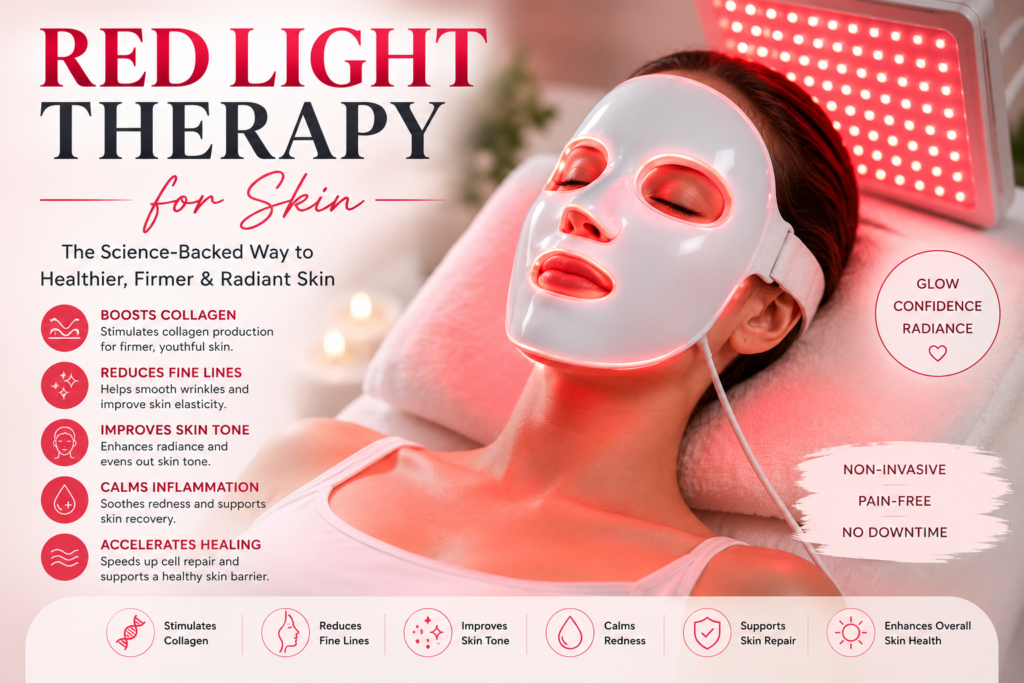
Red Light Therapy (RLT), also known as Low-Level Light Therapy (LLLT) or Photobiomodulation (PBM), is a non-invasive skincare treatment that uses specific wavelengths of red and near-infrared light to improve skin health. Unlike UV rays from the sun, red light does not damage the skin. Instead, it stimulates your skin cells to produce more energy, helping repair and rejuvenate the skin naturally.
Today, red light therapy is available in dermatology clinics, medical spas, and at-home LED masks and panels, making it one of the fastest-growing skincare treatments worldwide.
What is Red Light Therapy?
Red light therapy uses wavelengths typically between:
- Red Light: 620–700 nm
- Near-Infrared Light (NIR): 700–1100 nm
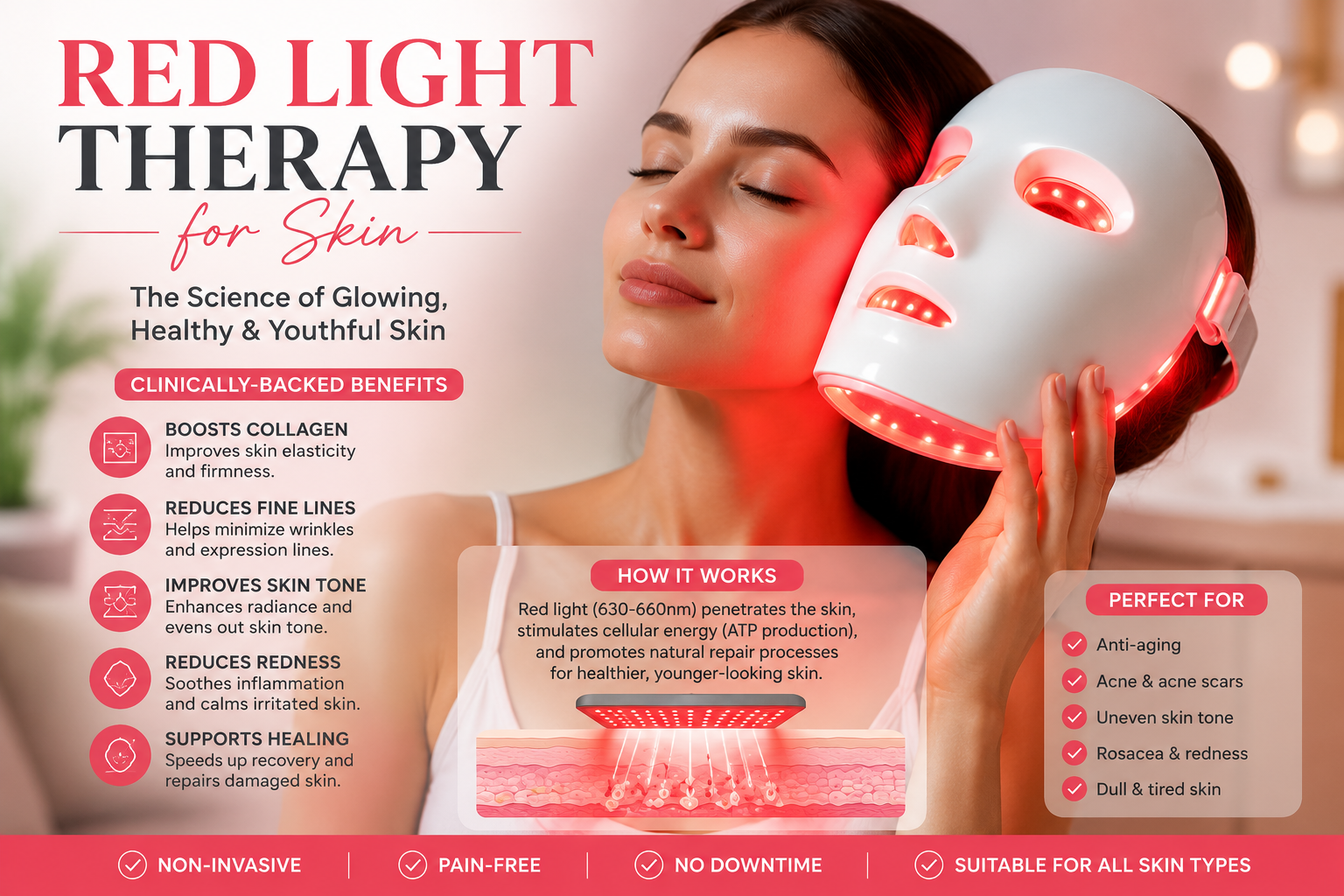
These wavelengths penetrate the skin and are absorbed by the mitochondria—the “powerhouses” of your cells. This process increases the production of ATP (adenosine triphosphate), providing cells with more energy to repair damage and function efficiently.
Benefits of Red Light Therapy for Skin
1. Reduces Fine Lines and Wrinkles
One of the biggest reasons people use RLT is its anti-aging effects.
Benefits include:
- Firmer skin
- Increased collagen
- Improved elasticity
- Softer expression lines
- Reduced crow’s feet
Visible improvements usually appear after several weeks of consistent use.
2. Boosts Collagen Production
Collagen is the structural protein responsible for keeping skin firm and youthful.
As we age, collagen production declines.
Red light therapy stimulates fibroblast cells that naturally produce collagen, helping improve:
- Skin firmness
- Texture
- Elasticity
- Overall skin health
3. Improves Skin Texture
Regular treatments can help make skin appear:
- Smoother
- Softer
- Brighter
- More even
Many users notice healthier-looking skin after one to two months of regular sessions.
4. Helps Fade Acne Scars
Although red light does not directly kill acne-causing bacteria (blue light is more effective for that), it helps by:
- Reducing inflammation
- Promoting faster healing
- Encouraging collagen remodeling
This may improve the appearance of post-acne marks and mild acne scars over time.
5. Reduces Redness and Inflammation
Red light therapy can calm irritated skin caused by:
- Rosacea
- Mild eczema
- Sensitive skin
- General inflammation
It works by reducing inflammatory chemicals inside skin cells.
6. Speeds Wound Healing
Dermatologists sometimes recommend RLT after cosmetic procedures because it may help:
- Heal minor wounds
- Reduce swelling
- Support tissue repair
- Minimize recovery time
7. Supports Skin Barrier Repair
A healthy skin barrier protects against moisture loss and environmental damage.
Red light therapy may help strengthen the skin barrier by improving cellular repair and reducing inflammation.
8. May Improve Hyperpigmentation
While not a primary treatment for pigmentation, improved skin renewal may gradually help fade:
- Post-inflammatory hyperpigmentation
- Mild sun damage
- Uneven skin tone
Results are usually modest and take time.
Conditions That May Benefit
Red light therapy may help improve:
- Fine lines
- Wrinkles
- Dull skin
- Mild acne
- Acne scars
- Rosacea
- Skin redness
- Dry skin
- Sensitive skin
- Sun damage
- Surgical scars
- Stretch marks (limited evidence)
- Skin healing
Who Can Use Red Light Therapy?
Suitable for:
- Dry skin
- Oily skin
- Combination skin
- Normal skin
- Sensitive skin
- Mature skin
- Acne-prone skin (especially for healing and inflammation)
Who Should Avoid or Be Careful?
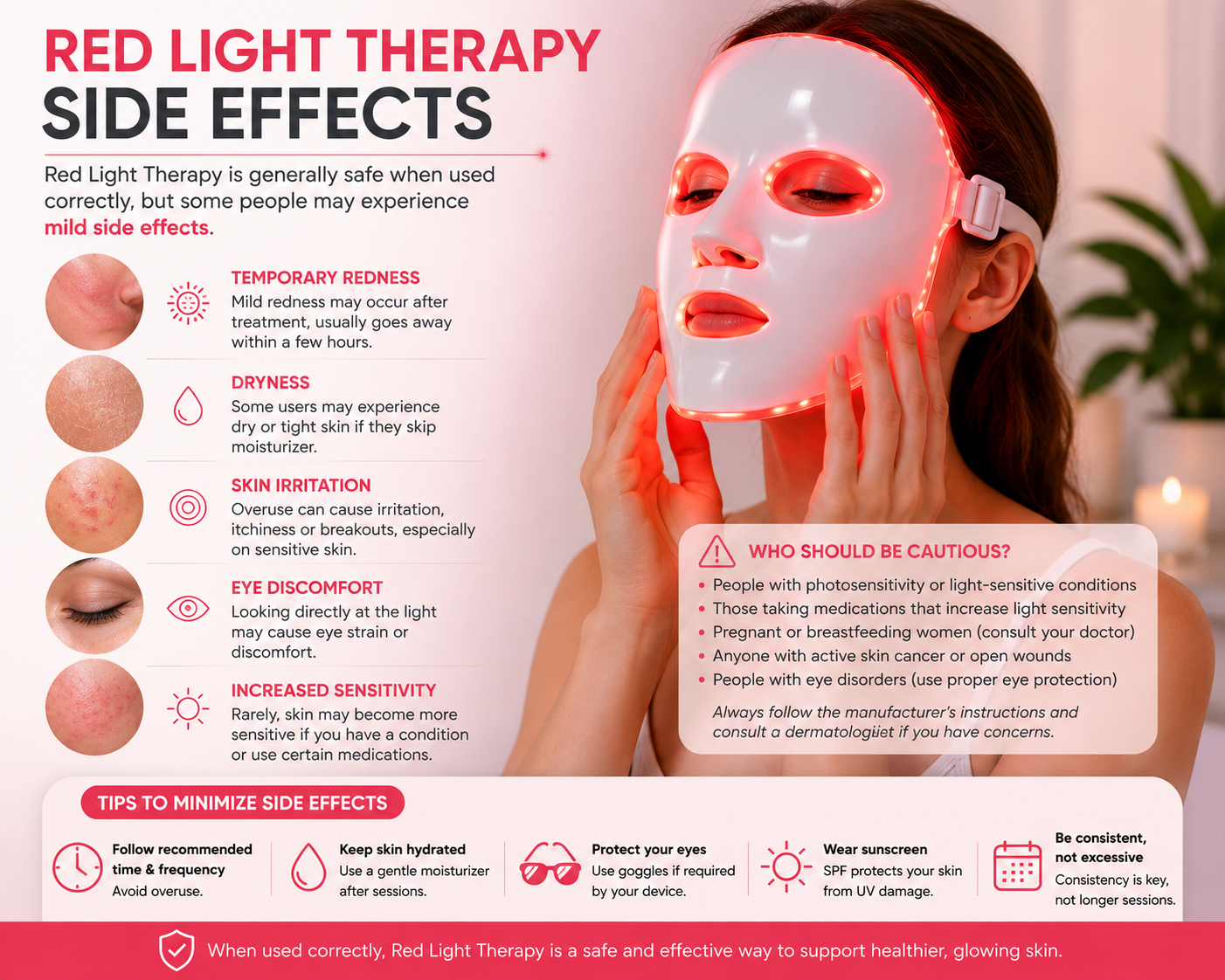
Consult a healthcare professional before using RLT if you:
- Have photosensitive disorders
- Take medications that increase light sensitivity
- Have active skin cancer or suspicious skin lesions
- Have severe eye conditions (always use proper eye protection if required by the device)
- Are unsure whether it is appropriate during pregnancy (evidence is limited)
How to Use Red Light Therapy at Home
Step 1
Wash your face with a gentle cleanser.
Step 2
Pat the skin dry.
Step 3
Use the LED device according to the manufacturer’s instructions, typically:
- 10–20 minutes
- 3–5 times per week
Step 4
Apply a moisturizer afterward.
Step 5
Use sunscreen during the day, as part of your regular skincare routine.
Best Ingredients to Pair with Red Light Therapy
These ingredients generally pair well:
- Hyaluronic Acid
- Ceramides
- Niacinamide
- Peptides
- Glycerin
- Panthenol
- Squalane
Use these after your session to support hydration and barrier repair.
Ingredients to Use With Caution
Some active ingredients can make skin more sensitive. Depending on your skin, consider using them at a different time of day if irritation occurs:
- Retinoids
- Glycolic Acid
- Salicylic Acid
- Lactic Acid
- High-strength Vitamin C (especially if your skin is sensitive)
If you’re using prescription skincare, follow your dermatologist’s guidance.
How Long Does It Take to See Results?
Typical timelines:
| Time | Expected Results |
|---|---|
| 2–4 weeks | Healthier-looking skin, mild glow |
| 4–8 weeks | Improved texture and hydration |
| 8–12 weeks | Reduction in fine lines and increased firmness |
| 3–6 months | More noticeable collagen-related improvements with consistent use |
Results vary depending on age, skin condition, and treatment consistency.
Does Red Light Therapy Really Work?
Research suggests red light therapy can modestly improve signs of skin aging, skin texture, wound healing, and inflammation when appropriate wavelengths and treatment protocols are used consistently. However, results are generally gradual rather than dramatic, and at-home devices are often less powerful than professional equipment.
Side Effects
Red light therapy is generally considered safe when used as directed.
Possible side effects include:
- Temporary redness
- Mild warmth
- Dryness
- Tightness
- Eye discomfort if protective measures are not followed
- Irritation from excessive or improper use
Serious side effects are uncommon with FDA-cleared devices used correctly.
Pros and Cons
Pros
- Non-invasive
- Painless
- No downtime
- Suitable for most skin types
- Supports collagen production
- Helps reduce inflammation
- May improve skin texture and firmness
- Can be used at home
Cons
- Requires consistent use
- Results are gradual
- Professional treatments can be expensive
- Home devices vary in quality and effectiveness
- Not a replacement for sunscreen or medical treatments when those are needed
Professional vs At-Home Devices
| Professional Treatments | At-Home Devices |
|---|---|
| Higher power | Lower power |
| Faster results | Slower results |
| More expensive | More affordable over time |
| Performed by professionals | Self-use |
| Often combined with other treatments | Convenient for maintenance |
Common Myths
Myth: Red light therapy uses UV rays.
Fact: It uses visible red and near-infrared light, not ultraviolet (UV) light.
Myth: One session removes wrinkles.
Fact: Improvement typically requires repeated treatments over weeks to months.
Myth: It works instantly.
Fact: Most benefits develop gradually with consistent use.
Myth: It replaces sunscreen.
Fact: Red light therapy does not protect against UV damage. Daily sunscreen is still essential.
Expert Tips for Better Results
- Use the device consistently rather than for long, infrequent sessions.
- Start with clean, dry skin.
- Stay hydrated and moisturize after treatment.
- Wear sunscreen daily.
- Take progress photos every 4 weeks to track changes.
- Be patient—collagen remodeling takes time.
Final Thoughts
Red Light Therapy has become one of the most popular non-invasive skincare treatments—and for good reason. By stimulating your skin’s natural repair processes, it can help improve collagen production, reduce the appearance of fine lines, calm inflammation, enhance skin texture, and support overall skin health. Unlike treatments that rely on harsh chemicals or invasive procedures, red light therapy offers a gentle approach with little to no downtime, making it suitable for most skin types.
That said, it’s important to have realistic expectations. Red Light Therapy is not an overnight solution or a replacement for a consistent skincare routine. The best results come from regular use over several weeks or months, combined with healthy skincare habits such as cleansing, moisturizing, and daily sunscreen application. Professional treatments may deliver faster results, while high-quality at-home devices can provide gradual improvements when used consistently.
If you’re looking for a safe and science-backed way to support healthier, firmer, and more radiant skin, Red Light Therapy can be a worthwhile addition to your skincare routine. Before starting, choose a reputable device, follow the manufacturer’s instructions carefully, and consult a dermatologist if you have underlying skin conditions or concerns. With patience and consistency, Red Light Therapy can become an effective part of your long-term skincare strategy.