Skin Cycling Explained: The Beginner’s Guide to Healthier Skin
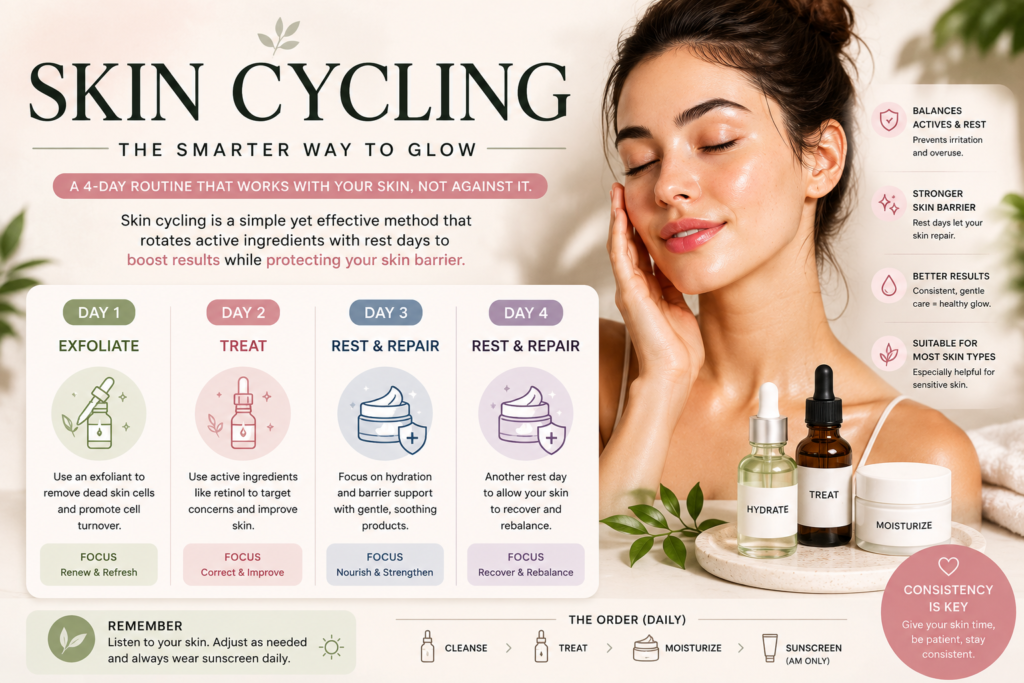
Skin cycling is a skincare routine that alternates active ingredients with recovery days to improve skin health while minimizing irritation. Instead of using powerful ingredients like retinol and exfoliating acids every night, skin cycling gives your skin time to rest and repair. This method has become popular because it helps people achieve smoother, brighter, and healthier skin without damaging the skin barrier.
Whether you’re a beginner or someone struggling with redness and sensitivity, skin cycling can make your skincare routine more effective.
What Is Skin Cycling?
Skin cycling is a structured nighttime skincare routine where you rotate active ingredients over several days. The concept was popularized by dermatologist Dr. Whitney Bowe.
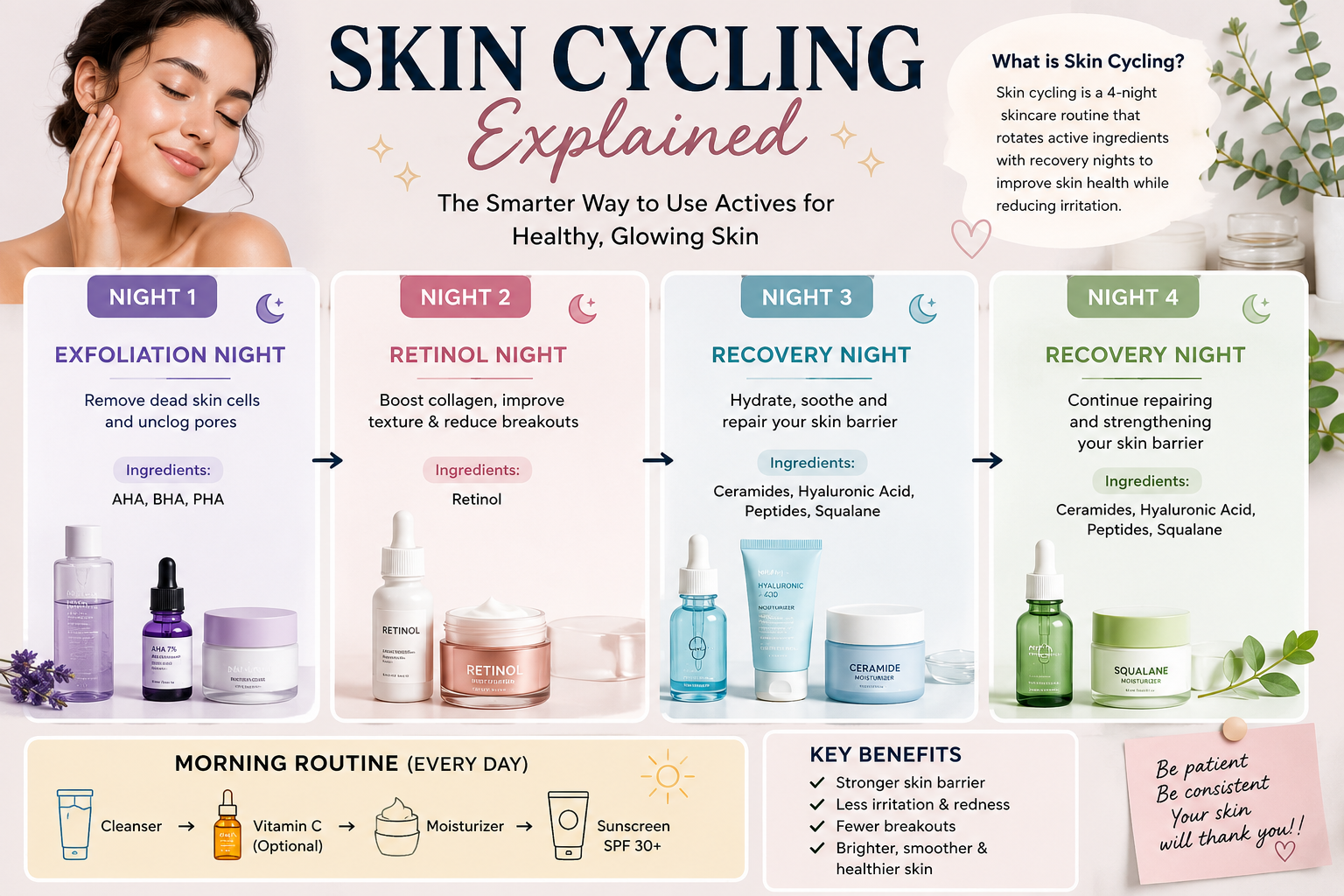
The traditional 4-night skin cycling routine looks like this:
- Night 1: Exfoliation
- Night 2: Retinoid (Retinol)
- Night 3: Recovery
- Night 4: Recovery
Then repeat the cycle.
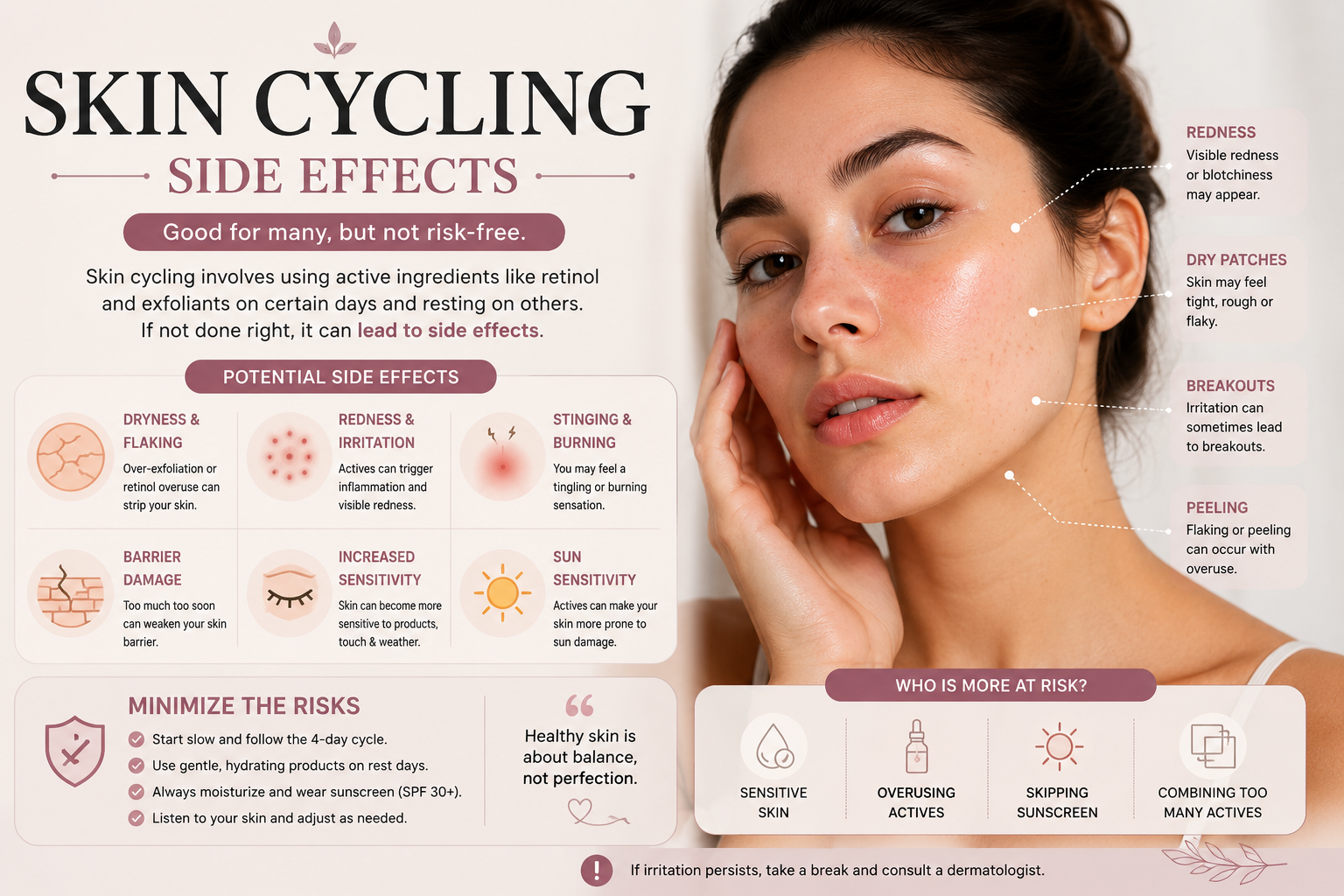
This approach helps maximize the benefits of active ingredients while reducing common side effects like dryness, peeling, redness, and irritation.
Why Is Skin Cycling Popular?
Many people unknowingly overuse skincare products. Layering acids, retinol, and vitamin C without giving the skin time to recover can weaken the skin barrier.
Skin cycling solves this by:
- Reducing irritation
- Preventing over-exfoliation
- Supporting the skin barrier
- Improving long-term results
- Making skincare easier to follow
Benefits of Skin Cycling
1. Strengthens the Skin Barrier
Recovery nights allow your skin to repair itself, reducing inflammation and water loss.
Benefits include:
- Less redness
- Better hydration
- Healthier-looking skin
- Reduced sensitivity
2. Reduces Acne
Retinoids unclog pores while exfoliation removes dead skin cells, helping prevent breakouts.
It can improve:
- Whiteheads
- Blackheads
- Mild acne
- Congested pores
3. Improves Skin Texture
Regular exfoliation smooths rough skin and encourages healthy skin cell turnover.
Results may include:
- Softer skin
- Smaller-looking pores
- More even texture
4. Brightens Dull Skin
Exfoliating acids remove dead skin cells, allowing fresh skin to appear brighter and healthier.
5. Helps Fade Dark Spots
Retinol speeds up skin renewal, helping gradually fade:
- Acne marks
- Hyperpigmentation
- Sunspots
- Uneven skin tone
6. Reduces Fine Lines
Retinol stimulates collagen production, improving:
- Fine lines
- Early wrinkles
- Skin firmness
The Classic 4-Night Skin Cycling Routine
Night 1 – Exfoliation Night
Purpose:
- Remove dead skin cells
- Brighten skin
- Prepare skin for retinol
Recommended ingredients:
- Lactic Acid
- Glycolic Acid
- Mandelic Acid
- Salicylic Acid (for oily skin)
Routine:
- Gentle cleanser
- Exfoliating serum
- Moisturizer
Avoid using:
- Retinol
- Vitamin C
- Multiple acids
Night 2 – Retinol Night
Purpose:
- Boost collagen
- Reduce wrinkles
- Improve acne
- Fade pigmentation
Routine:
- Gentle cleanser
- Retinol
- Moisturizer
Beginners can use the “sandwich method”:
- Moisturizer
- Retinol
- Moisturizer
This reduces irritation.
Night 3 – Recovery Night
Skip all active ingredients.
Focus on hydration.
Use:
- Gentle cleanser
- Ceramide moisturizer
- Hyaluronic acid
- Peptides
- Squalane
Night 4 – Recovery Night
Repeat the recovery routine.
The goal is to rebuild the skin barrier before restarting the cycle.
Morning Routine During Skin Cycling
Morning skincare should stay simple.
Recommended routine:
- Gentle cleanser
- Vitamin C serum (optional)
- Moisturizer
- Broad-spectrum SPF 30 or higher
Sunscreen is essential because retinoids and exfoliating acids can increase sun sensitivity.
Best Ingredients for Skin Cycling
Exfoliation Night
Good options:
- Glycolic Acid
- Lactic Acid
- Mandelic Acid
- Salicylic Acid
- PHA (for sensitive skin)
Retinol Night
Choose according to experience.
Beginners:
- 0.1–0.3% Retinol
Intermediate:
- 0.3–0.5%
Experienced:
- 1%
Recovery Nights
Look for:
- Ceramides
- Hyaluronic Acid
- Panthenol
- Centella Asiatica
- Glycerin
- Peptides
- Squalane
- Colloidal Oatmeal
Skin Cycling for Different Skin Types
Oily Skin
Best ingredients:
- Salicylic Acid
- Lightweight moisturizer
- Niacinamide
May tolerate a shorter recovery period if skin is not irritated.
Dry Skin
Focus on hydration.
Use:
- Lactic Acid
- Rich moisturizer
- Ceramides
- Squalane
Avoid over-exfoliating.
Sensitive Skin
Choose:
- PHA
- Low-strength retinol
- Fragrance-free moisturizer
Add extra recovery nights if needed.
Combination Skin
A balanced routine works well.
Use:
- Mild exfoliant
- Medium-strength retinol
- Lightweight moisturizer
Acne-Prone Skin
Skin cycling may reduce breakouts over time.
Helpful ingredients:
- Salicylic Acid
- Adapalene (if recommended by a healthcare professional)
- Niacinamide
Common Mistakes to Avoid
Using too many active ingredients
Avoid layering:
- Retinol
- Glycolic Acid
- Salicylic Acid
- Vitamin C
- Benzoyl Peroxide
on the same night unless directed by a dermatologist.
Skipping recovery nights
Recovery is essential for maintaining a healthy skin barrier.
Using high-strength retinol immediately
Start with a low concentration and increase gradually.
Forgetting sunscreen
Daily SPF helps protect skin and supports the results of your routine.
Over-exfoliating
Exfoliating more than recommended can lead to redness, dryness, and irritation.
Who Should Try Skin Cycling?
Skin cycling is ideal for:
- Beginners using retinol
- Sensitive skin
- Dry skin
- Acne-prone skin
- Mature skin
- People with damaged skin barriers
- Anyone experiencing irritation from active ingredients
Who Should Avoid or Modify Skin Cycling?
You may need a personalized approach if you:
- Have severe eczema or rosacea
- Are recovering from certain skin procedures
- Are using prescription acne treatments
- Have very sensitive or compromised skin
Consult a dermatologist if you’re unsure.
How Long Does It Take to See Results?
Results vary depending on your skin and the products you use.
Typical timeline:
- 2–4 weeks: Improved hydration and less irritation
- 4–8 weeks: Smoother skin and brighter complexion
- 8–12 weeks: Fewer breakouts and fading dark spots
- 3–6 months: Noticeable improvement in fine lines, pigmentation, and overall skin texture with consistent use.
Tips for Success
- Introduce one new product at a time.
- Patch-test new products before full use.
- Stick to a gentle cleanser and moisturizer.
- Avoid combining multiple strong actives on the same night.
- Adjust the number of recovery nights based on how your skin feels.
- Wear sunscreen every morning, even on cloudy days.
- Be patient—healthy skin improvements take time.
Final Thoughts: Skin Cycling Explained
Skin cycling is one of the most effective ways to build a balanced and sustainable skincare routine. Instead of using powerful active ingredients every night, it encourages a smarter approach by alternating exfoliation and retinoids with recovery nights. This helps strengthen the skin barrier while reducing the risk of irritation, dryness, and redness.
Whether your goal is to improve acne, fade dark spots, smooth fine lines, or achieve a healthier complexion, skin cycling can deliver noticeable results when practiced consistently. The key is choosing products that match your skin type, introducing active ingredients gradually, and prioritizing hydration and daily sunscreen.
Remember that healthy skin is a long-term investment, not an overnight transformation. Be patient, pay attention to how your skin responds, and adjust your routine when needed. With consistency and proper care, skin cycling can help you maintain stronger, brighter, and more resilient skin while making your skincare routine simpler and more effective.