Hyaluronic Acid (HA) and Polyglutamic Acid (PGA) are two of the most effective skincare ingredients for hydration. While both help keep your skin moisturized, they work differently and offer unique benefits. If you’re wondering which one is better for your skin, this comprehensive guide explains everything you need to know.
Hyaluronic Acid vs Polyglutamic Acid: Complete Comparison Guide
What Is Hyaluronic Acid?
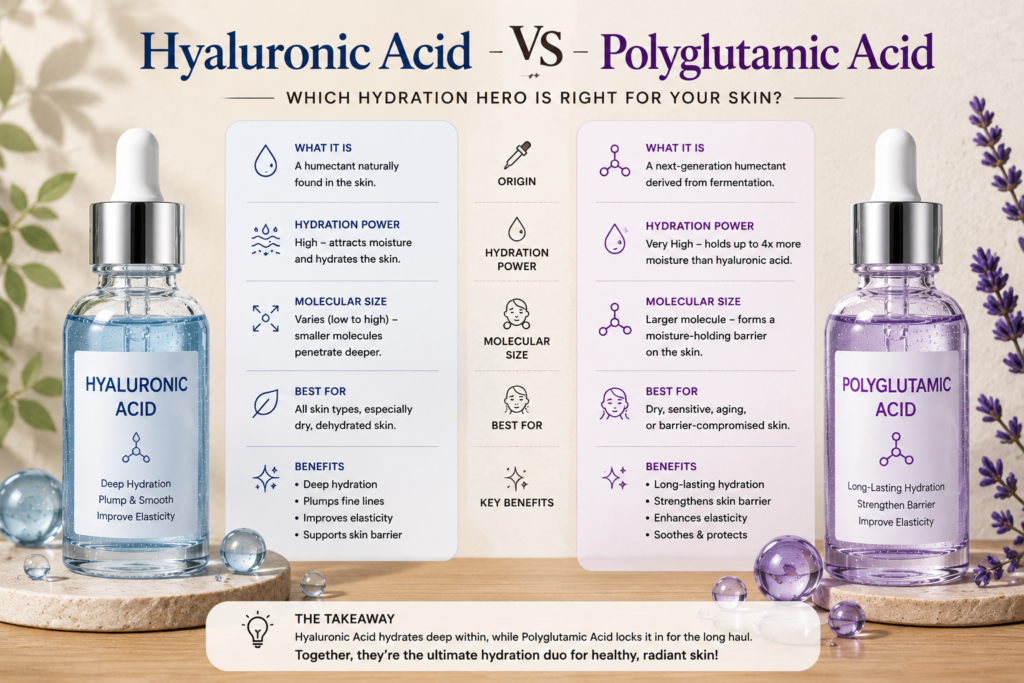
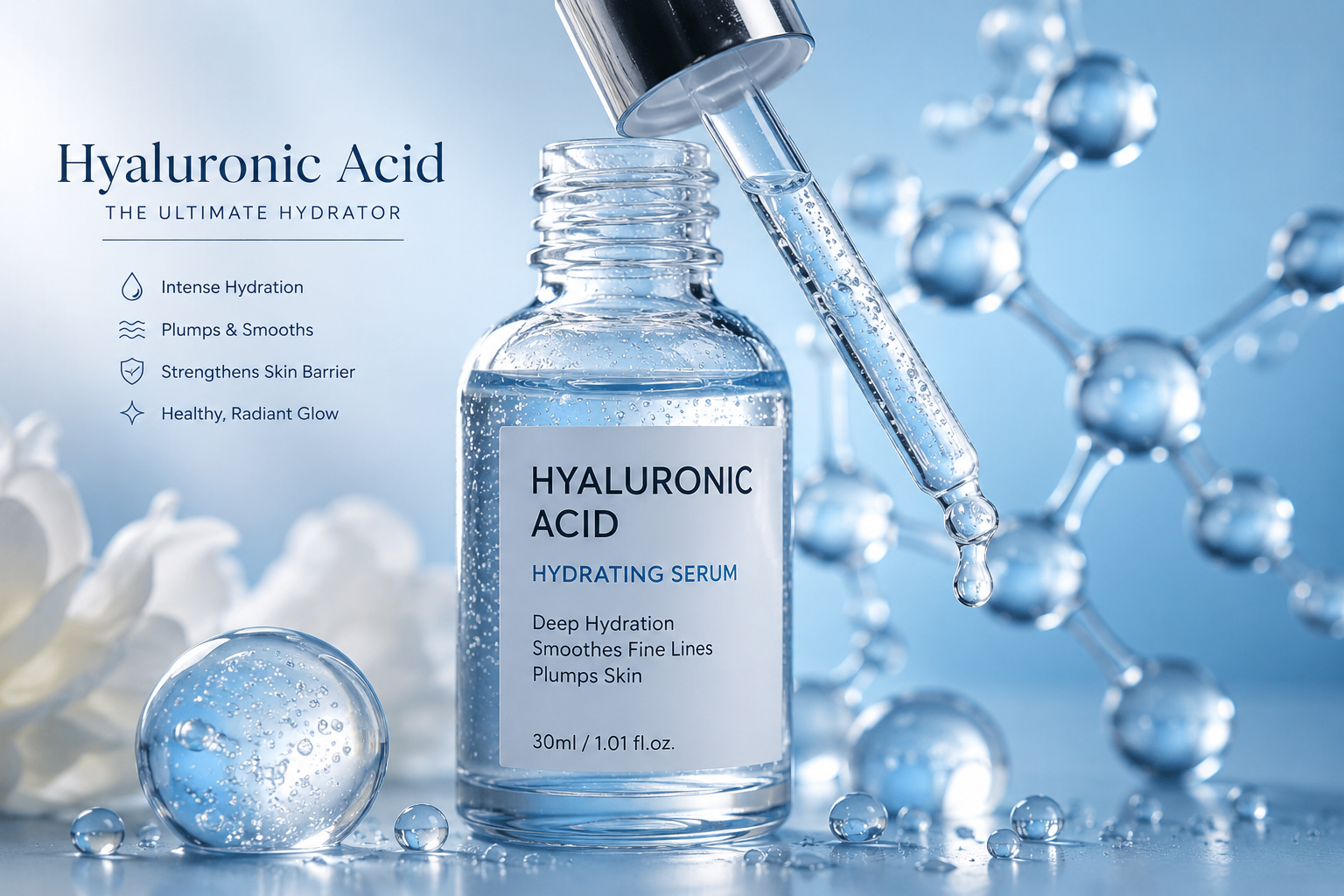
Hyaluronic Acid is a naturally occurring sugar molecule found in the skin, eyes, and connective tissues. Its primary role is to retain water, helping the skin stay plump, hydrated, and smooth.
One gram of Hyaluronic Acid can bind up to approximately 1,000 times its weight in water, making it one of the most popular moisturizing ingredients in skincare.
Benefits of Hyaluronic Acid
- Deeply hydrates the skin
- Plumps fine lines and wrinkles
- Improves skin elasticity
- Strengthens the skin barrier
- Leaves skin soft and supple
- Suitable for all skin types
- Helps reduce dehydration caused by environmental stress
Best For
- Dry skin
- Dehydrated skin
- Mature skin
- Sensitive skin
- Oily skin (lightweight hydration)
- Combination skin
What Is Polyglutamic Acid?
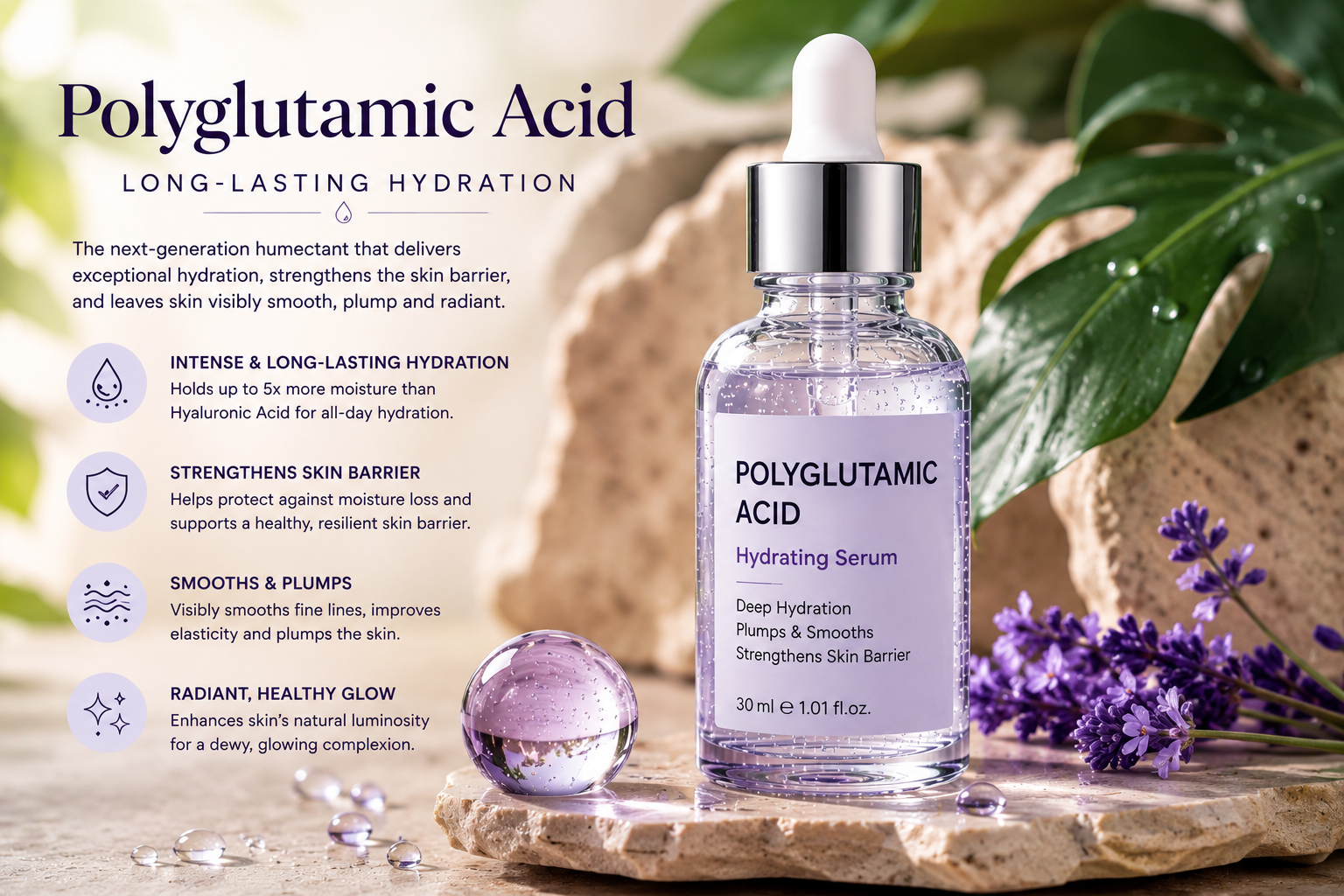
Polyglutamic Acid is a naturally derived peptide polymer produced through the fermentation of soybeans (commonly associated with the Japanese food Natto).
It forms a lightweight moisture-retaining film on the skin’s surface, helping reduce water loss while leaving the skin smooth and radiant.
Some laboratory measurements suggest PGA can hold even more water than HA, but this does not necessarily mean it hydrates skin better in real-world use. The two ingredients function differently and are often complementary.
Benefits of Polyglutamic Acid
- Provides long-lasting hydration
- Helps reduce moisture loss
- Strengthens the skin barrier
- Smooths rough texture
- Gives a dewy glow
- Supports skin elasticity
- Layers well with other skincare ingredients
Best For
- Dry skin
- Dehydrated skin
- Mature skin
- Sensitive skin
- Dull skin
- Normal skin
Hyaluronic Acid vs Polyglutamic Acid: Quick Comparison
| Feature | Hyaluronic Acid | Polyglutamic Acid |
|---|---|---|
| Source | Naturally found in the body | Fermented soybeans (Natto) |
| Main Function | Attracts and binds water | Locks moisture into the skin |
| Texture | Lightweight, watery | Slightly silky, film-forming |
| Penetration | Available in different molecular weights | Primarily works on the skin surface |
| Hydration | Excellent | Excellent, especially for reducing water loss |
| Skin Barrier Support | Good | Excellent |
| Anti-Aging | Excellent | Very Good |
| Suitable for Oily Skin | Yes | Yes |
| Suitable for Dry Skin | Excellent | Excellent |
| Sensitive Skin Friendly | Yes | Yes |
| Daily Use | Yes | Yes |
How They Work
Hyaluronic Acid
Hyaluronic Acid attracts water into the outer layers of the skin. Different molecular weights determine how deeply it can interact with the skin surface and upper layers.
Think of HA as a water magnet.
Key Action
- Pulls moisture toward the skin
- Increases skin plumpness
- Softens fine lines caused by dehydration
Polyglutamic Acid
Polyglutamic Acid creates a breathable moisture-retaining layer that helps reduce water evaporation from the skin.
Think of PGA as a hydration seal.
Key Action
- Prevents moisture loss
- Keeps skin hydrated longer
- Gives an instantly smoother appearance
Which Ingredient Hydrates Better?
There isn’t a universal winner.
Hyaluronic Acid excels at:
- Attracting moisture
- Plumping dehydrated skin
- Lightweight hydration
Polyglutamic Acid excels at:
- Keeping moisture from escaping
- Long-lasting hydration
- Improving skin smoothness
Best choice: Use both together for optimal hydration.
Can You Use Hyaluronic Acid and Polyglutamic Acid Together?
Yes.
In fact, dermatologists often recommend layering them because they complement each other.
Recommended Order
- Cleanser
- Toner (optional)
- Hyaluronic Acid serum (apply to slightly damp skin)
- Polyglutamic Acid serum
- Moisturizer
- Sunscreen (morning)
This combination helps draw moisture into the skin and then helps keep it there.
Which Skin Types Benefit Most?
| Skin Type | Hyaluronic Acid | Polyglutamic Acid |
|---|---|---|
| Dry | ⭐⭐⭐⭐⭐ | ⭐⭐⭐⭐⭐ |
| Oily | ⭐⭐⭐⭐⭐ | ⭐⭐⭐⭐☆ |
| Combination | ⭐⭐⭐⭐⭐ | ⭐⭐⭐⭐⭐ |
| Sensitive | ⭐⭐⭐⭐⭐ | ⭐⭐⭐⭐⭐ |
| Acne-Prone | ⭐⭐⭐⭐⭐ | ⭐⭐⭐⭐☆ |
| Mature | ⭐⭐⭐⭐⭐ | ⭐⭐⭐⭐⭐ |
| Dehydrated | ⭐⭐⭐⭐⭐ | ⭐⭐⭐⭐⭐ |
Anti-Aging Benefits
Hyaluronic Acid
- Temporarily plumps fine lines
- Improves skin elasticity
- Supports smoother-looking skin
- Enhances skin hydration
Polyglutamic Acid
- Keeps skin looking fuller through sustained hydration
- Helps soften the appearance of rough texture
- Supports a healthy skin barrier
- Promotes a radiant complexion
Neither ingredient replaces treatments that stimulate collagen, but both can make skin appear healthier and more youthful through improved hydration.
Can You Mix Them with Other Ingredients?
| Ingredient | Hyaluronic Acid | Polyglutamic Acid |
|---|---|---|
| Vitamin C | ✅ Yes | ✅ Yes |
| Niacinamide | ✅ Yes | ✅ Yes |
| Retinol | ✅ Yes | ✅ Yes |
| Ceramides | ✅ Yes | ✅ Yes |
| Peptides | ✅ Yes | ✅ Yes |
| Salicylic Acid | ✅ Yes | ✅ Yes |
| Glycolic Acid | ✅ Yes | ✅ Yes |
Possible Side Effects
Hyaluronic Acid
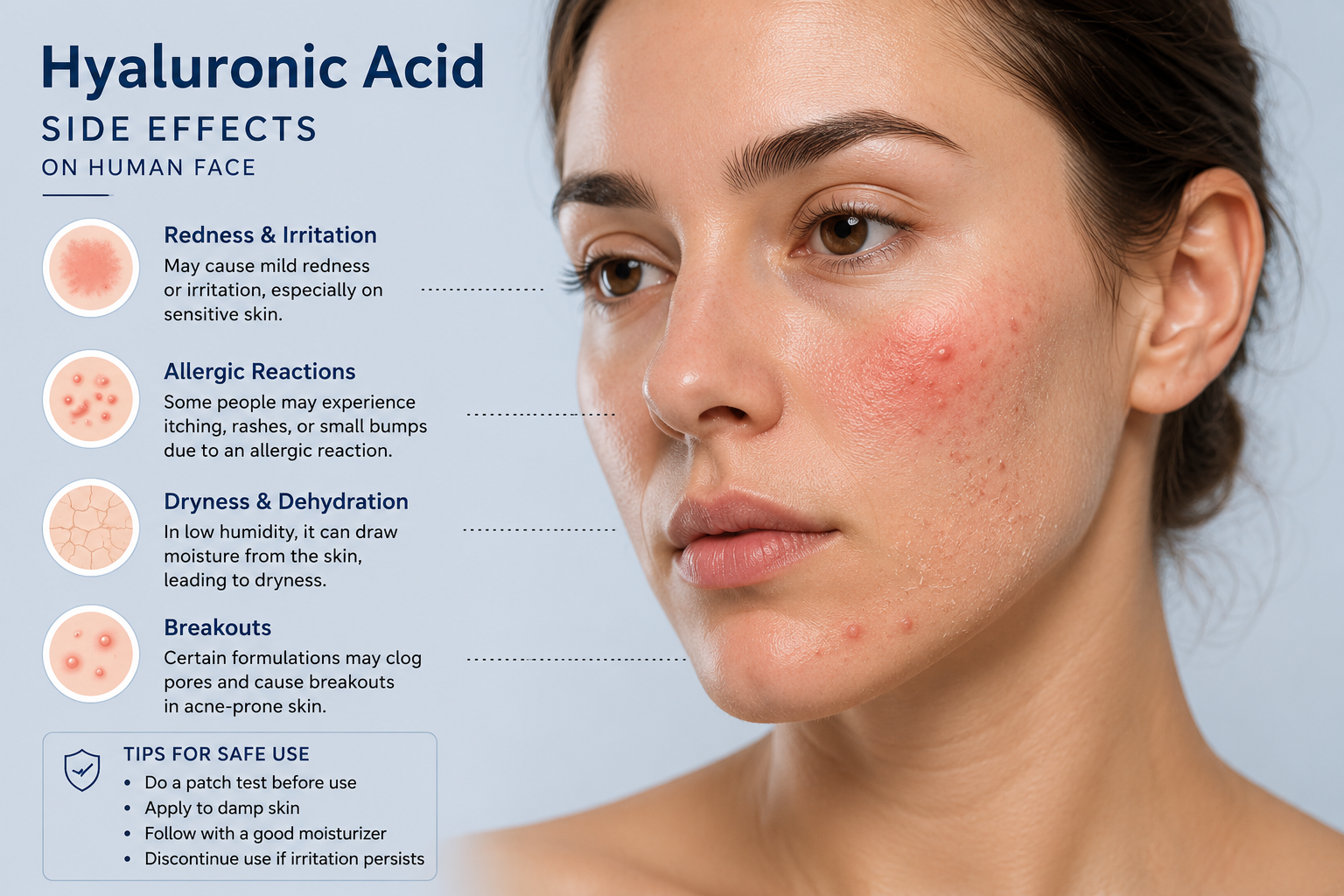
Usually very well tolerated. Rarely, some people may notice:
- Mild irritation
- Temporary stickiness
- Dryness if used without a moisturizer in very dry environments
Polyglutamic Acid
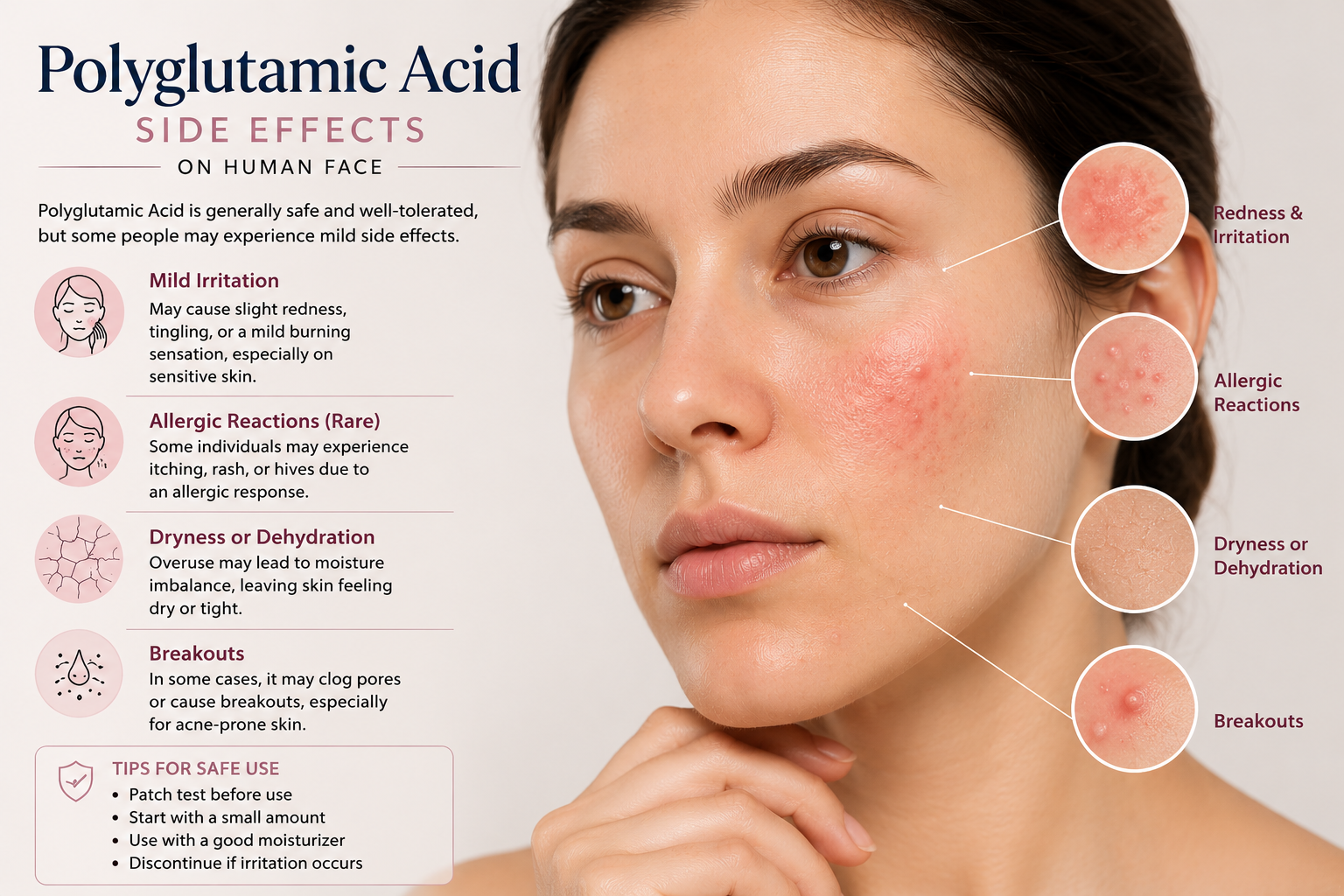
Generally gentle, though possible side effects include:
- Mild redness
- Temporary irritation
- Rare allergic reaction, particularly in people sensitive to fermented ingredients
Always patch-test new products before applying them to your entire face.
Pros and Cons
Hyaluronic Acid
Pros
- Lightweight
- Fast hydration
- Suitable for every skin type
- Widely available
- Layers easily
Cons
- Works best when followed by a moisturizer
- Effects are temporary and require consistent use
Polyglutamic Acid
Pros
- Long-lasting hydration
- Excellent moisture retention
- Gives a glowing finish
- Supports the skin barrier
Cons
- Fewer product options available
- Can feel slightly more film-forming on some skin types
Which One Should You Choose?
Choose Hyaluronic Acid if you:
- Have oily or combination skin
- Prefer lightweight hydration
- Want to reduce dehydration lines
- Are new to hydrating serums
Choose Polyglutamic Acid if you:
- Have very dry or dehydrated skin
- Need long-lasting moisture
- Want a dewy finish
- Have a compromised skin barrier
Choose Both if you:
- Want maximum hydration
- Have mature skin
- Experience seasonal dryness
- Use retinoids or exfoliating acids
- Want a healthy, plump, glowing complexion
Final Thoughts
When comparing Hyaluronic Acid vs Polyglutamic Acid, there isn’t a single winner because each ingredient plays a different role in keeping your skin hydrated. Hyaluronic Acid excels at attracting water to the skin, making it feel plump, smooth, and refreshed, while Polyglutamic Acid helps lock that moisture in and strengthens the skin’s moisture barrier for longer-lasting hydration. Together, they create a powerful combination that can leave your skin softer, healthier, and more radiant.
If you’re new to skincare or have oily to combination skin, Hyaluronic Acid is an excellent starting point. If your skin is very dry, dehydrated, or prone to moisture loss, Polyglutamic Acid can provide an extra boost by reducing water evaporation. For the best results, consider using both ingredients in the same routine—apply Hyaluronic Acid to slightly damp skin, follow with Polyglutamic Acid, and finish with a moisturizer to seal everything in.
Ultimately, the best choice depends on your skin’s needs. Whether you choose one or combine both, consistent use alongside a gentle cleanser, a suitable moisturizer, and daily sunscreen can help you achieve healthier, plumper, and well-hydrated skin over time.