Is Retinol Safe for Beginners? A Complete Beginner’s Guide (2026)
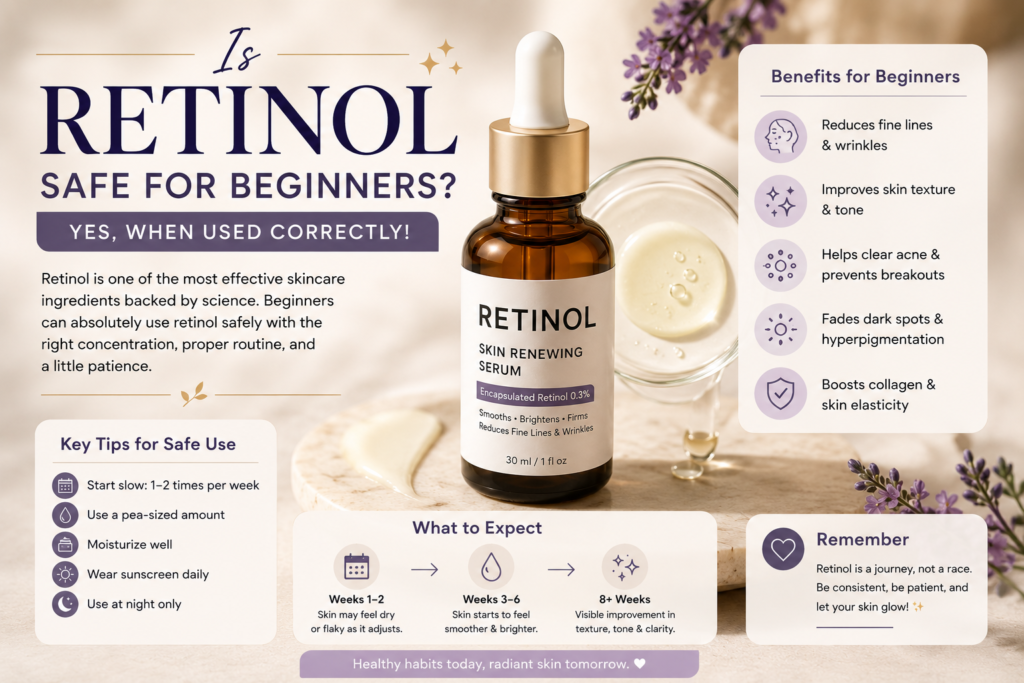
Retinol is one of the most effective skincare ingredients for improving fine lines, acne, uneven skin tone, and skin texture. However, many beginners hesitate to use it because of concerns about irritation, peeling, or skin damage.
The good news is yes—retinol is generally safe for beginners when introduced correctly. Starting with the right concentration, using it gradually, and following a proper skincare routine can help you enjoy its benefits while minimizing side effects.
This guide covers everything beginners need to know before adding retinol to their skincare routine.
What Is Retinol?
Retinol is a Vitamin A derivative that belongs to a group of ingredients called retinoids.
Once applied to the skin, retinol converts into retinoic acid, the active form that helps increase skin cell turnover and stimulate collagen production.
Because it works beneath the skin’s surface, retinol is considered one of the most scientifically proven anti-aging and acne-fighting ingredients available.
Is Retinol Safe for Beginners?
Yes. Retinol is safe for most beginners if used correctly.
Most problems occur because people:
- Start with a high concentration
- Apply it every night immediately
- Use too much product
- Skip moisturizer
- Forget sunscreen
Using retinol slowly allows your skin to adapt naturally.
Benefits of Retinol for Beginners
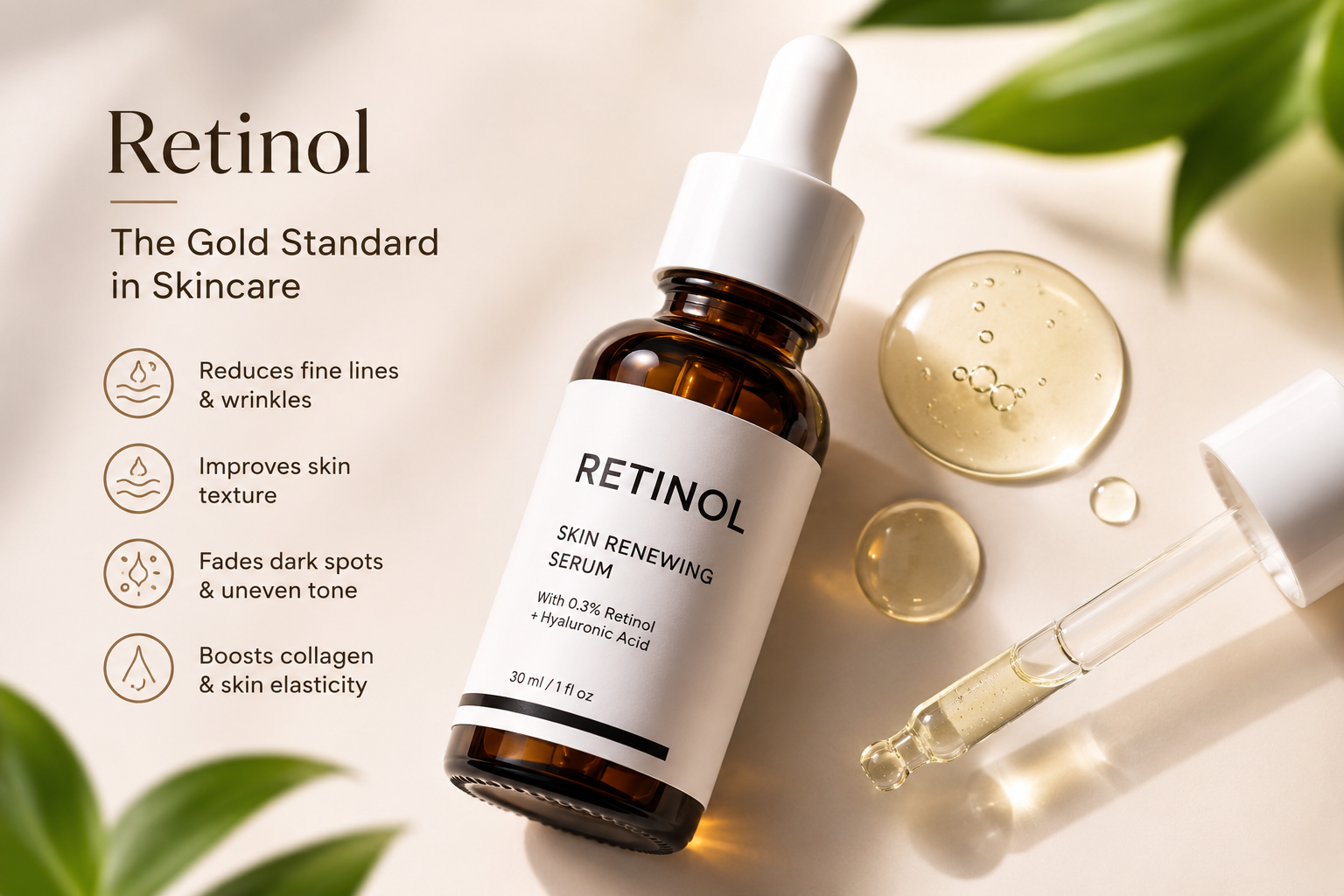
1. Reduces Fine Lines
Retinol stimulates collagen production, making the skin firmer and smoother over time.
Benefits include:
- Softer wrinkles
- Improved elasticity
- Younger-looking skin
2. Helps Treat Acne
Retinol keeps pores clear by increasing skin cell turnover.
It can reduce:
- Blackheads
- Whiteheads
- Pimples
- Acne scars
3. Improves Skin Texture
Regular use smooths rough skin and uneven texture.
Perfect for:
- Bumpy skin
- Enlarged pores
- Dull complexion
4. Fades Hyperpigmentation
Retinol speeds up skin renewal, helping fade:
- Sun spots
- Acne marks
- Dark patches
- Post-inflammatory pigmentation
5. Boosts Collagen Production
Collagen naturally declines with age.
Retinol helps:
- Firm the skin
- Improve elasticity
- Reduce sagging
6. Brightens Skin Tone
As old skin cells shed more quickly, fresh cells appear, creating:
- Brighter complexion
- More even tone
- Natural glow
Who Should Use Retinol?
Retinol is suitable for people with:
✅ Acne-prone skin
✅ Oily skin
✅ Combination skin
✅ Normal skin
✅ Aging skin
✅ Sun-damaged skin
Many people with dry or sensitive skin can also use retinol successfully by starting slowly and pairing it with a good moisturizer.
Who Should Avoid Retinol?
Retinol may not be suitable for:
- People with severely irritated skin
- Those experiencing eczema flare-ups
- Active rosacea (unless advised by a dermatologist)
- Skin with a damaged barrier
- People allergic to Vitamin A derivatives
Pregnant or breastfeeding individuals should consult a healthcare professional before using retinoids.
Best Age to Start Retinol
General recommendations:
| Age | Recommendation |
|---|---|
| Under 20 | Usually unnecessary unless treating acne under professional guidance |
| 20–25 | Optional for acne and prevention |
| 25–30 | Great time to start for anti-aging prevention |
| 30+ | Highly beneficial for wrinkles and collagen support |
| 40+ | Excellent addition to an anti-aging routine |
Best Retinol Strength for Beginners
Choose a low concentration initially.
| Strength | Best For |
|---|---|
| 0.1% | Very sensitive skin |
| 0.2% | First-time users |
| 0.3% | Most beginners |
| 0.5% | Intermediate users |
| 1% | Experienced users |
How to Start Retinol Safely
Week 1–2
Apply:
- Once per week
Observe your skin.
Week 3–4
Increase to:
- Twice weekly
Week 5–6
Use:
- Three nights weekly
After Two Months
If your skin is comfortable:
- Every other night
- Eventually nightly if tolerated
How Much Retinol Should You Use?
Only a pea-sized amount is needed for the entire face.
Using more does not make retinol work faster—it only increases irritation.
Correct Order of Application
Evening Routine
- Gentle cleanser
- Dry skin completely (wait 10–20 minutes if your skin is easily irritated)
- Retinol (pea-sized amount)
- Moisturizer
For beginners with sensitive skin, the “sandwich method” can help:
- Moisturizer
- Retinol
- Moisturizer
Common Side Effects
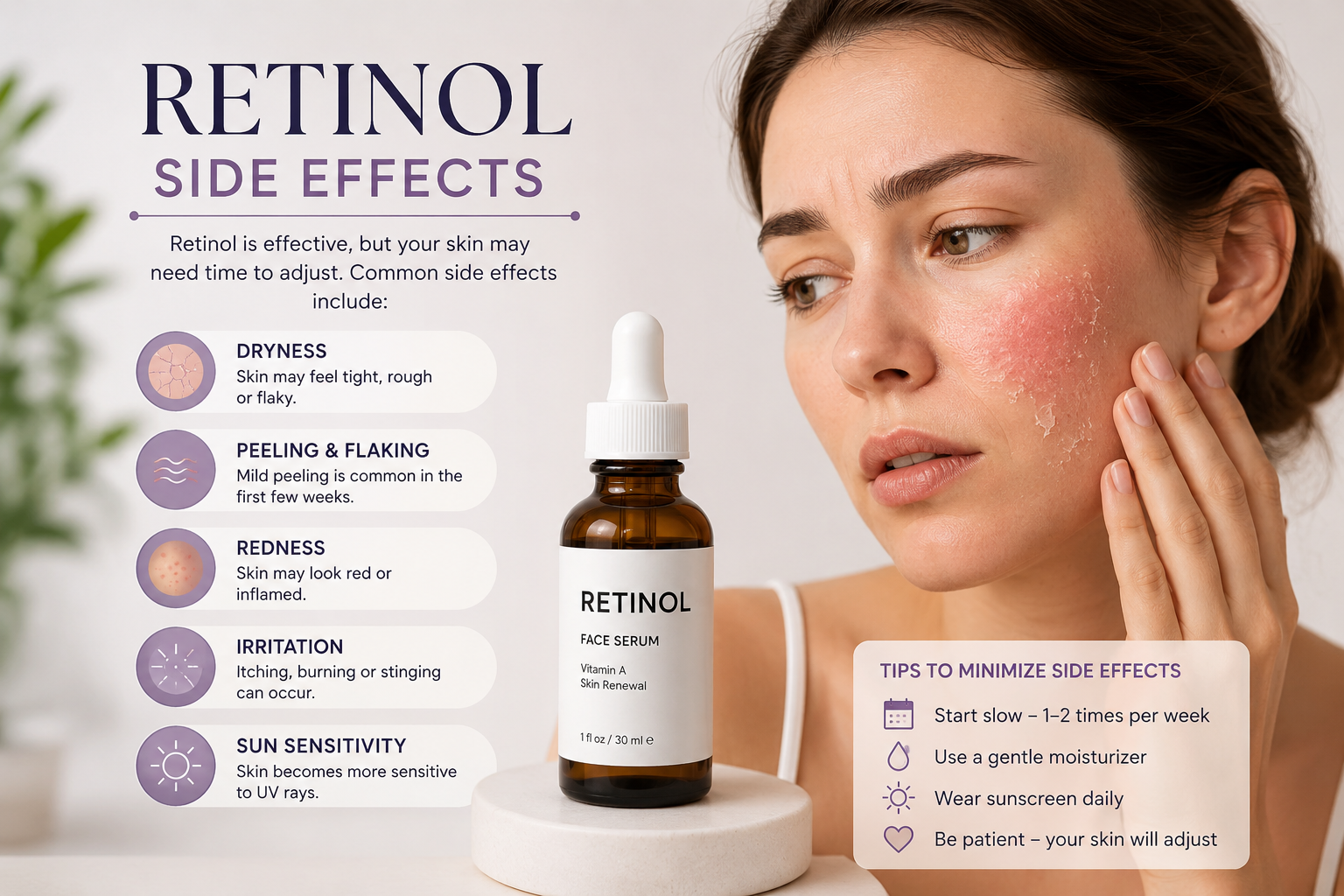
During the first few weeks, mild irritation is common.
You may experience:
- Dryness
- Tightness
- Mild peeling
- Flaking
- Slight redness
- Temporary sensitivity
These effects often improve as your skin adapts.
Retinol Purging
Some beginners experience retinol purging.
This happens because retinol speeds up skin cell turnover, bringing existing clogged pores to the surface faster.
Purging may include:
- Small pimples
- Whiteheads
- Temporary breakouts
Purging usually appears in areas where you already tend to break out and typically settles within 4–8 weeks. If acne becomes severe, spreads to new areas, or persists beyond this period, consider stopping the product and consulting a dermatologist.
Tips to Reduce Irritation
- Start slowly
- Use moisturizer generously
- Avoid over-exfoliating
- Apply only at night
- Use sunscreen every morning
- Skip retinol if your skin becomes extremely irritated until it recovers
Ingredients That Work Well With Retinol
These ingredients can complement retinol:
- Hyaluronic Acid
- Ceramides
- Niacinamide
- Glycerin
- Peptides
- Squalane
These help maintain hydration and support the skin barrier.
Ingredients Beginners Should Be Careful With
Avoid layering retinol in the same routine with strong exfoliating or potentially irritating actives until your skin has adjusted, such as:
- High-strength AHAs (glycolic acid, lactic acid)
- BHAs (salicylic acid), especially at higher strengths
- Benzoyl peroxide (unless directed by a dermatologist)
- Prescription retinoids
- Physical scrubs
Vitamin C can be used in the same overall routine by many people, but beginners often find it easier to use Vitamin C in the morning and retinol at night to reduce the chance of irritation.
Do You Need Sunscreen?
Absolutely.
Retinol can make your skin more sensitive to UV exposure, especially during the adjustment period.
Choose a broad-spectrum sunscreen with:
- SPF 30 or higher
- Daily application
- Reapplication every two hours when outdoors
How Long Does Retinol Take to Work?
| Skin Concern | Typical Timeline |
|---|---|
| Smoother skin | 4–6 weeks |
| Acne improvement | 8–12 weeks |
| Brighter skin | 6–8 weeks |
| Dark spots | 3–6 months |
| Fine lines | 3–6 months |
| Wrinkles | 6–12 months |
Consistency is key—results develop gradually.
Beginner Retinol Routine
Morning
- Gentle cleanser
- Hydrating serum (optional)
- Moisturizer
- Sunscreen SPF 30+
Evening (Retinol Nights)
- Gentle cleanser
- Retinol (pea-sized amount)
- Moisturizer
Evening (Non-Retinol Nights)
- Gentle cleanser
- Hydrating serum
- Moisturizer
Common Beginner Mistakes
- Using too much product
- Starting with a high concentration
- Applying every night immediately
- Mixing with multiple strong actives
- Skipping moisturizer
- Not wearing sunscreen
- Applying retinol to damp skin if you’re prone to irritation
- Expecting overnight results
Final Thoughts
Retinol is a powerful, dermatologist-recommended skincare ingredient that can deliver noticeable improvements in acne, fine lines, uneven skin tone, and overall skin texture. The good news is that retinol is generally safe for beginners when introduced gradually and used correctly. Starting with a low concentration, applying it just a few nights per week, using a moisturizer to support your skin barrier, and wearing a broad-spectrum sunscreen every day are the keys to a successful retinol journey.
It’s normal to experience mild dryness, flaking, or temporary irritation during the first few weeks as your skin adjusts. However, with patience and consistent use, these side effects usually subside, and the long-term benefits become more apparent. Remember that retinol is a marathon, not a sprint—visible improvements often take several weeks or months.
If you have very sensitive skin, eczema, rosacea, or are pregnant or breastfeeding, it’s best to consult a dermatologist before adding retinol to your routine. By using retinol wisely and consistently, beginners can safely enjoy smoother, clearer, brighter, and healthier-looking skin over time.